
Equipment detail
Refrigerated trailers: what to settle before you book
For temperature-sensitive freight, agree on the temperature, operating mode, loading conditions and records before booking. Clear instructions help everyone work from the same requirements.
On this page
What it is
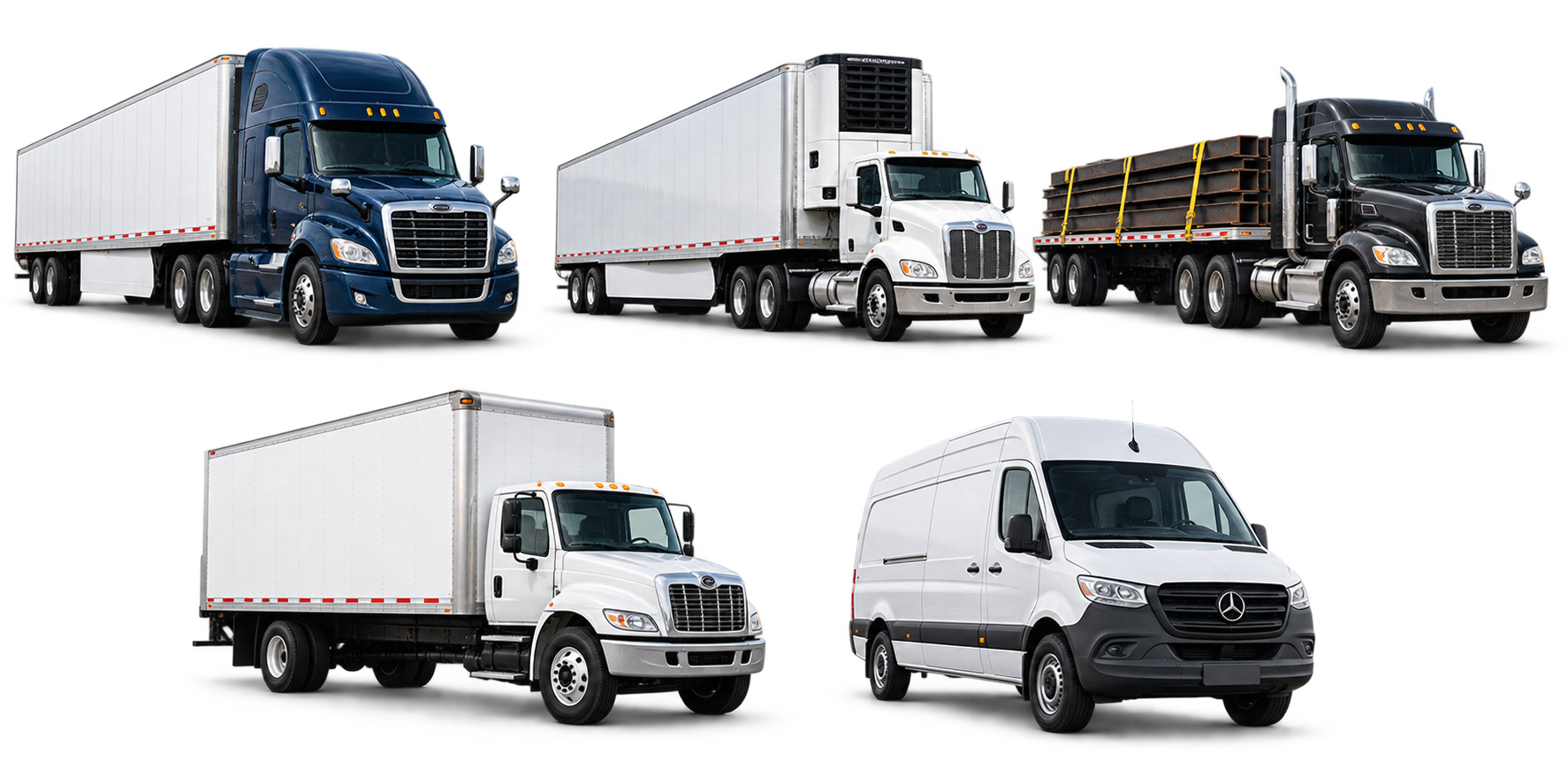
A reefer is an insulated van trailer with a diesel-powered temperature-control unit mounted on the front wall. The unit circulates air through ducting along the ceiling and returns it under the load, which is why airflow around the freight matters as much as the set point.
It is designed to hold temperature, not to bring warm freight down to it. Product should be at its target temperature before it's loaded, and pallets need to be stacked so air can move — solid wall-to-wall loading blocks it.
Typical shipment uses
- Fresh produce, dairy, meat, seafood and prepared foods
- Frozen goods held well below freezing
- Bakery, floral and other short-shelf-life freight
- Adhesives, coatings, batteries and certain pharmaceuticals with a stated range
- Protect-from-freeze freight in winter — dry product that simply must not freeze
Loading and unloading
Reefers load at a dock by forklift like a dry van, but cold-chain facilities run tighter: appointments are firmer, doors stay shut between pallets, and some receivers reject a load outright if the temperature reading or the seal is wrong on arrival.
Insulated walls and the unit itself consume interior space, so usable length, width and height are a little smaller than a dry van of the same nominal size. If your load is already dimension-tight in a dry van, check it again for a reefer.
Temperature considerations
Set point and units
State it in Fahrenheit, and say whether it's a single target or an acceptable range.
Continuous or cycle
Continuous run holds temperature more tightly; cycle-sentry saves fuel and lets the unit stop and start. Some receivers require continuous.
Pre-cooling
If the trailer must arrive already at temperature, that's an instruction the carrier has to receive before dispatch — not at the dock.
Readings and records
Decide who takes the pulp or air reading at each end, whether a downloadable temperature record is required, and what happens if a reading is out of range.
Trailer condition
Washout requirements, food-grade history, and whether a seal is applied and its number recorded on the paperwork.
Questions a shipper should ask
- What temperature and mode will appear on the rate confirmation?
- Is pre-cooling required, and how will it be verified?
- Who is responsible if the receiver rejects on temperature?
- Does the receiver require a temperature download, a seal number, or a washout certificate?
- How should the pallets be built so air can circulate?
Information we'll need
- Commodity and packaging
- Required temperature and mode
- Pre-cool requirement
- Pallet count and total weight
- Pickup and delivery appointments
- Seal, washout or recorder requirements
On specifications
Interior dimensions, pallet counts and payload vary by trailer, insulation, unit type and axle configuration. Treat general figures as planning estimates. Confirm the actual equipment, loading plan and route requirements with the carrier before booking.
Share this page
- Email this page
- LinkedIn: share this page (opens in a new window and copies suggested post text)
- Facebook: share this page (opens in a new window and copies suggested post text)
LinkedIn and Facebook also copy suggested post text for you to paste.