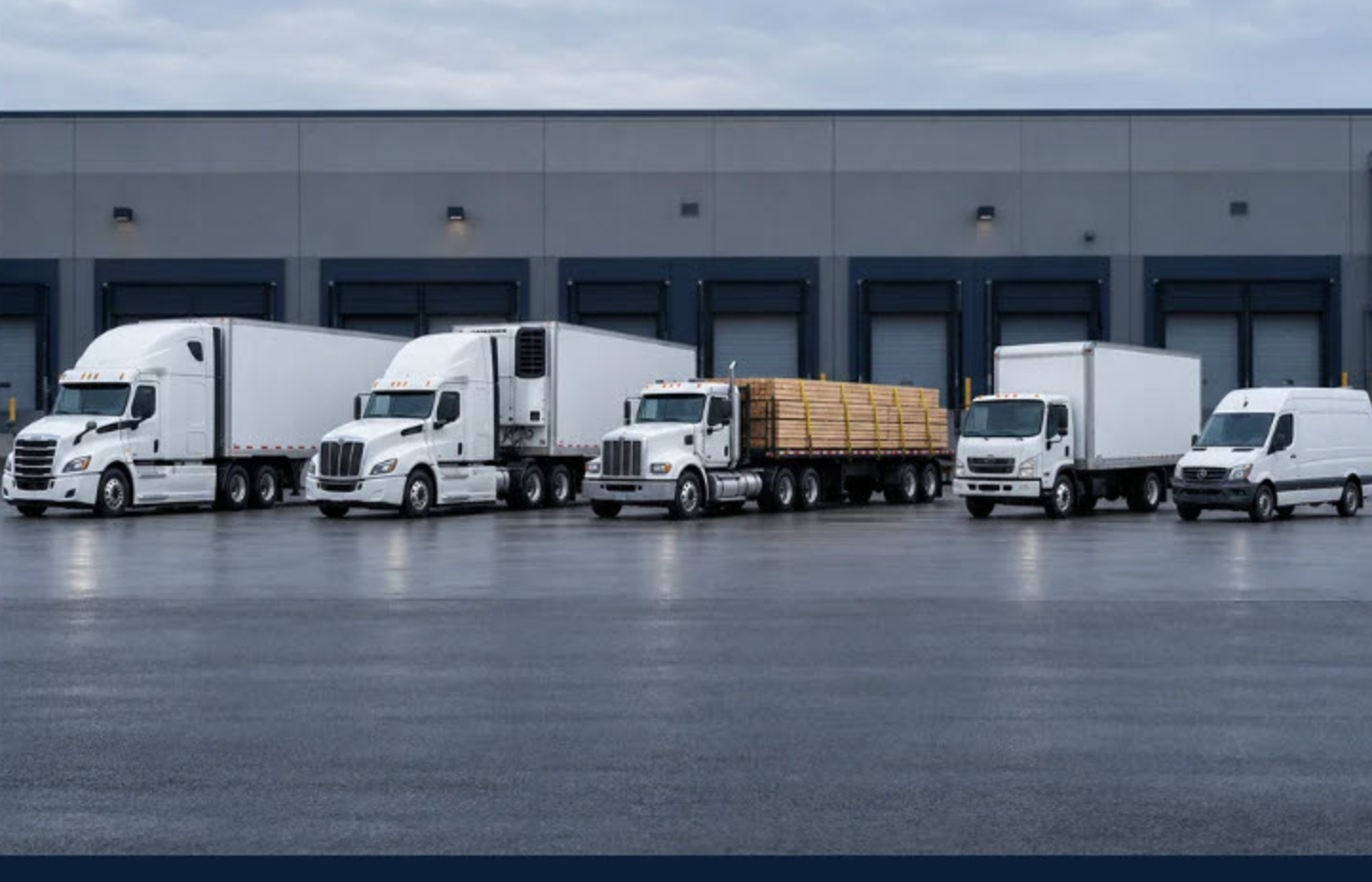
Not sure what equipment fits this freight?
Try the Load Planner or send us the shipment dimensions, weight and loading requirements and we’ll help narrow it down.
Enclosed
Weather protection, general freight and temperature-controlled shipping.
5Equipment types
01
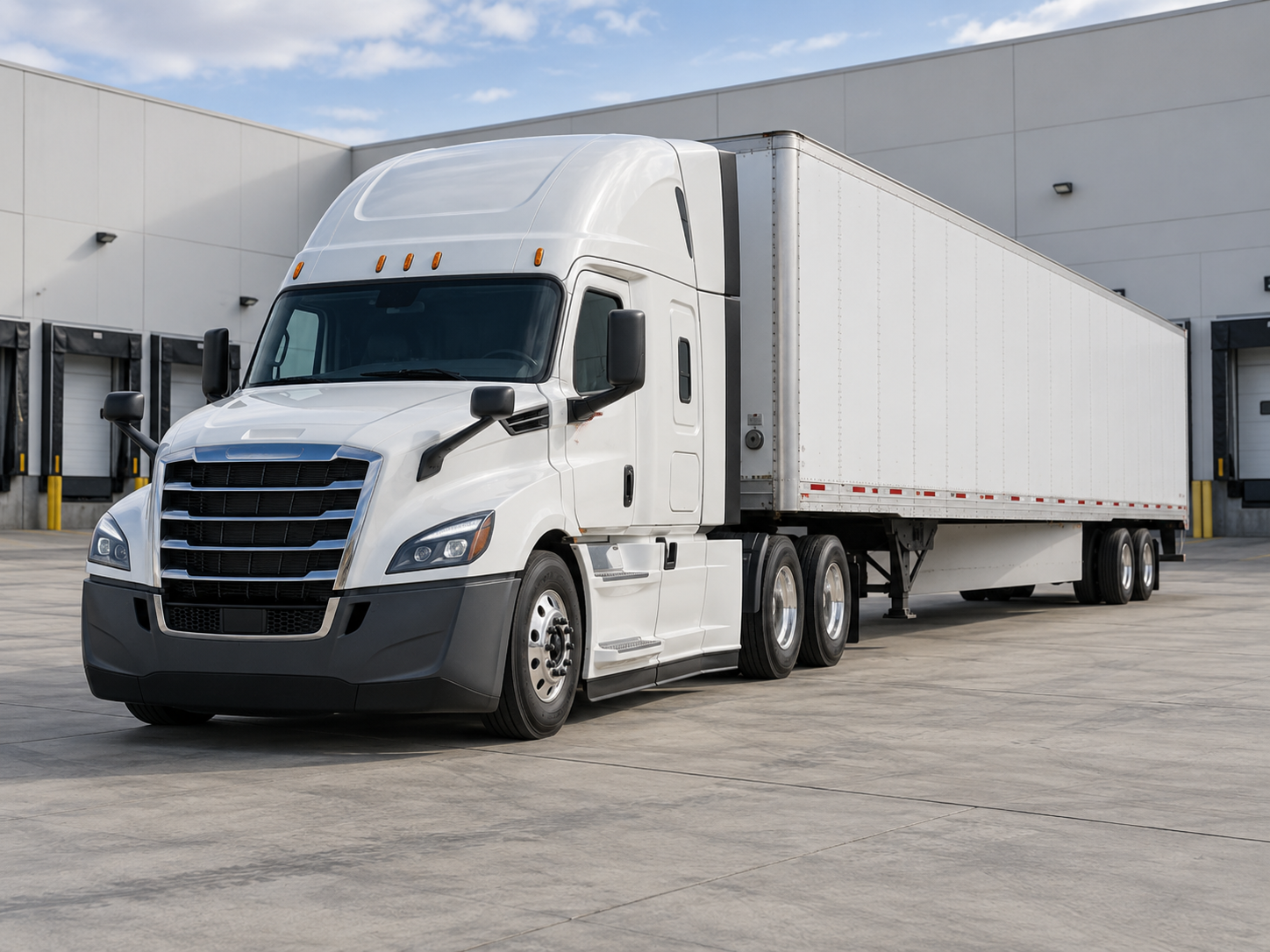
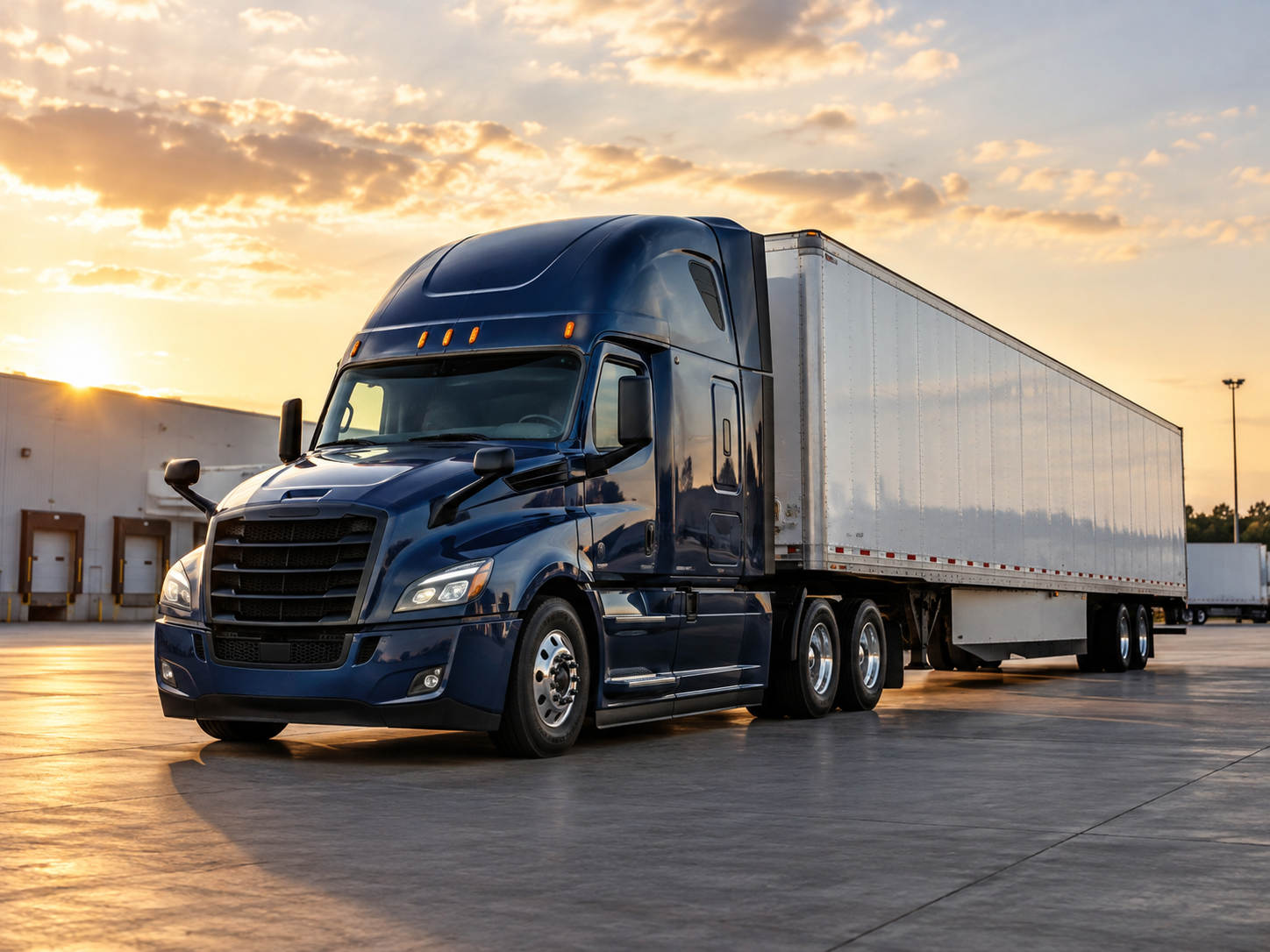
53' Dry Van
- Best for
- Palletized freight, boxed goods, packaged products, consumer goods and most general freight.
- Typical size
Typical planning range: 53' nominal trailer length, about 52'6" of clear cargo length. Interior width is often 98–101 inches and interior height 108–111 inches.
Why it varies: Sheet-and-post construction loses about three inches of width to the posts; plate and composite walls do not.
Important: The rear door opening is a different measurement again, usually 98–99 inches wide by 109–111 high.
- Typical payload / capacity
- Approximately 42,000–45,000 lb.
- Pallet capacity
- About 26 standard 48 × 40 inch pallets loaded straight, or 30 turned, in a single layer; freight overhang, the trailer's usable width and the loading pattern affect fit.
Loading notes & quote checklist
Good to know
Enclosed and weather protected, with no temperature control. Normally rear-loaded at dock height with a forklift or pallet jack, which works well from a standard dock; freight that has to load from the side or overhead may need open-deck or curtain-side equipment.
Before requesting a quote
Commodity, total weight, pallet count and dimensions, stackability, dock availability and special handling.
02
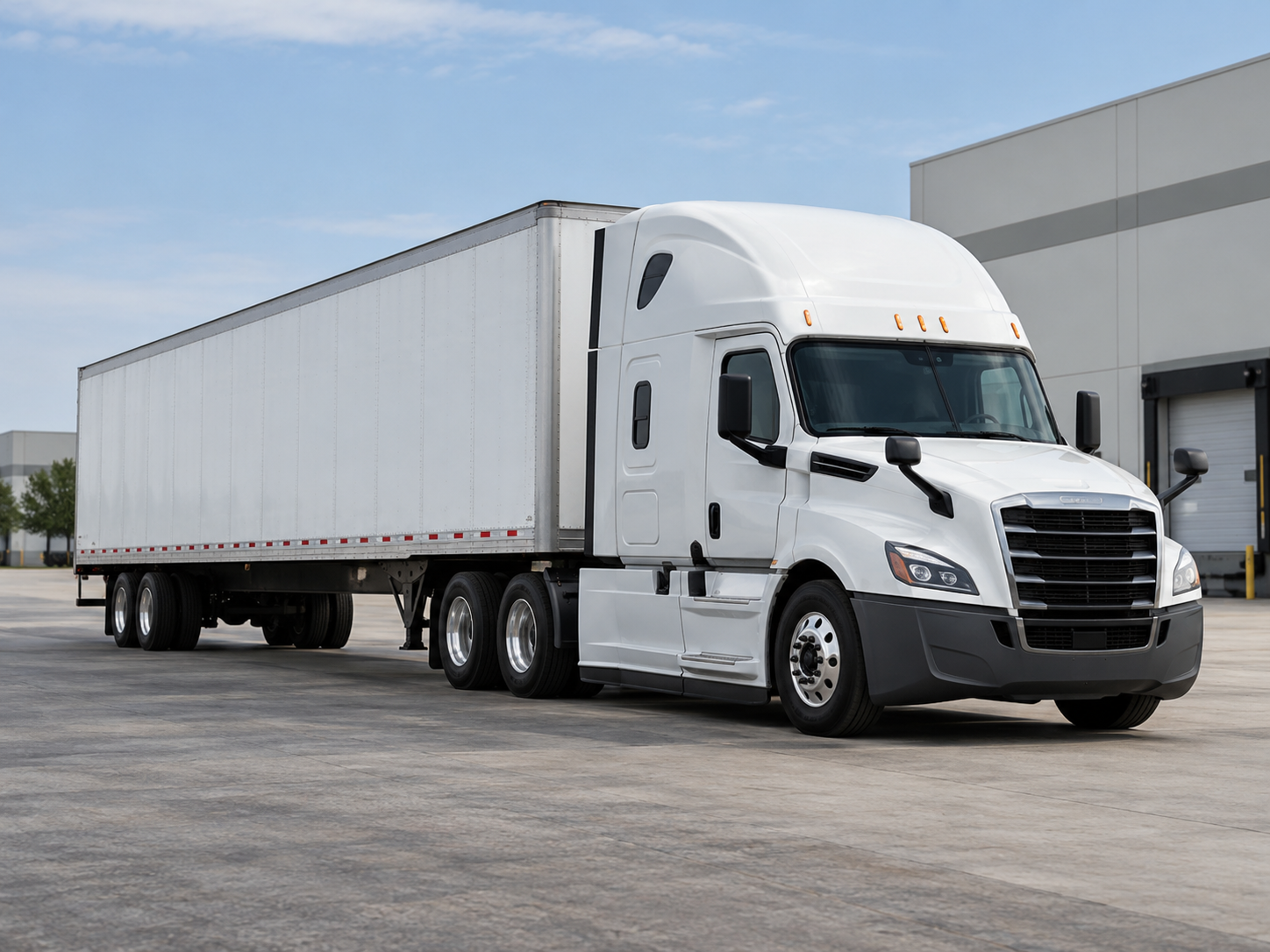
48' Dry Van
- Best for
- General freight, regional shipments and palletized products where a shorter trailer may suit the site.
- Typical size
Typical planning range: 48' nominal trailer length, about 47'3"–47'6" of clear cargo length. Interior width 99–101 inches and interior height 108–112 inches.
Why it varies: Construction sets the interior figures, and roll-up doors sit at the low end of both door-opening ranges.
Important: The rear door opening is smaller than the interior, commonly 93–99 inches wide by 105–110 high.
- Typical payload / capacity
- Approximately 43,000–45,000 lb.
Loading notes & quote checklist
Good to know
The same basic weather protection as a 53' dry van, with less floor space. Confirm the actual trailer and maneuvering room at both facilities.
Before requesting a quote
Pallet layout, total weight, rear-door clearance, dock access and whether the shorter trailer is required.
03
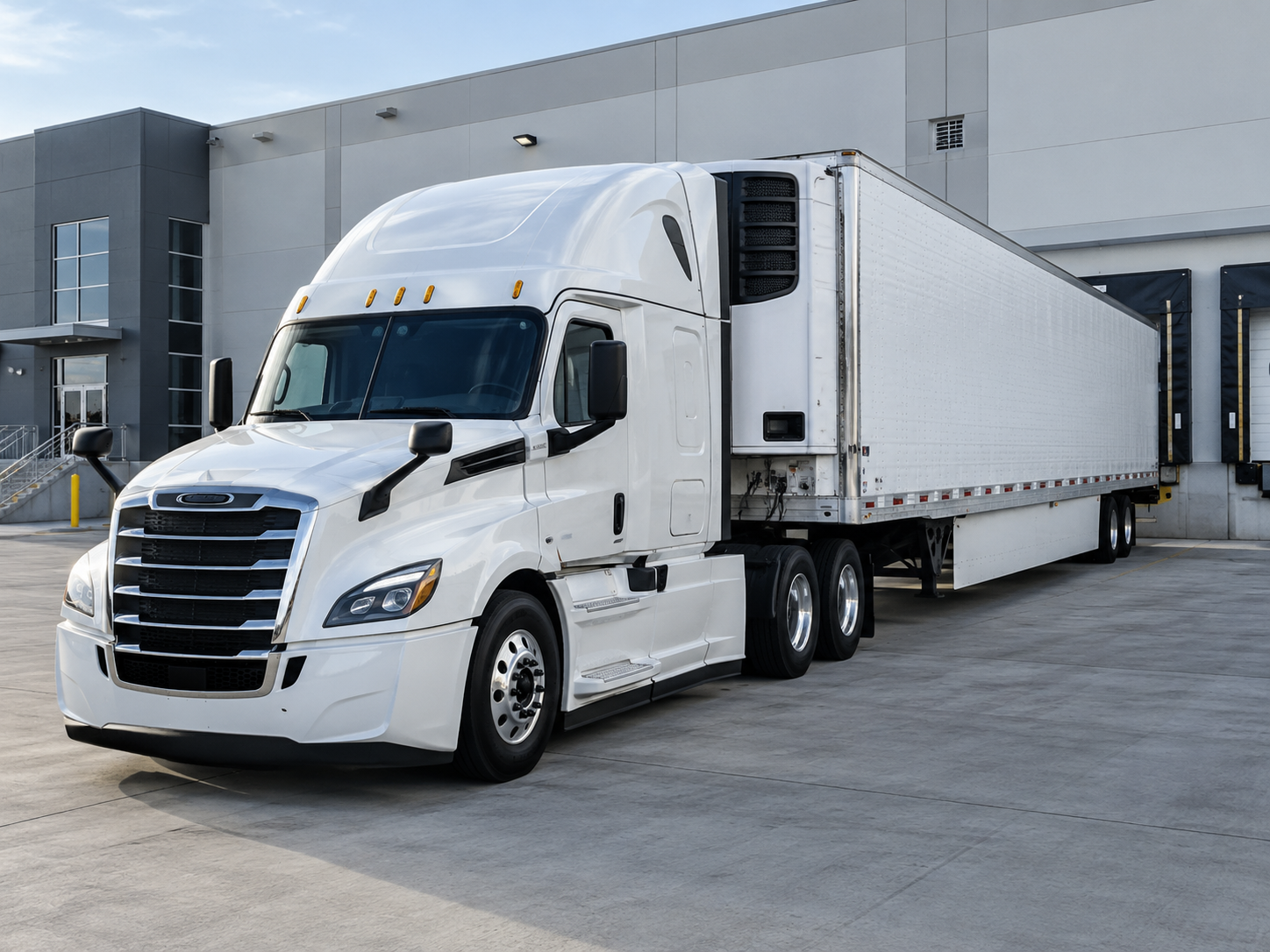
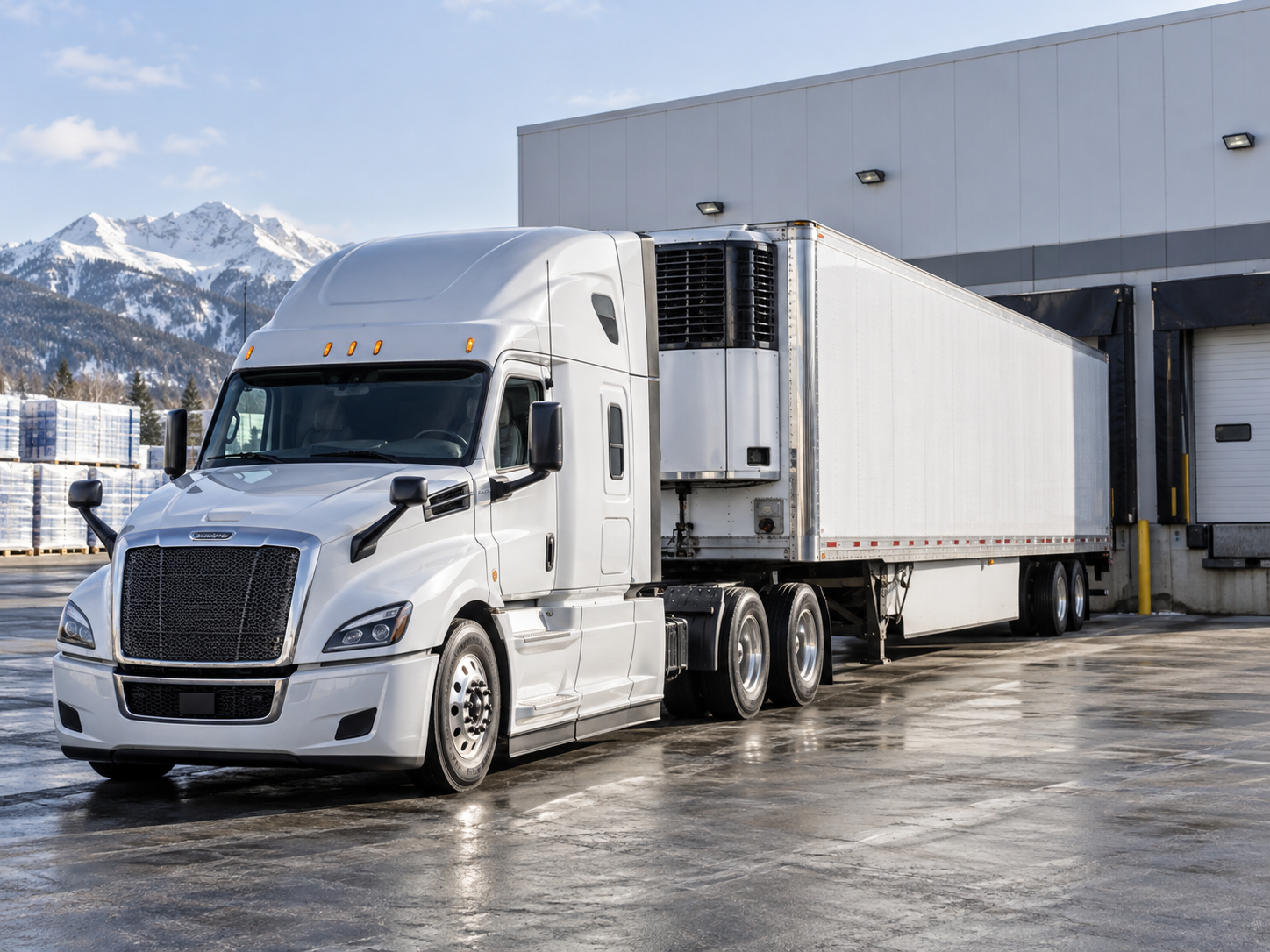
53' Refrigerated Trailer / Reefer
- Best for
- Produce, frozen products, dairy, meat, beverages and other temperature-sensitive freight. Pharmaceutical shipments may require additional qualifications.
- Typical size
- 53' nominal trailer length; roughly 8'–8'2" interior width × 8'2"–8'8" interior height. Insulation, air chutes and bulkheads reduce clear space.
- Typical payload / capacity
- Approximately 42,000–44,000 lb.
Loading notes & quote checklist
Good to know
Insulated walls and a refrigeration unit provide temperature control. Space must be left for the required airflow, so physical fit alone is not enough.
Before requesting a quote
Required temperature, continuous or cycle mode, pre-cooling, loading and product temperatures, washout and any product-specific qualifications.
04
48' Refrigerated Trailer / Reefer
- Best for
- Temperature-controlled regional food and produce shipments that do not need a full 53' trailer.
- Typical size
- 48' nominal trailer length; approximately 8'–8'2" interior width × 8'2" interior height. Confirm the actual unit and door opening.
- Typical payload / capacity
- Approximately 42,000–44,000 lb.
Loading notes & quote checklist
Good to know
A shorter temperature-controlled trailer. Airflow, insulation and any compartment dividers affect usable cargo space.
Before requesting a quote
Temperature and operating mode, pallet layout, product temperature, pre-cooling, washout and appointment requirements.
11
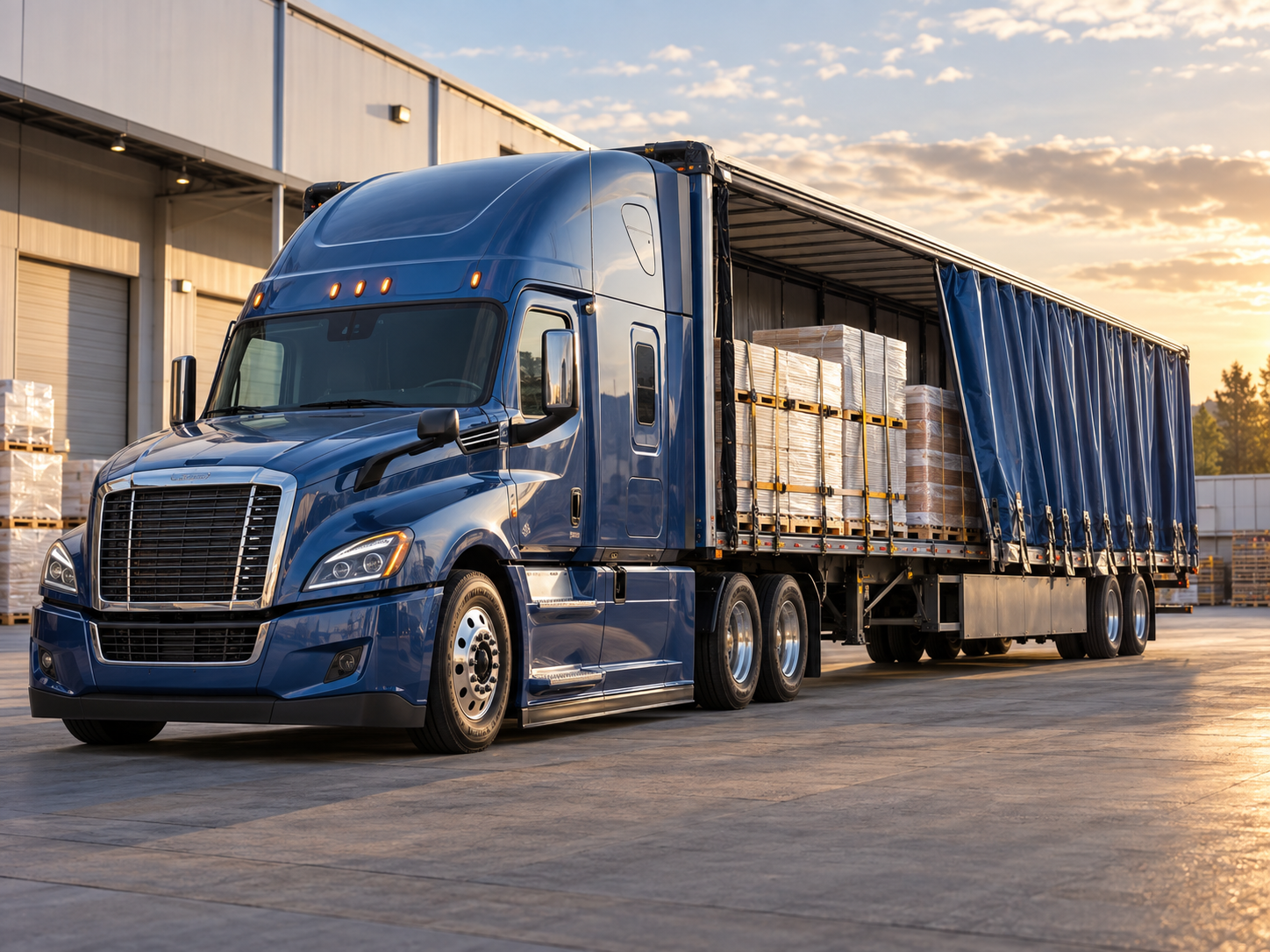
Curtain Side
- Best for
- Palletized products, building materials, lumber, beverages and freight that benefits from side access.
- Typical size
- 48'–53' nominal length × about 8'6" exterior width. Interior space and side openings vary.
- Typical payload / capacity
- Approximately 42,000–45,000 lb.
Loading notes & quote checklist
Good to know
Flexible curtains open along the sides, with a fixed roof on many designs. Curtains provide weather protection; cargo securement must be confirmed separately.
Before requesting a quote
Pallet dimensions, side-loading clearance, loading equipment, securement and whether rear access is also needed.
Back to equipment categories ↑
Open deck
Side or overhead loading for materials, machinery and taller freight.
6Equipment types
05
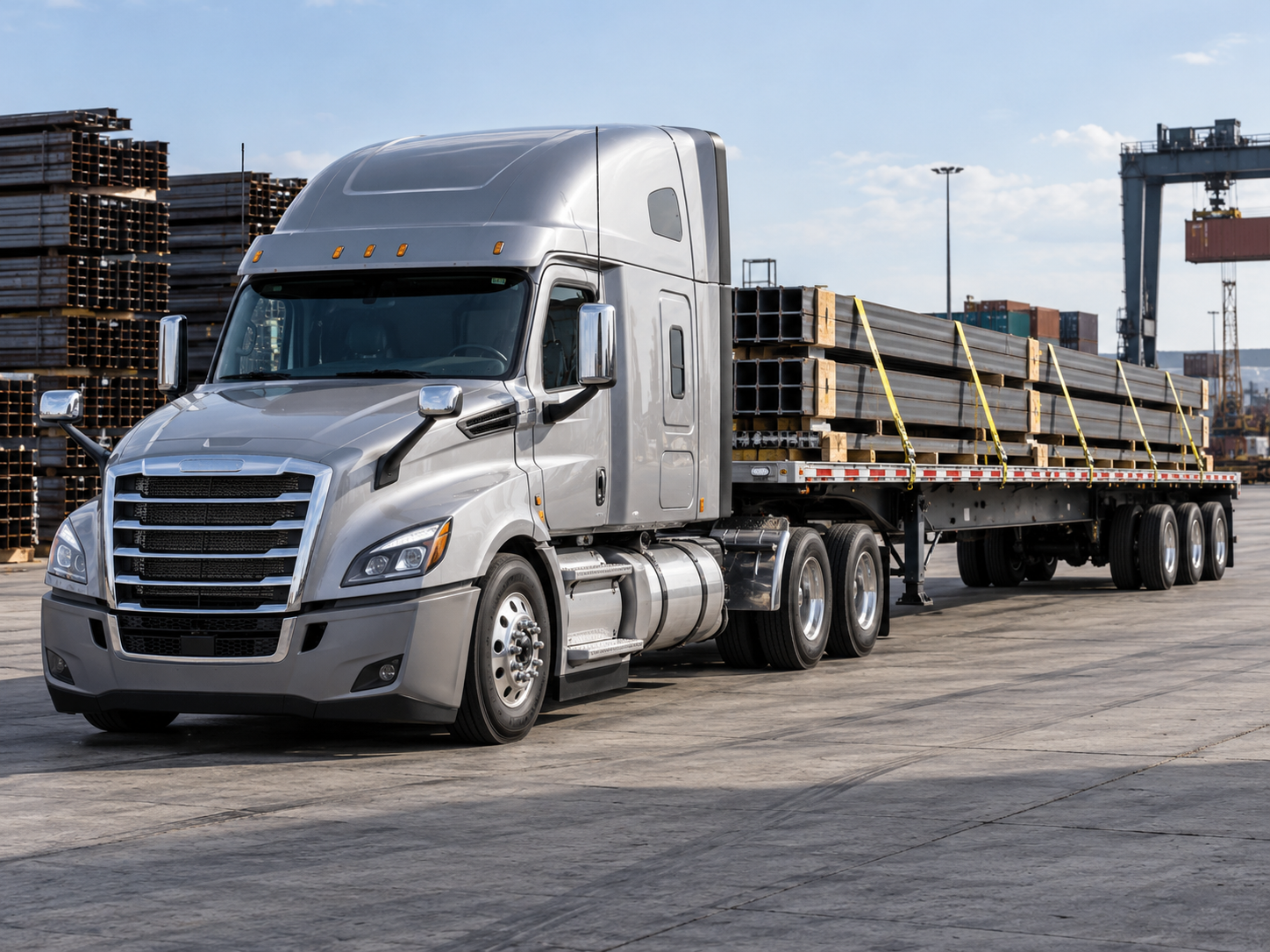
53' Flatbed
- Best for
- Steel, lumber, pipe, machinery, building materials and freight that loads from the side or overhead.
- Typical deck
- 53' long × 8'6" wide.
- Typical payload / capacity
- Approximately 45,000–48,000 lb.
Loading notes & quote checklist
Good to know
An open deck without a roof or side walls. Loading may use a crane or forklift. Oversize freight needs an individual route and permit review.
Before requesting a quote
Exact dimensions and weight, loading method, weight distribution, securement and whether tarps are required.
06
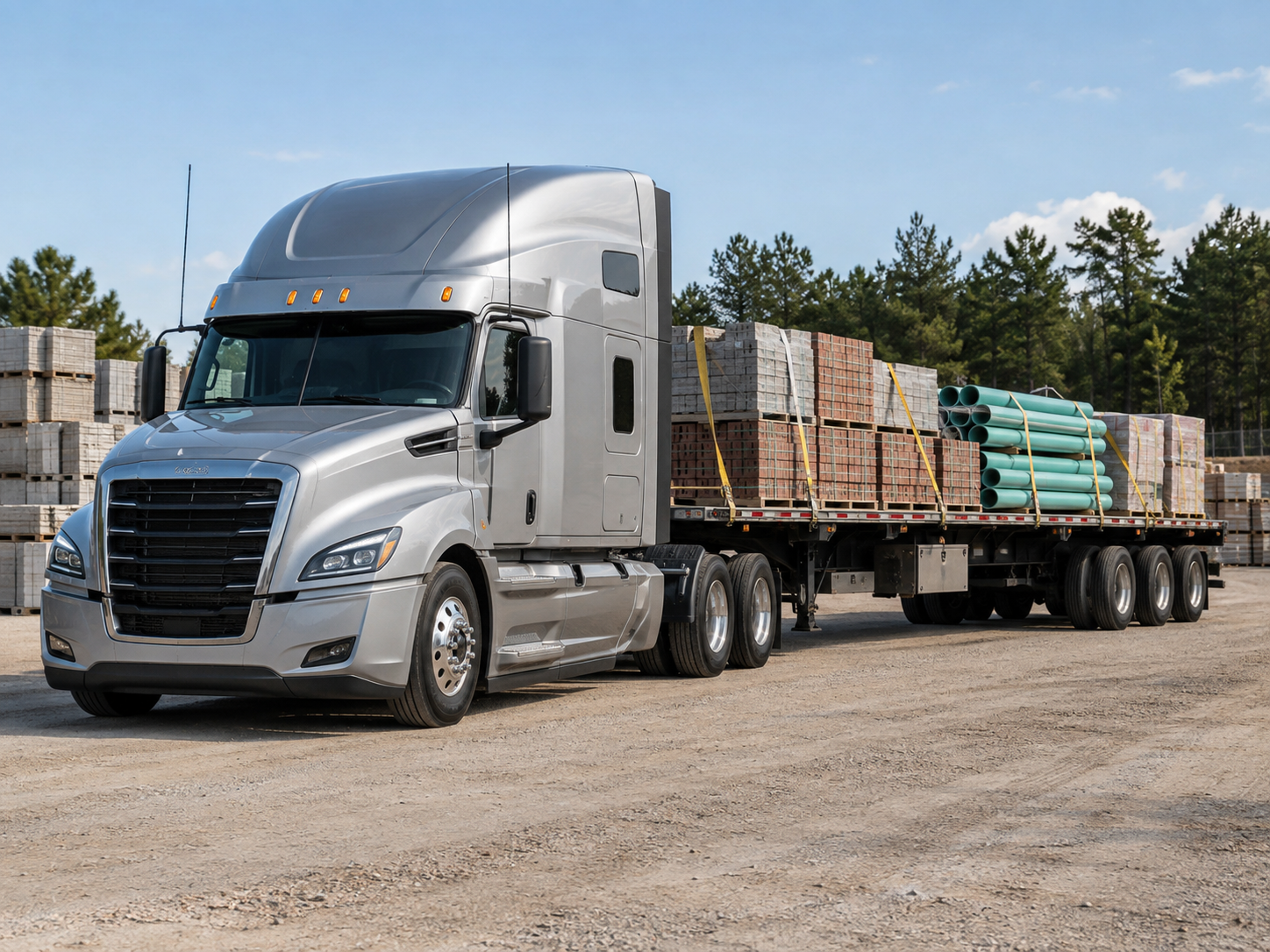
48' Flatbed
- Best for
- Steel, lumber, construction materials, pipe, machinery and general open-deck freight.
- Typical deck
- 48' long × 8'6" wide.
- Typical payload / capacity
- Approximately 45,000–48,000 lb.
Loading notes & quote checklist
Good to know
A common open-deck configuration. A shorter deck does not automatically mean a lower payload; the tractor, trailer and axle loading determine what can move.
Before requesting a quote
Cargo footprint, total and concentrated weight, loading access, tarps and securement requirements.
07
Step Deck / Drop Deck
- Best for
- Machinery, equipment and freight that is too tall for a standard flatbed.
- Typical size
Typical planning range: 48'–53' overall length × 8'6" wide, with 37'–43' of lower deck behind a 10'–11' upper deck over the kingpin.
Important: The load goes on the lower deck, about 35–41 inches off the ground, which is what lets taller freight stay under a height limit that would stop it on a flatbed.
- Typical payload / capacity
- Approximately 42,000–48,000 lb.
Loading notes & quote checklist
Good to know
The lower rear deck reduces loaded height. Confirm the deck height and usable lower-deck length; it does not automatically make a tall load legal on every route.
Before requesting a quote
Exact length, width, height and weight; center of gravity, deck placement and loading method.
08
Double Drop / Lowboy
- Best for
- Tall machinery, construction equipment, industrial equipment and oversized freight.
- Typical size
- Often 48'–53' overall, with a low center well. The usable well length and width must be confirmed.
- Typical payload / capacity
- Approximately 35,000–45,000+ lb, configuration-dependent.
Loading notes & quote checklist
Good to know
The low center section reduces the loaded height. Oversize permits, escorts, route surveys or special loading equipment may still be needed.
Before requesting a quote
Cargo dimensions and weight, ground clearance, center of gravity, loading method and route restrictions.
09
RGN — Removable Gooseneck
- Best for
- Excavators, bulldozers, loaders, heavy machinery and drive-on equipment.
- Typical size
- Often 48'–53' overall × 8'6" wide; specialized and expandable configurations differ.
- Typical payload / capacity
- Approximately 35,000–80,000+ lb across different axle configurations. Heavier moves need a configuration, route and permit assessment.
Loading notes & quote checklist
Good to know
The front gooseneck detaches so the deck can lower for drive-on loading. RGN describes the detachable neck; some lowboys and double drops use this design.
Before requesting a quote
Machine make/model, operating weight, dimensions, running condition, ground clearance and any attachments traveling separately.
10
Conestoga
- Best for
- Machinery, steel and sensitive industrial freight needing open-deck loading access with weather protection.
- Typical size
- Usually a 48'–53' trailer with an approximately 8'6" exterior width. Clear width and height inside the tarp system are smaller.
- Typical payload / capacity
- Approximately 42,000–46,000 lb.
Loading notes & quote checklist
Good to know
A retractable tarp system slides over the freight. It provides weather protection without a conventional hand-applied tarp, but is not refrigerated.
Before requesting a quote
Exact dimensions within the tarp frame, loading access, product sensitivity and securement requirements.
Back to equipment categories ↑
Expedited & local
Smaller vehicles and decks for lighter freight, tighter access or urgent moves.
3Equipment types
13
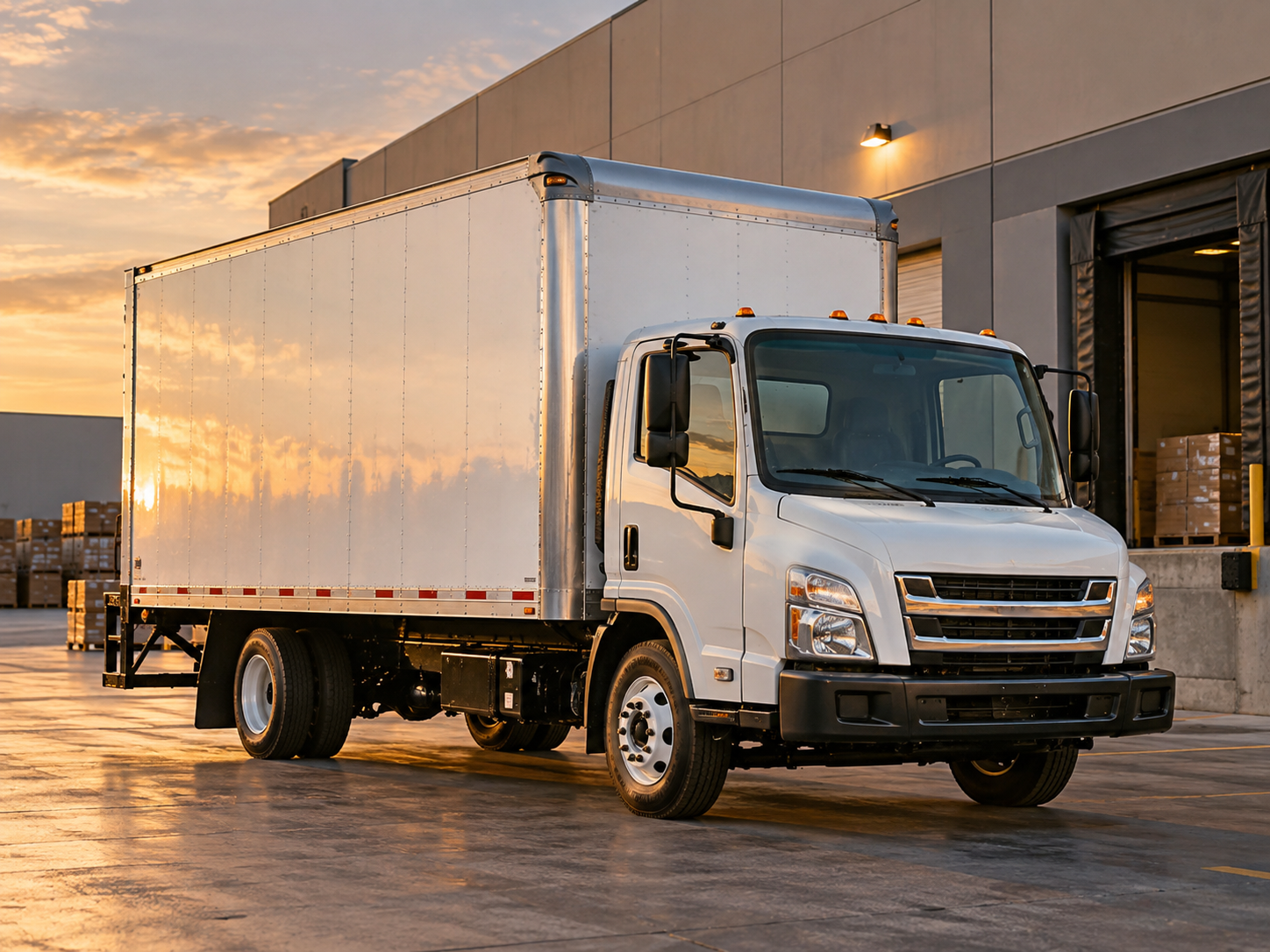
Box Truck / Straight Truck
- Best for
- Smaller shipments, urban deliveries and commercial locations that do not need a full tractor-trailer.
- Typical box
- 20'–26' nominal box length × about 8' wide × 8'–8'6" high. Door openings and usable interior space vary.
- Typical payload / capacity
Typical planning range: Approximately 9,180–13,000 lb.
Why it varies: The spread is real rather than vague: fleets publish 9,180 lb (Budget), 10,000 lb (Penske non-CDL, Enterprise), 12,859 lb (U-Haul) and 13,000 lb (Ryder, FedEx Custom Critical), most of them for trucks rated at 25,999–26,000 lb gross. Body weight, a liftgate and fuel are what differ, and a liftgate alone is 1,100–1,350 lb of it.
Important: A CDL-class 26-footer on a 33,000 lb chassis reaches about 17,000 lb, which is a different truck. Confirm the one being sent.
- Options to request
- Liftgate, pallet jack, inside or residential delivery. These are not included automatically; confirm liftgate size and weight rating.
Loading notes & quote checklist
Good to know
A single vehicle rather than a tractor and trailer. A liftgate may help at a no-dock location if the freight fits its platform and rated capacity.
Before requesting a quote
Individual piece dimensions and weights, dock/forklift availability, liftgate needs and access at both ends.
14
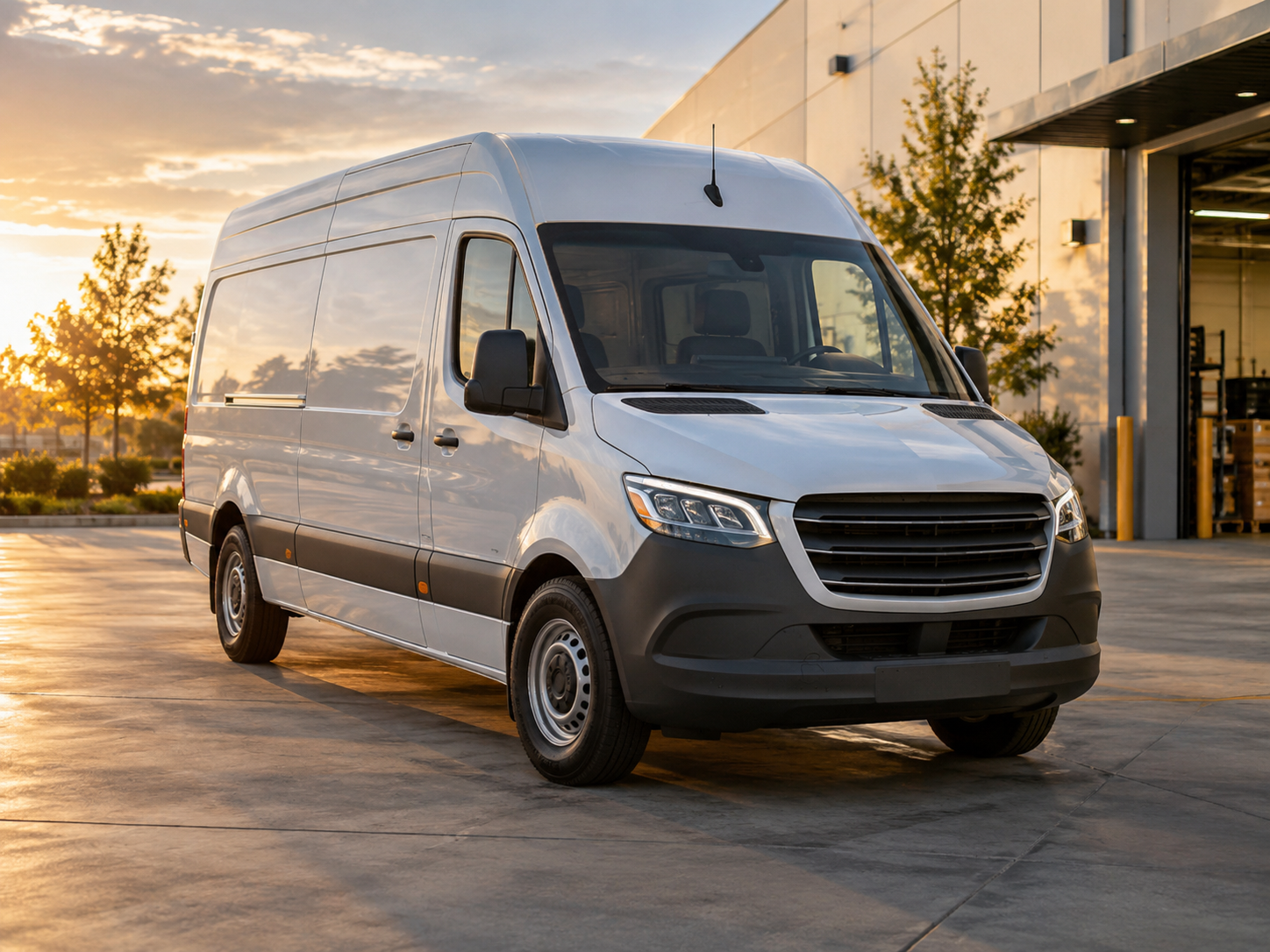
Sprinter-Style Cargo Van
- Best for
- Urgent smaller shipments, parts, automotive freight and time-sensitive deliveries. Medical freight may have additional handling requirements.
- Typical cargo area
Typical planning range: Approximately 8'–15'9" of cargo floor and 56–86 inches of interior height, depending on the van and roof.
Why it varies: The width that matters is the gap between the wheel wells — 53 inches on a Sprinter 2500 but only 39 on a dual-rear-wheel 3500, 45–55 on a Transit, 56 on a ProMaster — not the wider figure measured above them. The rear opening is about 60–61 inches wide.
Important: A 48-inch pallet will not pass either dual-rear-wheel van.
- Typical payload / capacity
Typical planning range: Approximately 2,500–3,500 lb of usable payload — what an expedite carrier will accept, which is the figure freight has to fit.
Why it varies: Manufacturer chassis ratings run higher (3,195–6,812 lb), but that is the vehicle before its body, bulkhead, driver, fuel and load bars.
Important: Plan on the usable range and confirm the doorjamb label on the actual van.
Loading notes & quote checklist
Good to know
Flexible for smaller shipments, with much less capacity than a box truck. A pallet that fits the floor may not fit through the doors or between wheel wells.
Before requesting a quote
Piece count, individual dimensions, total weight, floor-loading method and pickup/delivery deadlines.
15
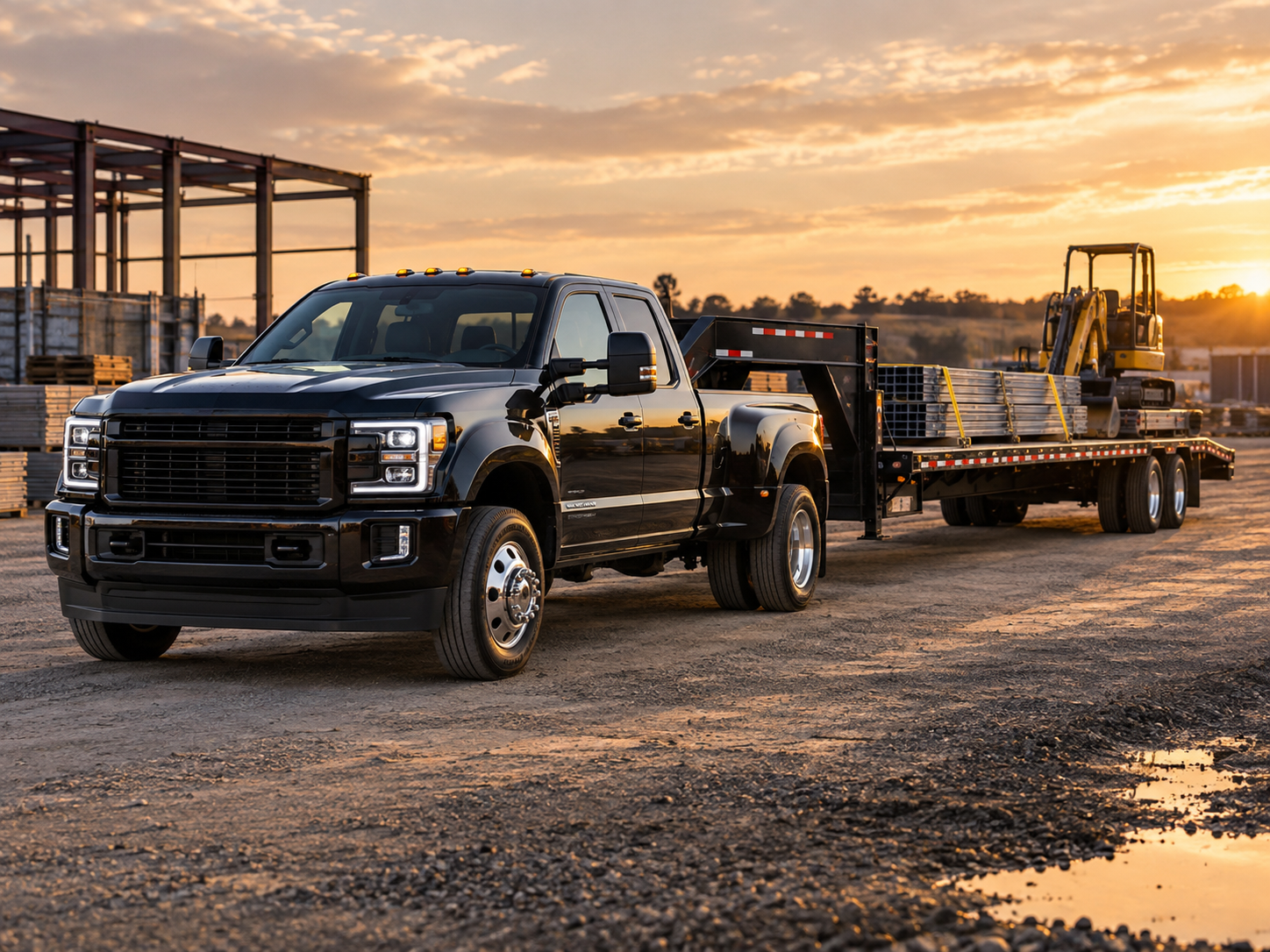
Hotshot
- Best for
- Smaller machinery, construction materials, urgent equipment moves and lighter open-deck shipments.
- Typical deck
Typical planning range: Approximately 20'–44' of deck, with 40' by far the most common gooseneck length.
Why it varies: Deck width is 83 in on a narrow low-boy and 102 in on a deckover or a bed with drive-over fenders — those are two different trailers, not a tolerance. Deck height runs 28–38 in, well under a flatbed's 54–62 in, which helps a tall piece and a drive-on ramp angle.
Important: Deck length is rarely what runs out first; payload is.
- Typical payload / capacity
Typical planning range: Roughly 10,000–16,500 lb. Published hotshot figures cap near 16,500 lb.
Why it varies: Three separate ceilings hold it there: the trailer’s own GVWR less its tare, the gooseneck pin weight — 15–25% of the loaded trailer — charged against the pickup’s payload, and axle count under the bridge formula. Trailer capacity sheets read higher because they rate the trailer, not the rig.
Important: Verify the assigned truck, trailer and axle ratings — the unit decides the legal capacity, not the category.
Loading notes & quote checklist
Good to know
Commonly pulled by a heavy-duty pickup. Truck, trailer and axle ratings matter just as much as deck space; urgent service is subject to availability.
Before requesting a quote
Exact dimensions and weight, loading equipment, securement, tarps and required timing.
Back to equipment categories ↑
Specialized
Customer-supplied trailers and vehicle transport call for a different set of details.
2Equipment types
12
Power Only
- Best for
- Preloaded trailers, trailer relocation, drop-and-hook operations and customers that own or control their trailers.
- Equipment provided
- The carrier supplies a compatible tractor and driver; the customer supplies the trailer.
- Typical payload / capacity
- Determined by the supplied trailer, tractor, axle configuration and route—not a fixed power-only capacity.
Loading notes & quote checklist
Good to know
This is a service arrangement, not a trailer type. Confirm trailer compatibility, condition, authority to move it and interchange requirements.
Before requesting a quote
Trailer type/number, roadworthiness, registration, tires, brakes, lights, pickup instructions and interchange requirements.
16
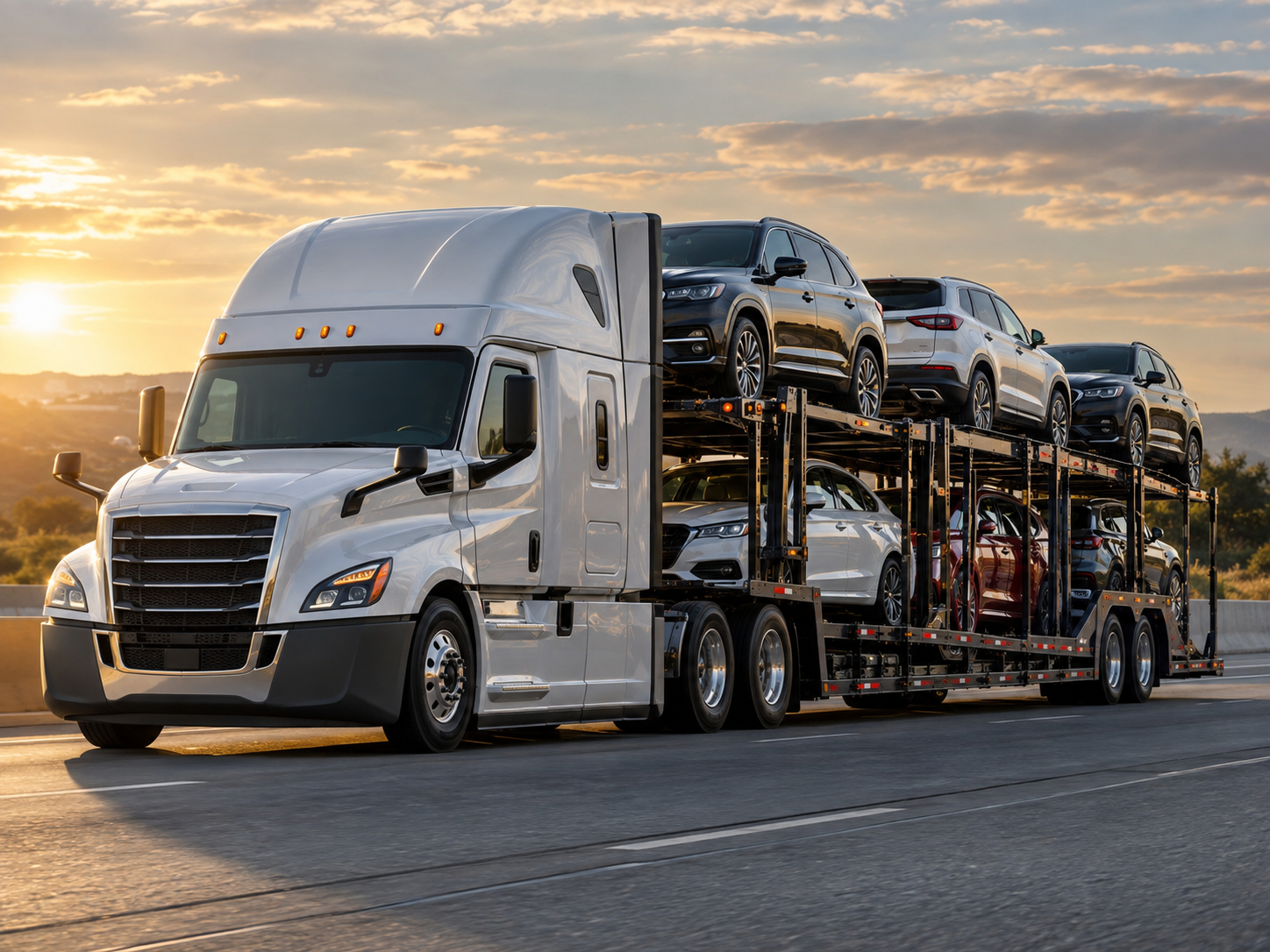
Auto Transport / Car Hauler
- Best for
- Cars, SUVs, light trucks, fleet vehicles and dealership moves.
- Configuration
- Open or enclosed vehicle transport; trailer size and vehicle positions vary.
- Typical payload / capacity
- Capacity depends on vehicle count, size, weight and the specific hauler—not standard pallet positions.
Loading notes & quote checklist
Good to know
The mix of vehicles determines fit. Inoperable vehicles, low ground clearance and oversized pickups may need special loading arrangements.
Before requesting a quote
Year, make, model, operable/inoperable condition, quantity, pickup/delivery locations and open or enclosed preference.
Back to equipment categories ↑
Bulk
Equipment matched to the product, contamination restrictions and unloading system.
4Equipment types
17
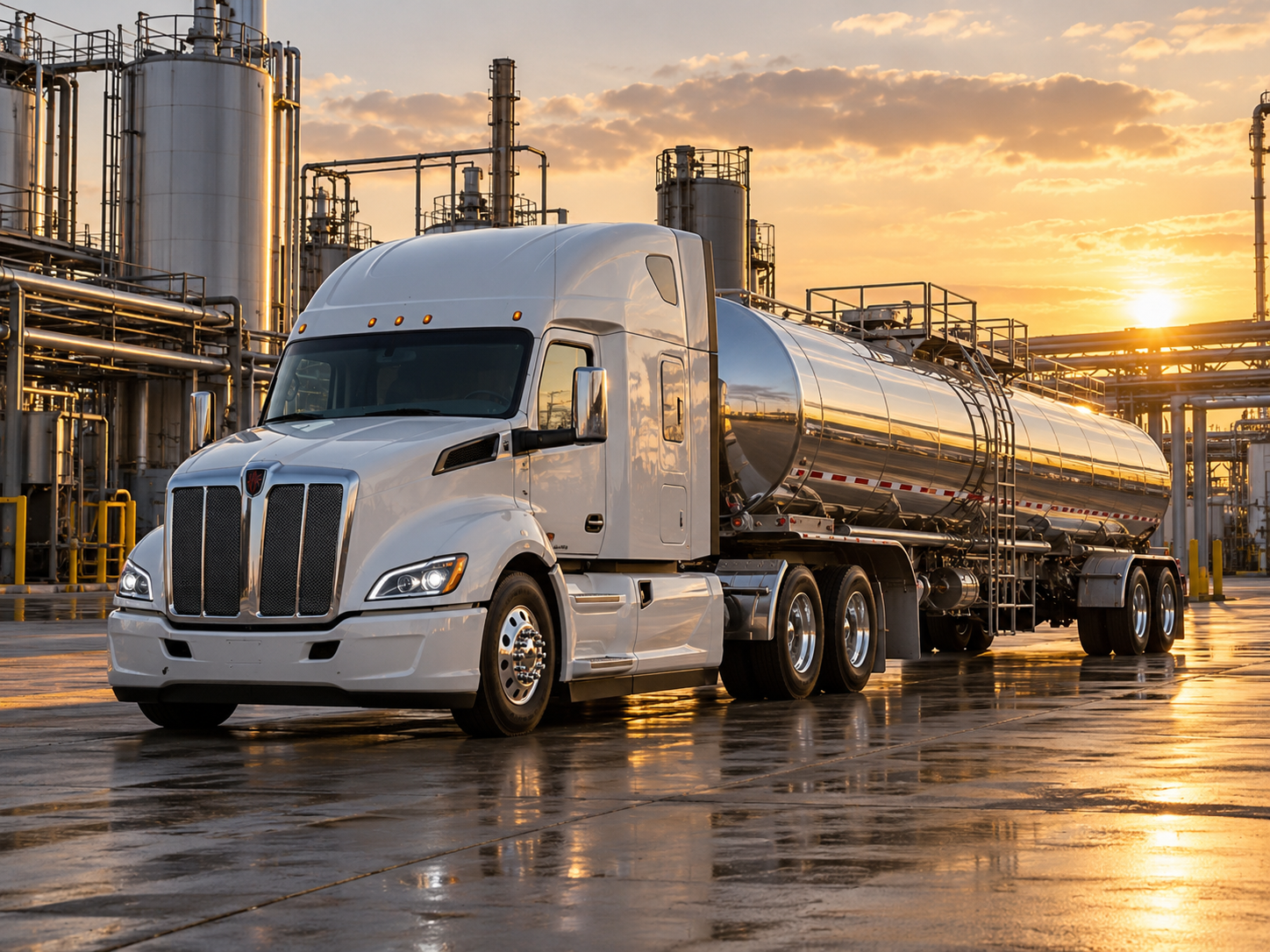
Liquid Tanker
- Best for
- Bulk liquids such as chemicals, food-grade liquids, fuels, oils and beverages, using product-compatible equipment.
- Typical tank volume
- Approximately 5,000–11,000 gallons across different products and configurations. Tank volume is not the allowable loaded quantity.
- Typical payload / capacity
- Approximately 40,000–48,000 lb; product density and legal weight can limit gallons before the tank is full.
Loading notes & quote checklist
Good to know
Food-grade, chemical and fuel equipment are not interchangeable. Confirm compatibility, cleaning history and any temperature or hazardous-material requirements.
Before requesting a quote
Commodity, density, gallons, temperature, hazardous status, food-grade requirements, pump/unloading setup and previous-load restrictions.
18
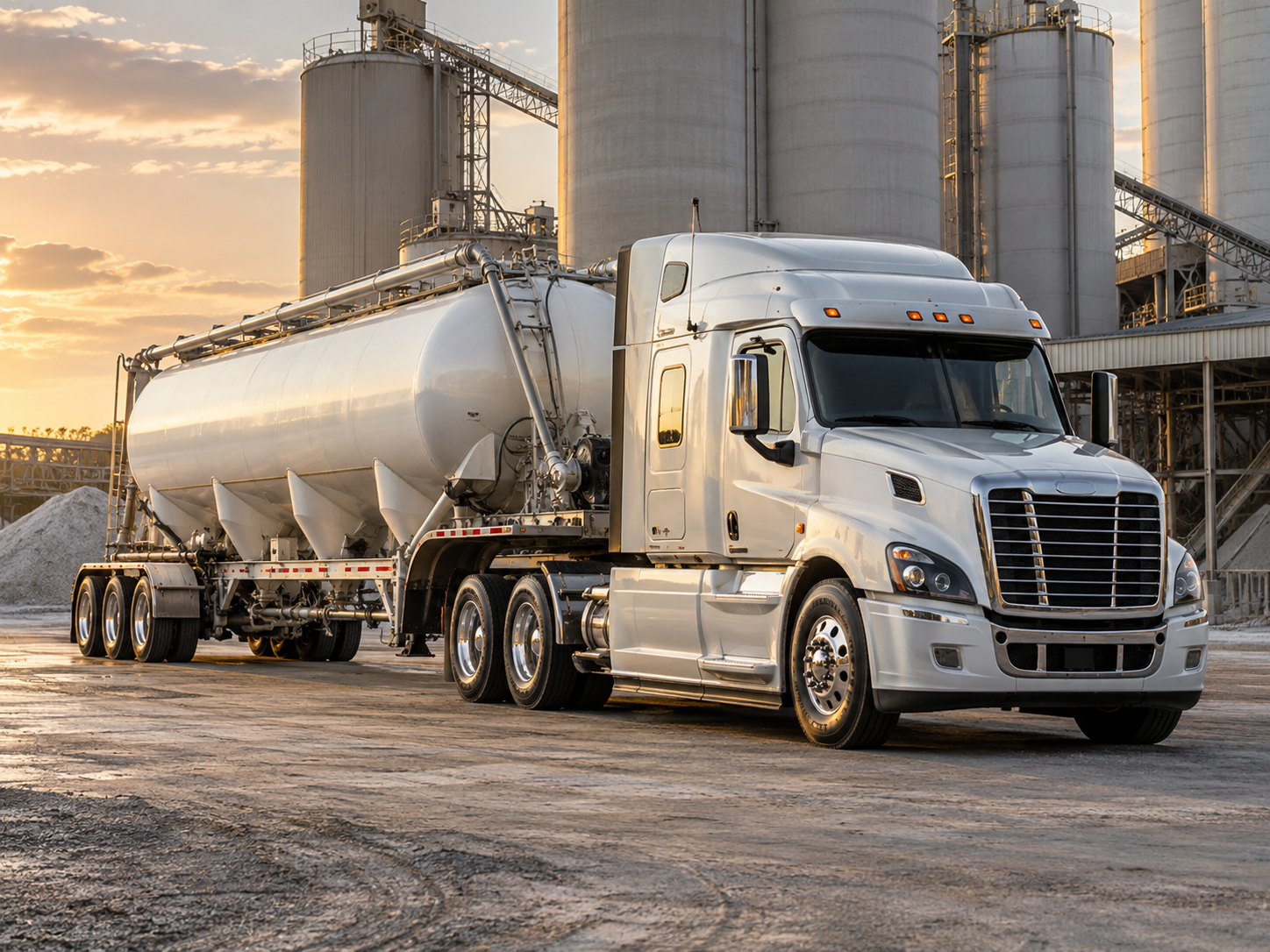
Pneumatic / Dry Bulk Tanker
- Best for
- Compatible dry bulk products such as cement, flour, plastic pellets, sand and lime, using appropriate dedicated or cleaned equipment.
- Capacity planning
- Tank volume varies; both product bulk density and available payload determine the quantity that can move.
- Typical payload / capacity
- Approximately 45,000–50,000 lb, subject to configuration and legal axle/gross weights.
Loading notes & quote checklist
Good to know
Unloads using compressed air. Food products and industrial materials have different equipment and contamination-control requirements.
Before requesting a quote
Commodity, bulk density, contamination restrictions, receiving silo, unloading setup and hose requirements.
19
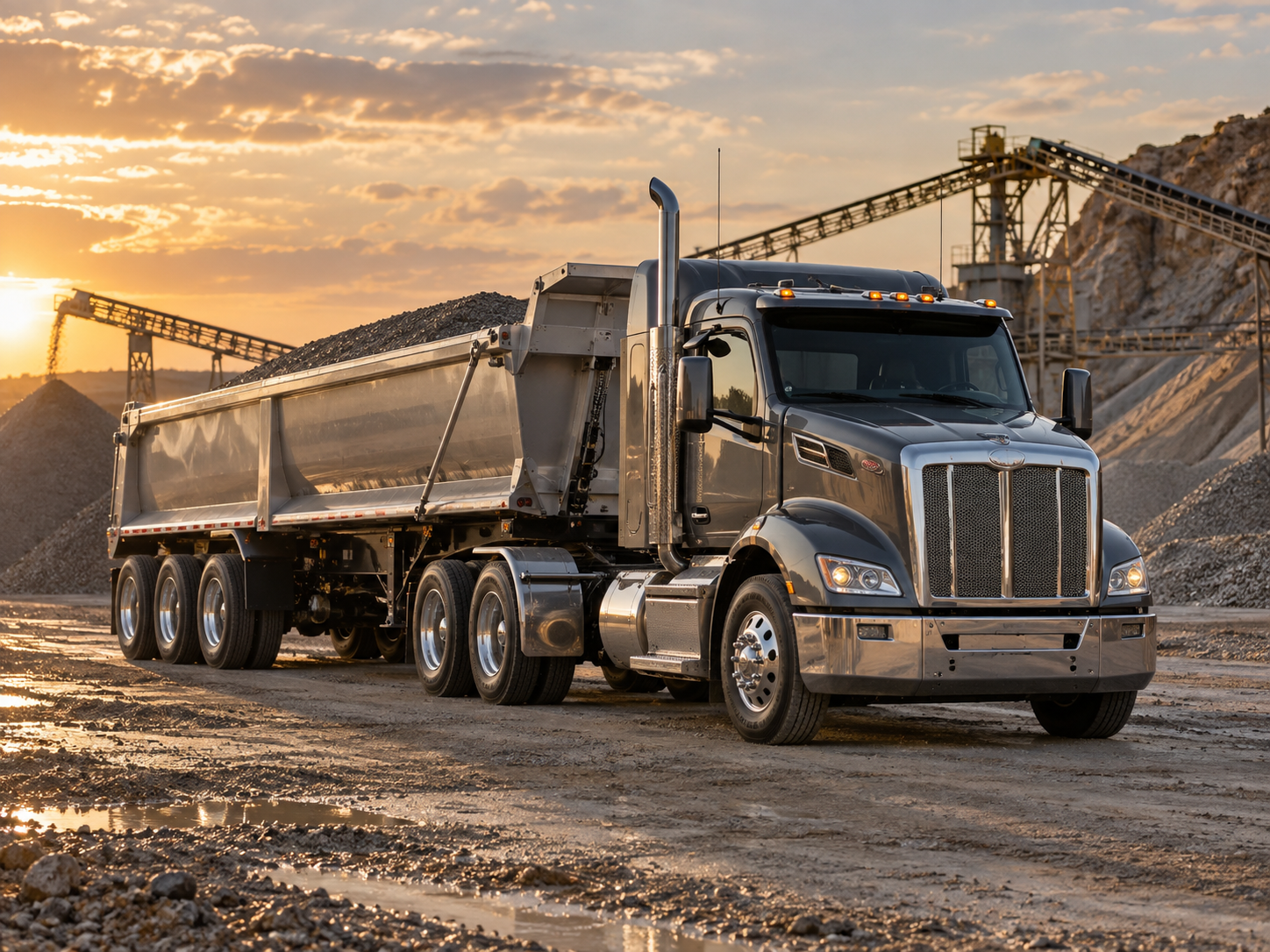
End Dump / Dump Trailer
- Best for
- Aggregate, scrap, demolition material, gravel, sand, grain and compatible bulk construction materials.
- Typical length
- Approximately 22'–40'; body volume and material compatibility vary.
- Typical payload / capacity
- Approximately 40,000–50,000 lb, subject to configuration and legal axle/gross weights.
Loading notes & quote checklist
Good to know
The body raises to discharge through the rear. Site suitability, stable ground and overhead clearance must be assessed before unloading.
Before requesting a quote
Commodity and density, loading method, unloading surface, overhead obstructions, site conditions and weight limits.
20
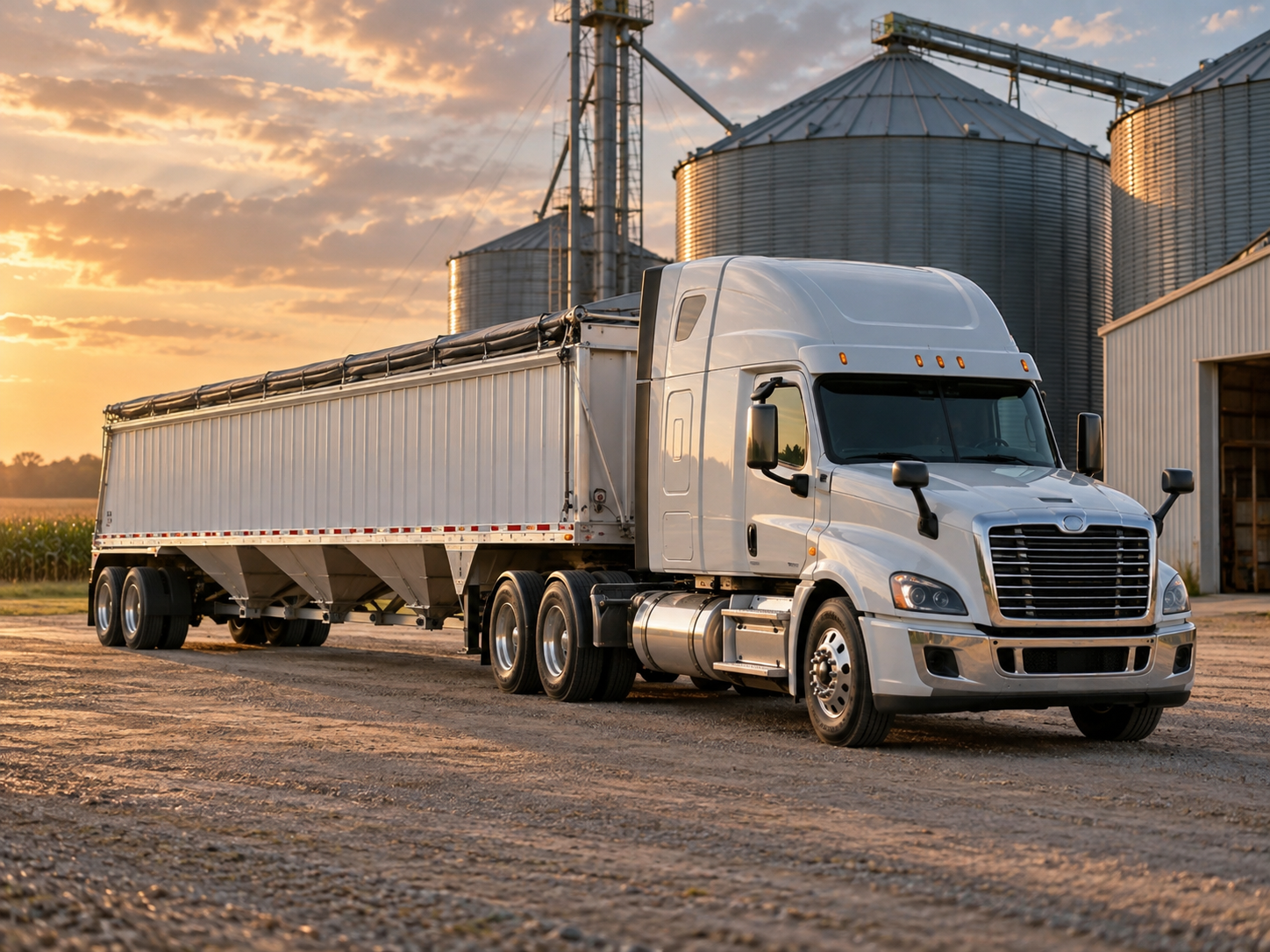
Hopper Bottom / Grain Trailer
- Best for
- Grain, corn, wheat, soybeans, suitable animal feed and agricultural bulk products.
- Typical length
- Approximately 40'–43'; hopper volume and outlet configuration vary.
- Typical payload / capacity
- Approximately 45,000–50,000 lb, subject to commodity density and legal axle/gross weights.
Loading notes & quote checklist
Good to know
Bottom doors discharge into a receiving pit, conveyor or other compatible system. Confirm the receiving setup and ground clearance.
Before requesting a quote
Commodity, density, quantity, food/feed requirements, previous loads and receiving pit or conveyor details.
Back to equipment categories ↑
Keep these distinctions in mind
U.S. freight planning reference
- Gross vehicle weight
- 80,000 lbGeneral federal Interstate benchmark for the complete vehicle and load, not cargo alone, which is why a trailer's payload sits well below it. Bridge-formula limits, exceptions and permits matter.
- Exterior width
- 102 in / 8'6"General National Network width benchmark—not interior cargo width. Freight wider than this is oversize and needs permits and a separate route check.
- Single / tandem axles
- 20,000 / 34,000 lbGeneral federal Interstate benchmarks. Weight distribution, axle spacing, the bridge formula and applicable exceptions also matter, so where freight sits on the trailer can matter as much as its total weight.
- Loaded vehicle height
- State & route specificThere is no federal height limit. States set their own, and FHWA reports most range from 13'6" to 14', with lower limits on particular roads. Plan a multi-state move around 13'6"; actual bridge and route clearance can be lower, and permits are state-issued.
- Semitrailer length
- At least 48 ft allowedOn the National Network and reasonable access routes, states must allow a semitrailer of at least 48 ft in a tractor-semitrailer and may not cap the combination's overall length. The common 53' trailer runs under state length rules, which can also limit kingpin-to-rear-axle distance.
- 53' dry van payload
- 42,000–45,000 lbTypical planning range. Payload depends on the tractor, trailer, fuel and axle weights, so a load near the top of it needs the actual equipment confirmed.
- 53' reefer payload
- 42,000–44,000 lbTypical planning range. The refrigeration unit and the trailer's configuration take part of it, so a heavy reefer load needs the actual unit confirmed.
- Flatbed payload
- 45,000–48,000 lbTypical planning range. A heavy piece on a small footprint can exceed a deck's rating before the load reaches this weight, so say how the weight sits on the deck.
- Standard pallet reference
- 48 × 40 inIn a 53' dry van, about 26 floor positions loaded straight or 30 turned, not stacked. The actual pallet size, overhang, freight shape, stackability, load bars, wheel wells, reefer walls, bulkheads, the door opening, the loading method and weight distribution can all change that count.Trailer Capacity Calculator →Load Planner →
Equipment dimensions and payloads are typical planning figures, not guaranteed limits. Actual capacity depends on the tractor, trailer, axle configuration, commodity, route, state regulations, and permitting requirements. We confirm equipment requirements with the carrier before booking through UCW Logistics.
Rule reference: FHWA vehicle size and weight guidance (opens in a new tab). Confirm current state and route requirements for the actual shipment.
Your freight determines the equipment
Equipment names are only the starting point. Bring the loading conditions, product requirements and actual transport measurements into the plan.
Vehicles
Confirm each vehicle’s actual transport size, weight, clearance and loading condition.
Confirm carrier positions, ramps or winch, axle loads and vehicle securement. A rectangular footprint does not establish vehicle positions.
Plan vehiclesMachinery / Equipment
Confirm transport dimensions with attachments secured, center of gravity, point loads and tiedown points.
Confirm ramp angle and rating, crane or forklift capacity at both ends, deck height and route clearance.
Plan machinery / equipmentLong / Bundled Freight
Confirm support points, dunnage, securement and usable deck segments; overall trailer length alone is not enough.
Overhang, coils, irregular shapes and route permits need carrier review.
Plan long / bundled freightDrums / Totes
Use the outside dimensions and gross weight of each secured shipping unit, including its pallet.
Confirm packaging, upright orientation, spill containment, compatibility and any hazardous-material requirements. Packaged liquid is not bulk tanker cargo.
Plan drums / totesLiquid Bulk
Confirm tank material, prior cargo / wash requirements, compartments, outage and product compatibility.
Confirm pump, hose, fittings and receiving capacity. Volume and weight screening do not establish tank suitability.
Plan liquid bulkDry Bulk
Confirm bulk density, moisture sensitivity, contamination controls and compatible trailer construction.
Match discharge equipment to the receiver: pneumatic connection / silo, gravity pit, or a suitable dump site.
Plan dry bulkTrailer Move / Power Only
Confirm supplied trailer ownership / release, inspection, tires, brakes, lighting and coupling compatibility.
Confirm trailer gross weight, axle loading, tractor rating, insurance / interchange terms and pickup access. Cargo capacity belongs to the supplied trailer.
Plan trailer move / power onlyOther / Special Cargo
A specialist must identify suitable equipment for this cargo; no automatic fit is claimed.
Describe containers, boats, coils, live cargo or other unusual handling, plus lifting points and supporting drawings where available.
Plan other / special cargoFrom research to a shipping plan
What to send for an accurate quote
Send the details you have. If something important is missing, we'll tell you what to confirm.
Pickup & delivery
- Pickup and delivery addresses or ZIP codes
- Pickup date and delivery requirements
- Facility hours and appointment windows
- Residential or limited-access locations
- Team or expedited service
Freight
- Commodity and total weight
- Piece or pallet count; length × width × height
- Stackability and packaging
- Hazmat status
- Declared value when relevant
Equipment & handling
- Equipment preference, if you have one
- Loading direction: rear, side or overhead
- Dock, forklift or crane at each end
- Ground-level or inside pickup or delivery
- Liftgate, pallet jack or driver assist
- Tarps, straps, chains and edge protectors
- Temperature requirements
- Oversize dimensions and special instructions
Why one costs more than another
Most freight comes down to a choice between two kinds of equipment, and the price gap between them usually has the same few causes: how much of that equipment is available on the lane, what it costs to run, how much handling the load needs, and how much of the truck your freight actually uses.
Reefer versus dry van
On the same lane a reefer usually prices higher. The trailer costs more to buy and run, the refrigeration unit burns fuel for the whole trip, and there are fewer reefers available than dry vans. If your freight has no temperature requirement, including protection from freezing in winter, a dry van is usually the better value.
Flatbed versus dry van
An open deck can sound like it should cost less, since there is no trailer body. It often costs more: there are fewer flatbeds than dry vans, and the driver secures every load with straps or chains, and tarps it when it has to stay dry. That work is part of the rate.
Cargo van versus box truck
This one is usually decided by weight, not space. A cargo van carries about 2,500–3,500 lb of usable payload and a box truck roughly 9,180–13,000 lb, so freight heavier than the van can take, or too big for its doors and wheel wells, moves up to a box truck.
Box truck versus a full 53-foot van
If the freight fits a box truck, a box truck is often the less expensive way to move it, though the lane, the distance and what is available decide that. Paying for 53 feet of trailer you will not fill is a common way to overspend, so send the real dimensions and weight and we will check both.
One box truck versus two vans
When freight sits near the line, splitting it across two cargo vans can cost more than putting it all on one box truck. Working out which way is actually cheaper is our job, not yours — send us the weights and we will price it both ways.
When you ship moves the price too
Rates often rise at the end of a month or a quarter, when many shippers are moving freight at once, and around holidays. Winter weather can tighten capacity and slow transit on any equipment.
You cannot control any of that, but it is fairly predictable. If your dates have a day or two of give in them, tell us — moving a pickup off the last day of the month can make a real difference to the rate.
Have a shipment to price? Request a Freight Quote →
About this reference
Adapted from Jay Rock's supplied equipment guide. Dimensions and payload ranges are general planning estimates, not model-specific specifications. Federal size and weight reference notes were checked against FHWA guidance and 23 CFR Part 658; manufacturer links illustrate why actual interior dimensions vary.
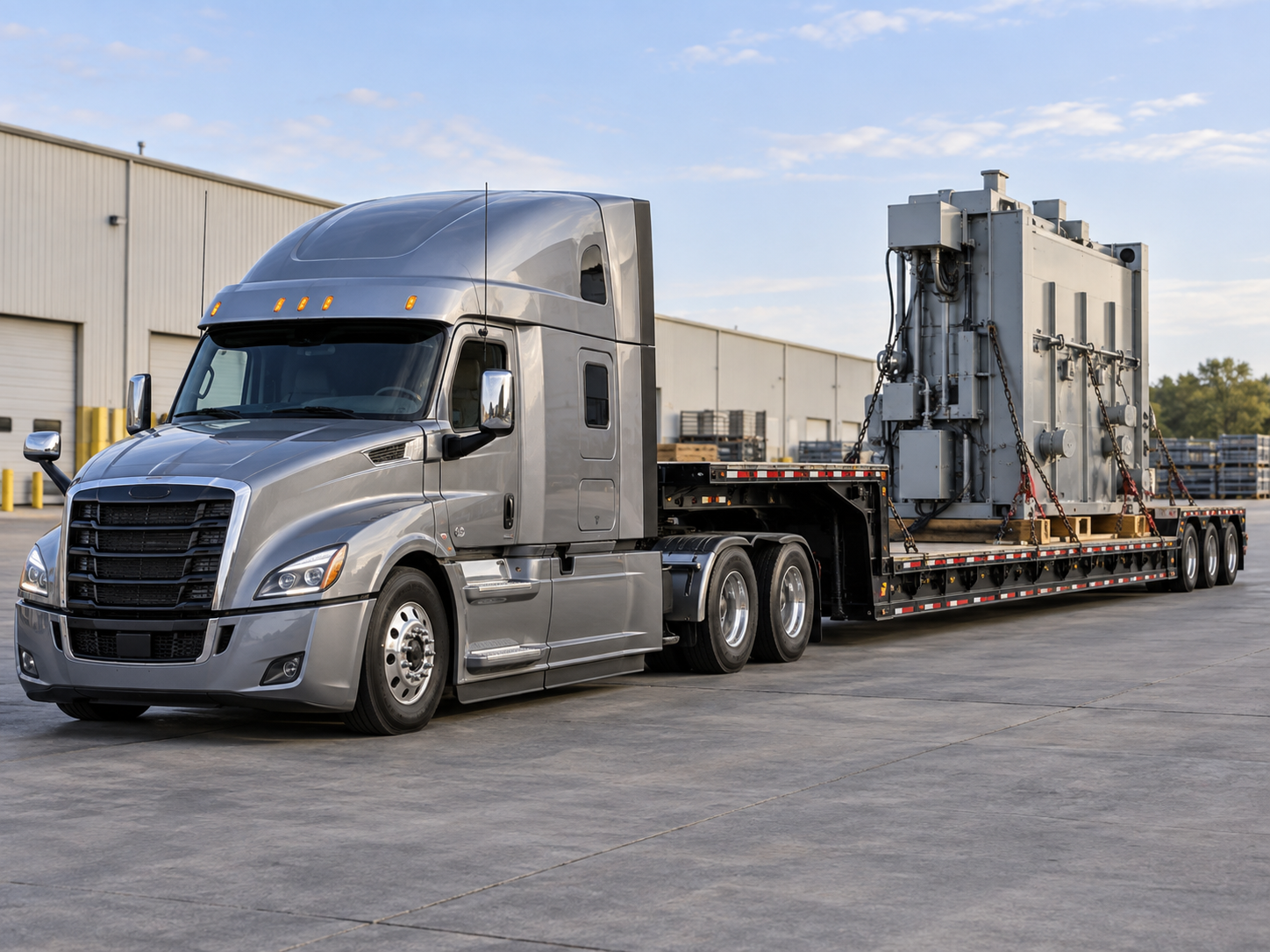
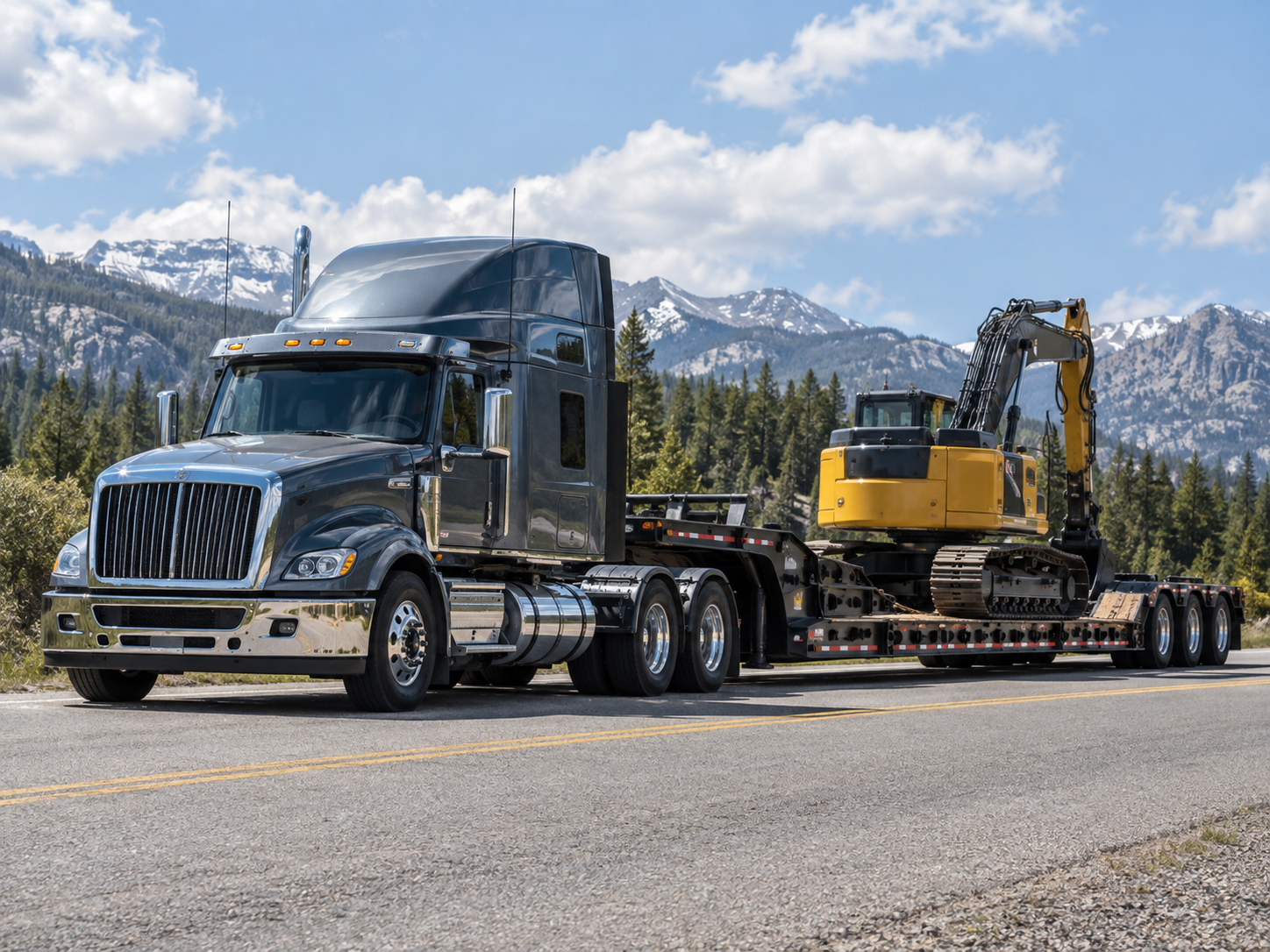
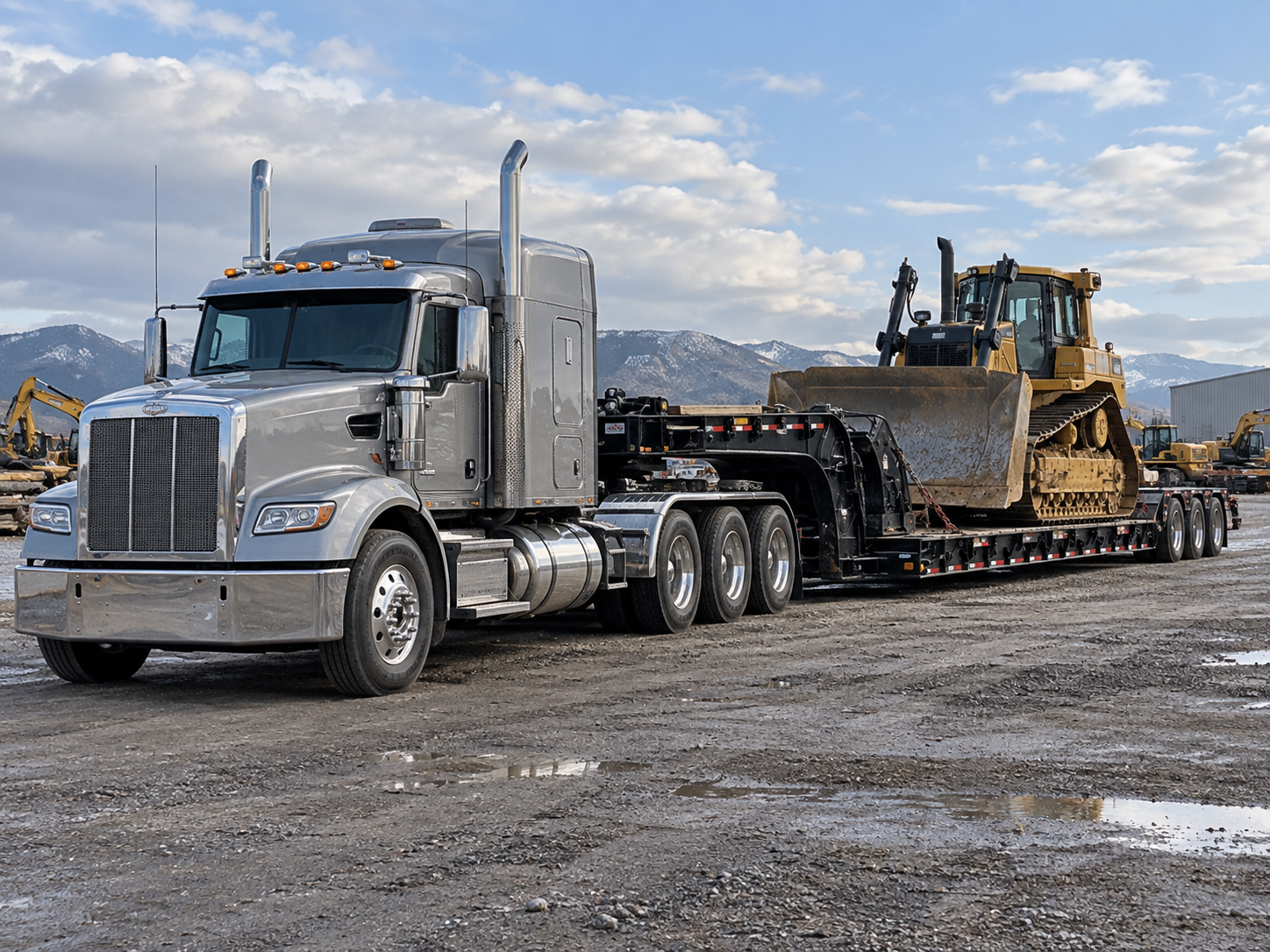
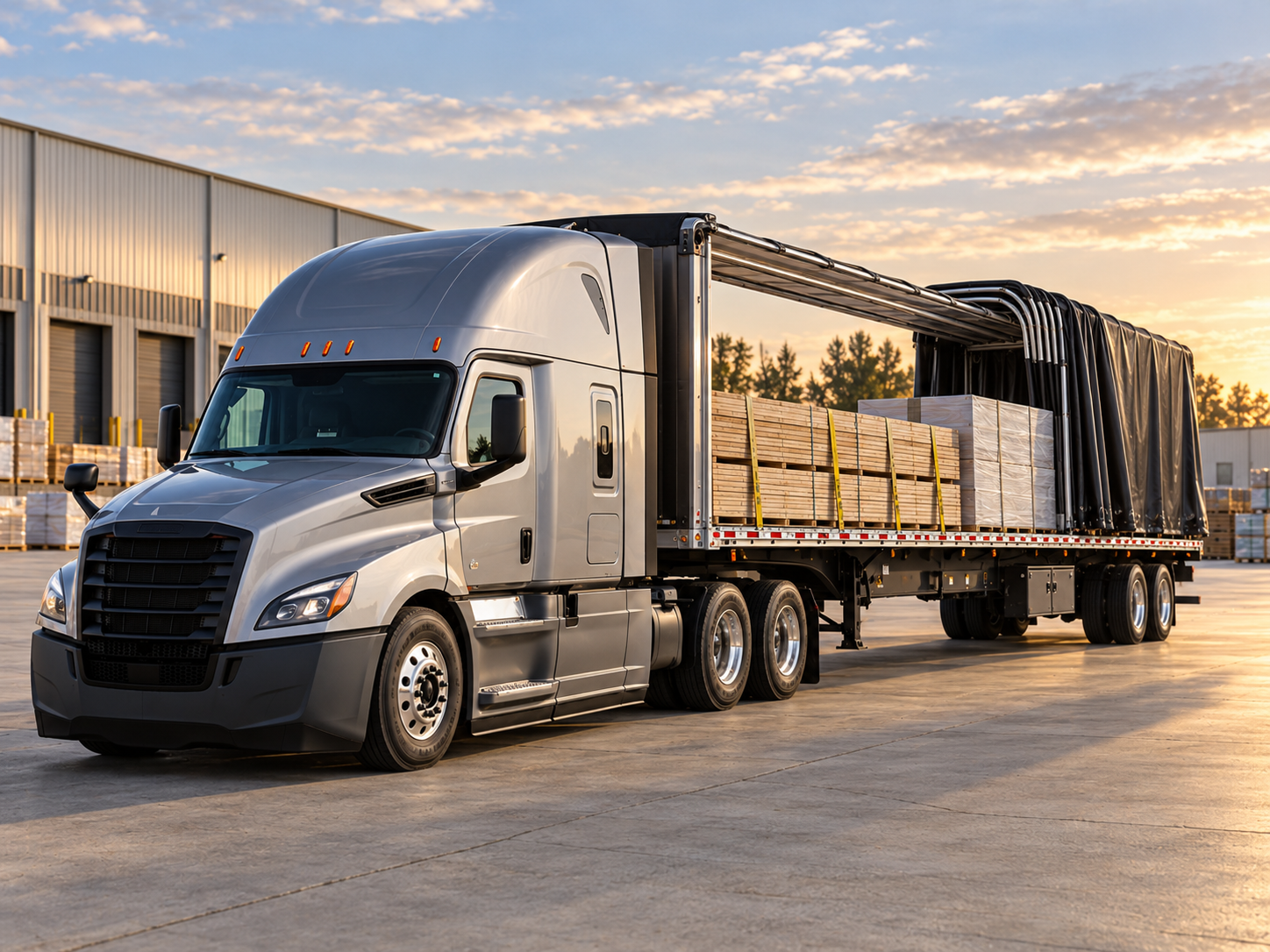
Equipment images are illustrative examples, not photos of a dedicated UCW fleet or proof of exact dimensions, payload or loading requirements.