
The short answer
A linear foot rule is a carrier tariff term that changes how a shipment is rated once it takes up too much trailer length for its weight. The threshold is the carrier’s, not the industry’s.
Do these first
Find out how much usable trailer length your freight actually occupies.
- Use finished dimensions — include overhang and non-stackable space.
- Check the carrier tariff — thresholds and rating methods differ.
- Compare LTL with partial options — long freight may fit another service better.
Why linear feet matter
LTL carriers make money by combining multiple shipments in one trailer.
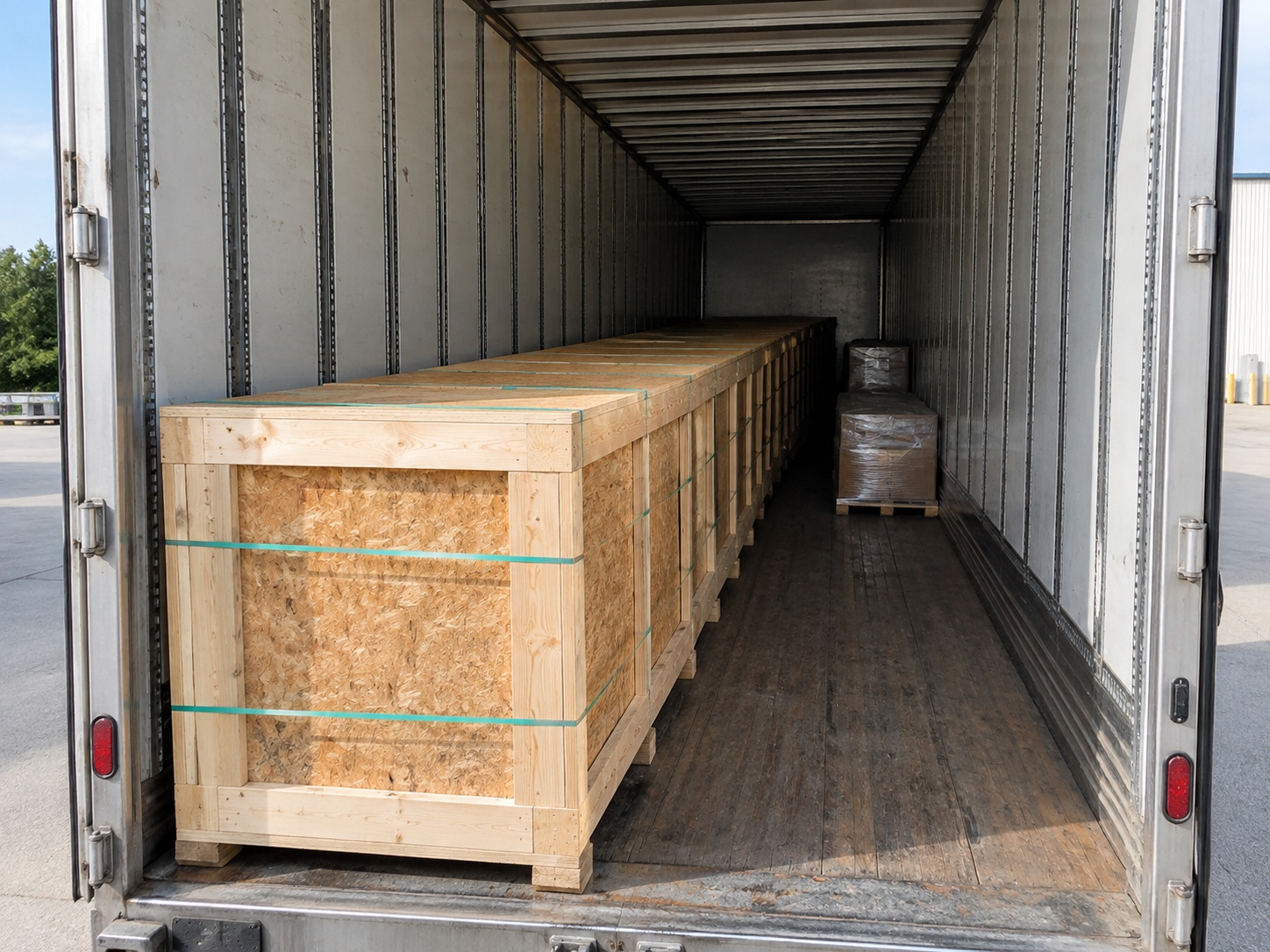
A shipment that occupies a long uninterrupted section of floor can prevent the carrier from loading enough other freight around it.
That can trigger a different minimum-charge or rating rule.
Use the linear feet tool to estimate occupied trailer length.
There is no universal threshold
Carrier tariffs differ.
For example, Dohrn's 2026 tariff contains its own linear-foot rule and specific thresholds and calculated minimum weights. Other carriers publish different values and methods.
That is evidence of the key point: the threshold is a carrier tariff term, not an industry constant.
Do not assume
- Every carrier uses the same number of linear feet.
- A pallet count automatically tells you linear feet.
- The carrier must rotate or pinwheel pallets to reduce your occupied length.
What changes when the rule applies
Depending on the tariff, the carrier may apply:
- Minimum billed weight
- Minimum charge
- Volume or capacity rating
- Different pricing basis
The exact method comes from the carrier tariff or agreement.
Sources
Not sure whether your LTL is too long for normal pricing?
Send the handling-unit dimensions, count and carrier so we can check the space before tender.
Request a Freight Quote