
The short answer
LTL freight is picked up locally, taken to an origin terminal, moved between terminals on a linehaul, then delivered from a destination terminal. It is handled at every one of those points.
What happens, step by step
- PickupA local driver collects your freight with other shipments.
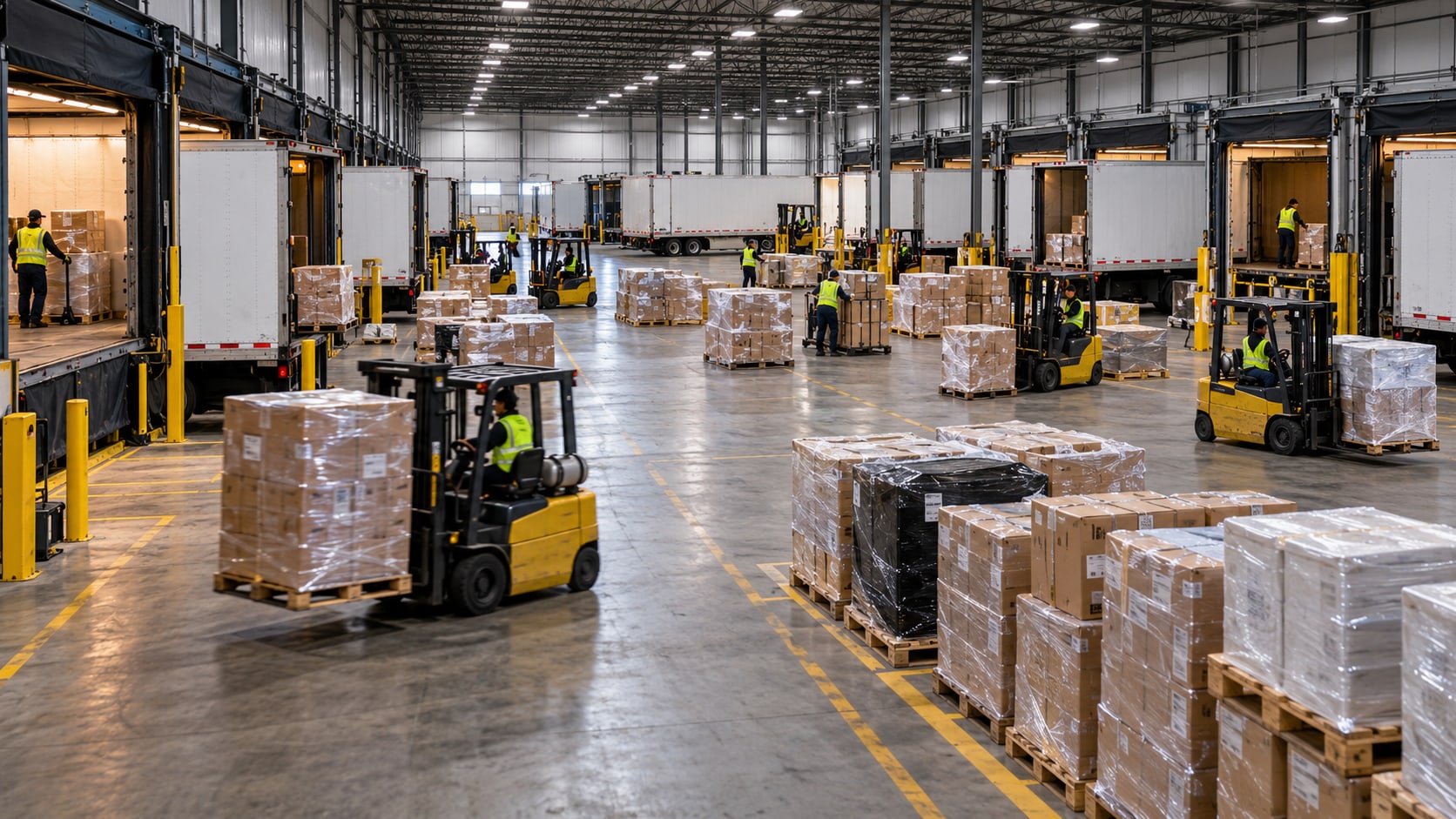
- Origin terminalFreight is unloaded, sorted and assigned to its next movement.
- LinehaulConsolidated freight moves between service centers or hubs.
- Destination terminalYour shipment is unloaded and staged for local delivery.
- DeliveryA local driver takes it to the consignee.
Why carriers use terminals
Terminals let carriers combine many small shipments into fuller linehaul trailers.
Estes describes LTL as a hub-and-spoke network where local service centers handle pickup and delivery and larger hubs consolidate freight for longer movements.
That network is what makes LTL economical for shipments that do not need a dedicated trailer.
Why the freight gets handled more
Every transfer can mean:
- Unload
- Sort
- Stage
- Reload
That is why packaging requirements are different from a direct full-truckload move.
See why LTL freight gets damaged.
Important to know
- "In transit" can include freight sitting at a terminal.
- One shipment can move on several trailers.
- Terminal transfers are normal LTL operations, not automatically a service problem.
Sources
Want to know whether LTL is the right network for your shipment?
Send the freight size, timing and delivery requirements and we will compare the service options.
Request a Freight Quote