
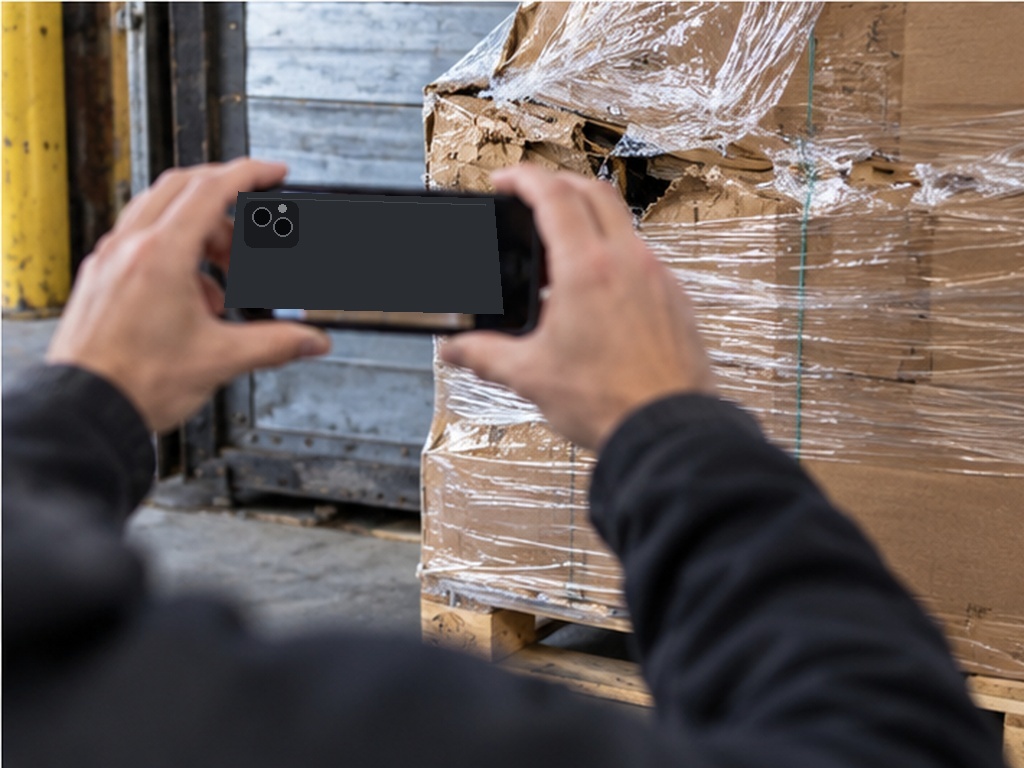
Take these photos before anything moves
- Wide photo of the entire pallet or damaged piece
- Wide photo showing where the freight sits in the trailer or receiving area
- Photo of the shipping label or identifying label
- Photo of the pallet base and all four sides when possible
- Photo of the trailer interior around the damaged freight
- Photo of the trailer doors and seal before the seal is discarded, when applicable
- Medium photo showing the damaged area in context
- Close photo of each crushed, torn, punctured, wet or shifted area
- Photo of broken pallet boards or failed packaging
- Photo of exposed product if packaging has opened
- Photo of any nearby freight that may have contacted the damaged shipment
- Photo of visible wet floors, walls or ceiling if water damage is involved
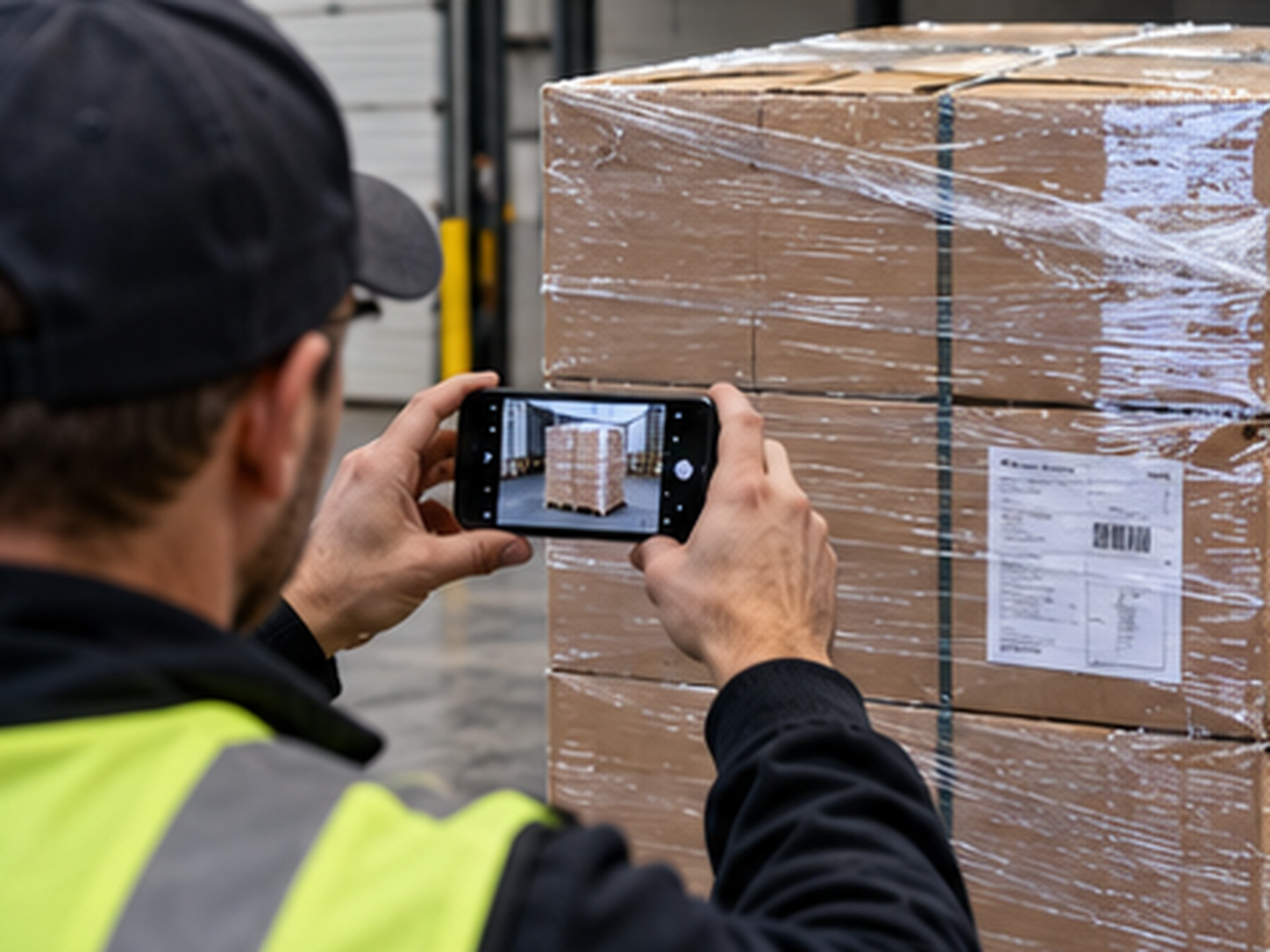
Use a wide-to-close sequence
Take the photos in this order:
- Whole shipment. Show the entire pallet, crate or piece.
- Where it was. Show the freight in the trailer or on the dock.
- Identification. Capture the label, shipment number or other identifying information.
- Packaging. Show wrap, pallet, carton and crate condition.
- Damage area. Move closer.
- Damage detail. Take close photos that clearly show crushing, puncture, water, tearing or product exposure.
That sequence makes it easier for someone who was not at the dock to understand what they are looking at.
Do not move the freight first if you can avoid it
Once a pallet is moved, the scene changes.
You may lose useful information about:
- What the freight was touching
- Whether it had shifted
- Whether another pallet contacted it
- Whether the trailer floor was wet
- Where broken wood or packaging was located
- How the load was positioned
If safety or dock operations require the freight to move, photograph what you can first.
The first five minutes matter
Do not spend those minutes trying to make the freight look cleaner. Document it as received.
Get the label in frame
A perfect close-up of a crushed carton is less useful if nobody can tell which shipment it belongs to.
Take at least one photo that clearly connects the damage to the shipment.
That may be:
- Shipping label
- Pallet label
- Purchase-order label
- BOL reference
- Handling-unit label
Do not rely on a label photo alone. Pair it with wide photos of the actual freight.
Photograph the pallet too
Damage can begin underneath the product.
Look for:
- Broken deck boards
- Split stringers
- Collapsed pallet blocks
- Product overhang
- Cartons crushed against the pallet edge
- Shifted or leaning stacks
The truck and pallet loading guide covers pallet-condition checks in more detail.
If the wrap is torn, show the tear and what is behind it
Take:
- One photo showing the entire wrapped pallet
- One photo showing the torn area
- One closer photo showing exposed cartons or product
- One photo showing whether the load shifted inside the wrap
Do not remove all the wrap just to make the photo easier unless the freight has to be opened for inspection.
If the freight is wet
Photograph:
- Wet or stained cartons
- The lowest affected cartons
- Pallet condition
- Floor around the freight
- Nearby trailer wall or roof area if visibly wet
- Any dripping or standing water that is visible
Do not assume where the water came from. Photograph what you can see.
Write these details down while you are looking at it
Damage notes
- Date and local time
- Facility
- Shipment or load number
- PO or BOL number
- Number of damaged pallets or pieces
- Number of missing pieces if any
- Which side or area of the pallet is damaged
- Packaging condition
- Product condition that is visible without speculation
- Trailer condition that is visible
- Seal number if applicable
- Names of people who inspected the freight
- What was written on the delivery receipt
What gets missed most often
People often forget:
- The wide shot
- The label
- The pallet underneath
- The trailer interior
- The seal
- The number of affected pieces
- A photo showing scale
- The delivery-receipt notation
A hundred close-up photos do not replace one good wide photo that explains the scene.
What happens next?
Document first. Then contact the broker or the party handling the shipment.
Do not use this page to decide claim deadlines, carrier liability or legal recovery. Those can depend on the carrier, contract, commodity and circumstances.
For delivery shortages or damage notation, use the OS&D checklist and delivery checklist.
Looking at damaged freight right now?
Take the wide, label, pallet, trailer and close-detail photos before the scene changes, then send the shipment details and documentation to your broker.
Request a Freight Quote