
Multi-stop means one truck, more than two points. Several pickups consolidated into one load, several deliveries off one load, or both.
It is normally cheaper than running separate trucks, because you pay one linehaul plus a charge per additional stop rather than a full rate each time.
Stop order is a loading decision, not a routing one
This is the whole thing.
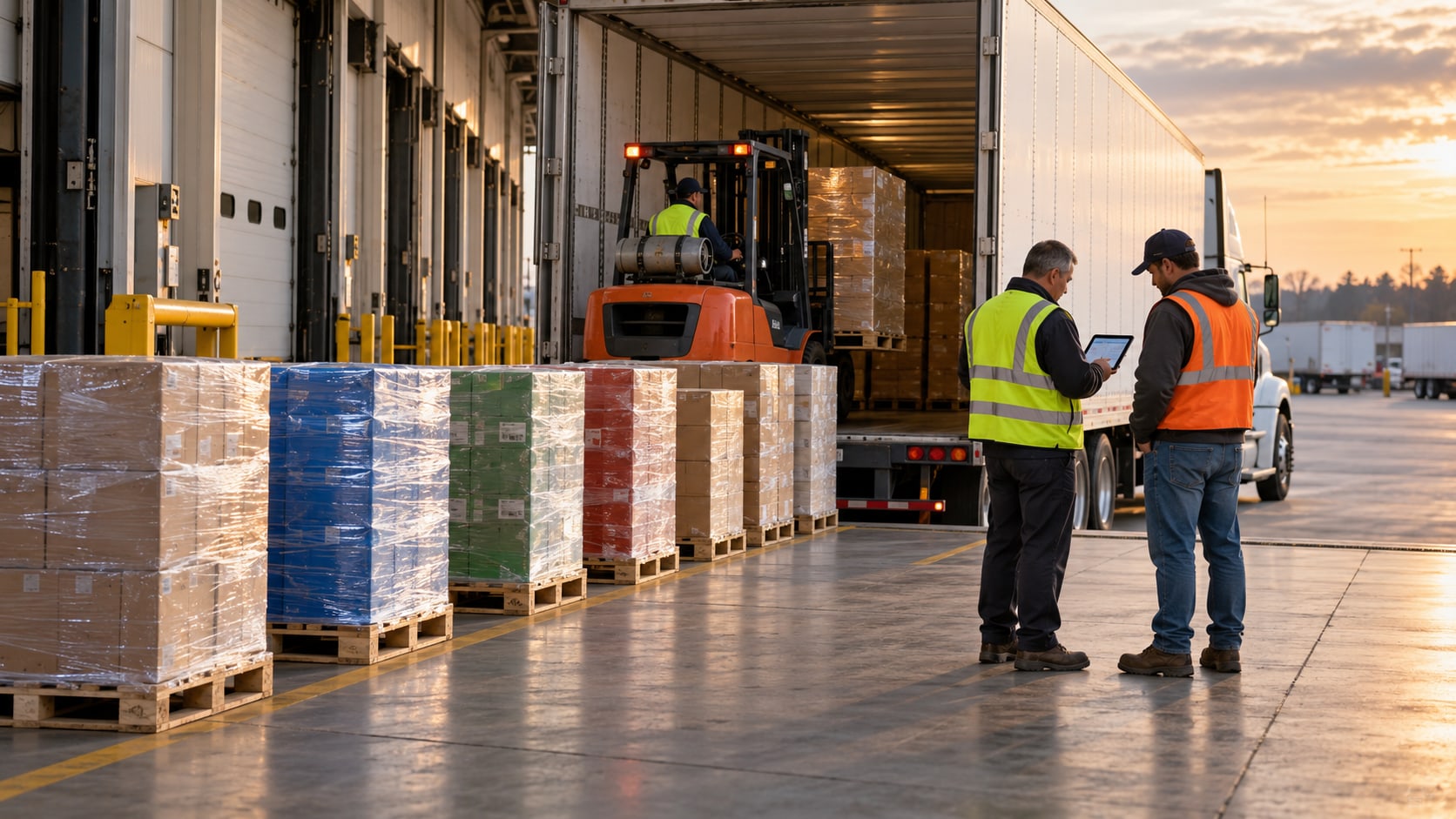
Freight comes off a trailer in the reverse order it went on. So the first delivery must be loaded last, nearest the doors. Get that wrong and the driver has to unload freight that is not due yet, on a dock that is not expecting it, to reach the freight that is.
That means the stop sequence has to be settled before the forklift starts, not while the truck is moving. Once the trailer is loaded, changing the delivery order can mean restacking the whole load.
The loading guide covers how this looks in the trailer.
Why appointments compound
On a single-stop load, a late appointment affects one delivery. On a multi-stop load, it affects every stop after it.
If stop one holds the driver three hours, stops two and three do not simply happen three hours later — they may miss their receiving windows entirely and roll to the next day. A single detention event on a multi-stop load can turn into a layover.
This is why multi-stop loads need more front-loading of information than any other service type. Every stop's hours, appointment rules and dock situation matter, because the whole sequence depends on each one going roughly to plan.
What each stop actually costs
You are normally charged a stop-off fee for each additional pickup or delivery beyond the first and last. That covers the driver's time and the detour.
Where multi-stop gets expensive is not the stop fee. It is the knock-on effects: waiting at one stop, missing a window at the next, and needing an extra day. Those show up as detention, layover and sometimes a redelivery.
When multi-stop works well
- Several deliveries in the same region, in a sensible geographic order
- Receivers with wide or flexible receiving hours
- Freight that is straightforward to segregate by stop
- Stops that are genuinely on the way rather than backtracking
- Loads where you control the schedule at most of the stops
When it does not
- Stops scattered in different directions, where the detour costs more than a second truck
- Multiple receivers with narrow, non-negotiable appointment windows
- Freight that cannot be segregated cleanly, so every stop means digging
- Any stop with a history of long waits
- Tight overall deadlines, since there is no slack to absorb a single delay
What to send
Details a multi-stop load needs up front
- Every address, in the order you want them served
- What is going to each stop, and the pallet count for each
- Receiving hours at every stop
- Appointment requirements, and who books them
- Dock, forklift or liftgate at each stop
- A contact name and number for each location
- Whether the stop order can change if routing suggests better
That last one is worth answering honestly. Sometimes the geographically sensible order is not the one you listed, and knowing whether the stops can be reordered saves a conversation mid-load.
Planning a multi-stop run?
Send the stops in order with the freight for each and the receiving hours. We will tell you whether the sequence works and what it should cost.
Request a Freight Quote