The short answer
The carrier transports the freight, but where standard unloading ends and who performs additional handling depend on the carrier's rules and the service booked.
Do these first
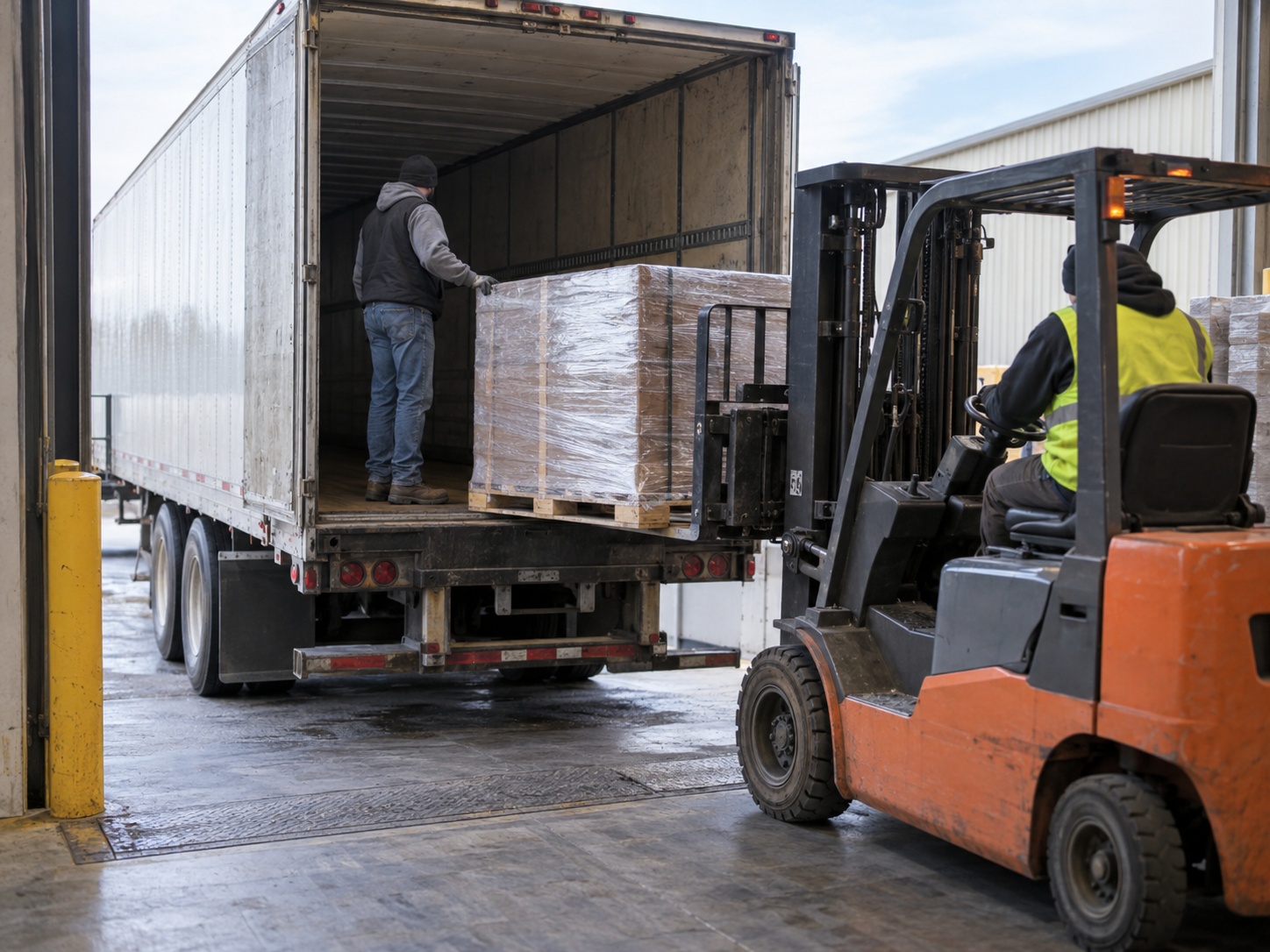
Tell us how the freight will physically leave the truck before booking.
- Confirm the dock — usable dock, ramp or ground-level only.
- Confirm unloading equipment — forklift, pallet jack, crane or liftgate.
- Describe final placement — truck-side, threshold or farther inside.
Who is responsible for loading and unloading freight?
There is no single answer for every shipment. Responsibility depends on the service, the carrier's terms, the facility, the freight's size and weight, the equipment and what was agreed before pickup or delivery. In many full-truckload moves the shipper loads at origin and the receiver unloads at destination, while the driver handles the truck and the securement duties that fall to the carrier. LTL and specialised services can work differently, especially for heavy or bulky pieces, liftgate service, inside delivery, driver assist and lumper operations. Confirm the loading and unloading plan before the truck is dispatched.
Hazardous materials are different again: do not generalise from ordinary freight, because regulated loading and securement duties can attach to whoever performs those functions.
Standard delivery has a defined handoff point
TForce Freight's general pickup-and-delivery rule says freight is ordinarily unloaded immediately adjacent to the delivery vehicle unless another service applies. Its tariff separately covers inside delivery, extra labor and special equipment.
Heavy or unusual freight changes the plan
Carrier tariffs can assign more loading or unloading responsibility to the shipper or consignee for heavy, long or bulky freight. Those limits are carrier-specific.
The carrier is normally responsible for
- Moving the freight between origin and destination
- Bringing it to the point of delivery
- Releasing it to whoever signs for it
The receiver is normally responsible for
- Unloading the freight from the trailer
- Supplying the dock, forklift or people to do it
- Any handling past the point of delivery
Important to know
- Standard delivery does not mean room-of-choice delivery.
- Special equipment is not automatically carried on the truck.
- A liftgate and inside delivery solve different problems.
What to tell us
- Piece or pallet count
- Heaviest handling-unit weight
- Finished dimensions
- Dock or ground-level delivery
- Forklift availability
- Liftgate need
- Inside placement need
- Crane or rigging requirement
Do not assume
- Every driver unloads every shipment.
- Driver assist means the carrier provides a forklift or crane.
- Every carrier uses the same unloading limits.
Sources
Tell us how the freight will be unloaded
Include the dock, equipment and final-placement requirements before booking so the correct service is requested.
Request a Freight Quote