
Machinery shipping
How to Ship Machinery and Equipment
Enter the machine’s transport dimensions, its weight and how it loads — driven on, or lifted by crane or forklift. The Load Planner compares it against the open-deck and specialized equipment in our library.
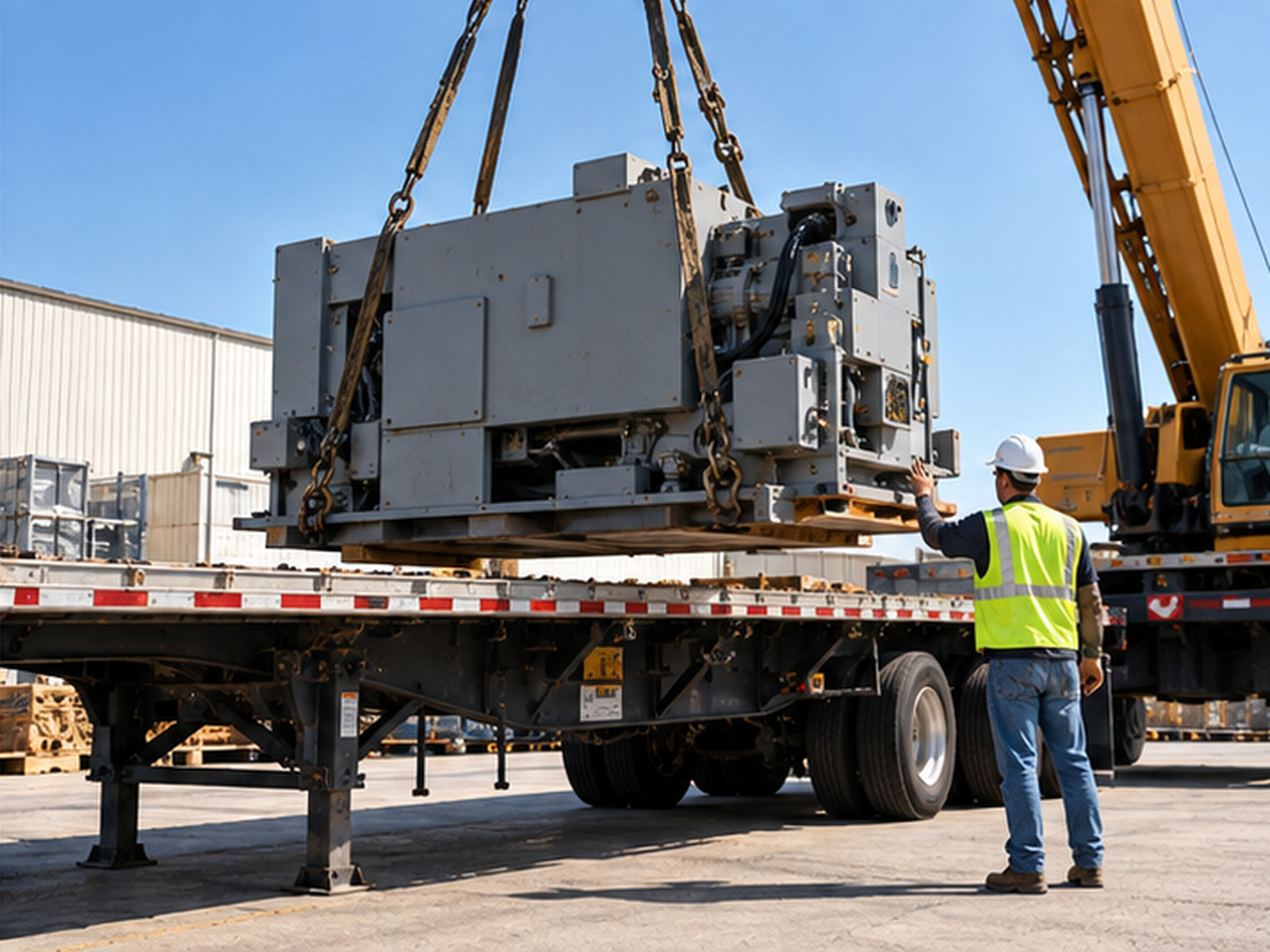
Machinery details
Freight Command Center Freight load report
Jay Rock Freight Broker · UCW Logistics 520-394-7400 · jrock@ucwlogistics.com FreightCommandCenter.com
Your load
Correct anything in the shipment and rebuild the answer. Nothing else you entered is lost.
Use this load
The measurement behind the answer: the shipment as FCC read it, every check, every option in full and why some were ruled out.
What was checked
Everything the planner could settle from what you entered is marked as checked. Everything it could not is listed as requiring confirmation rather than assumed, and the two are never mixed.
Space used
A possible arrangement, not an instruction. It shows that the freight can be placed inside the published floor dimensions; the driver and carrier decide the actual load order, weight distribution and securement.
Equipment fit details
Every trailer in the library measured against this shipment, and what each one said about the freight physically. These are fit answers, not a second set of recommendations.
Requires confirmation
Where a figure is marked as requiring confirmation, it is because this site does not publish that measurement for that equipment -- most often the rear-door opening, which is a different measurement from the interior width.
Recommended planning fit, based on the information entered and the equipment figures this site publishes. Actual equipment specifications vary. Final loading, weight distribution, securement and legal compliance remain subject to the carrier, the driver and the actual equipment.
Your stops are already in it. Nothing you do in here changes the shipment above.
Request a quote
Request received
Thank you. Your quote request is in.
Your reference is . Keep it for any follow-up.
This is a quote request, not a confirmed booking. We’ll review it and follow up using the contact details you provided.
How machinery shipping is planned
Measure the machine the way it will travel: with buckets, booms, attachments and guards secured in transport position. That is the size the trailer carries, and it can be very different from the brochure figure. Measured dimensions beat manufacturer figures, and the planner keeps the two apart.
The loading method narrows the equipment. A self-propelled machine can often drive on over ramps or a detachable gooseneck; others need a crane or forklift at both ends. Ground clearance, ramp angle and deck height all matter.
Tall, wide or heavy machines may exceed legal limits once loaded. The planner does not assume a machine is oversize — it screens your figures — and if the loaded dimensions may cross state limits, the State Permit Planner shows what each state on the route requires. For rigging, lifting points and weight distribution, see How do I ship machinery safely?
What we need to plan it
- What the machine is: type, make and model
- Length, width and height in transport position, attachments included
- Shipping weight, including attachments
- Whether the dimensions are measured or estimated
- Whether it runs and can drive on
- How it loads at pickup and unloads at delivery
- Ground clearance
- Whether it needs weather protection
Equipment to consider
Machinery usually rides on open-deck equipment. Deck height decides how tall a machine can be, and ramps or a detachable gooseneck let self-propelled machines drive on.
48' Flatbed
Steel, lumber, construction materials, pipe, machinery and general open-deck freight.
Step Deck / Drop Deck
Machinery, equipment and freight that is too tall for a standard flatbed.
RGN — Removable Gooseneck
Excavators, bulldozers, loaders, heavy machinery and drive-on equipment.
Double Drop / Lowboy
Tall machinery, construction equipment, industrial equipment and oversized freight.
Hotshot
Smaller machinery, construction materials, urgent equipment moves and lighter open-deck shipments.
The planner compares your shipment against every equipment type in our library that carries this kind of freight. The result it gives you, not this list, is the answer — and actual equipment specifications vary by carrier.
What affects the price
- Transport dimensions and weight, including any permits and escorts they require
- The equipment: flatbed, step deck, RGN or lowboy
- The loading method, and lifting equipment at each end
- Distance and the route
- Tarping or other protection
- Site access, lead time and current market conditions
Common mistakes
- Leaving off the bucket, boom or attachments.
- Giving the machine’s operating or rated weight instead of its shipping weight.
- Presenting estimated dimensions as measured ones.
- Not saying how the machine is loaded and unloaded.
- Assuming a machine is oversize, or assuming it is not, before the loaded dimensions are known.
Common questions
What trailer do I need to ship machinery?
It depends on the machine’s transport height, width and weight and on how it loads. The planner compares it against flatbeds, step decks, RGNs and lowboys in our library and shows which ones fit.
Does my machine need an oversize permit?
Only if the loaded dimensions or weight exceed a state’s limits on the route, which the machine and the trailer together decide. The State Permit Planner checks your figures state by state.
Can the machine be driven onto the trailer?
If it runs and the trailer has ramps or a detachable gooseneck, often yes. Ground clearance and ramp angle still have to be confirmed. Choose Drive / roll on as the loading method.
What if I only have the manufacturer’s dimensions?
Enter them. The planner treats them as planning figures, and the report asks for the actual transport measurements before anyone relies on them.
Should attachments ship separately?
Sometimes taking an attachment off brings a machine inside a lower trailer or a legal dimension. Add a removed attachment as its own freight item so both are planned.
Related tools and guides
Ready to price this machinery shipment?
Use the planner above, then send the shipment to us for an actual freight price. Once you have run a report, this button opens the quote with the shipment already filled in, so nothing is typed twice.