The short answer
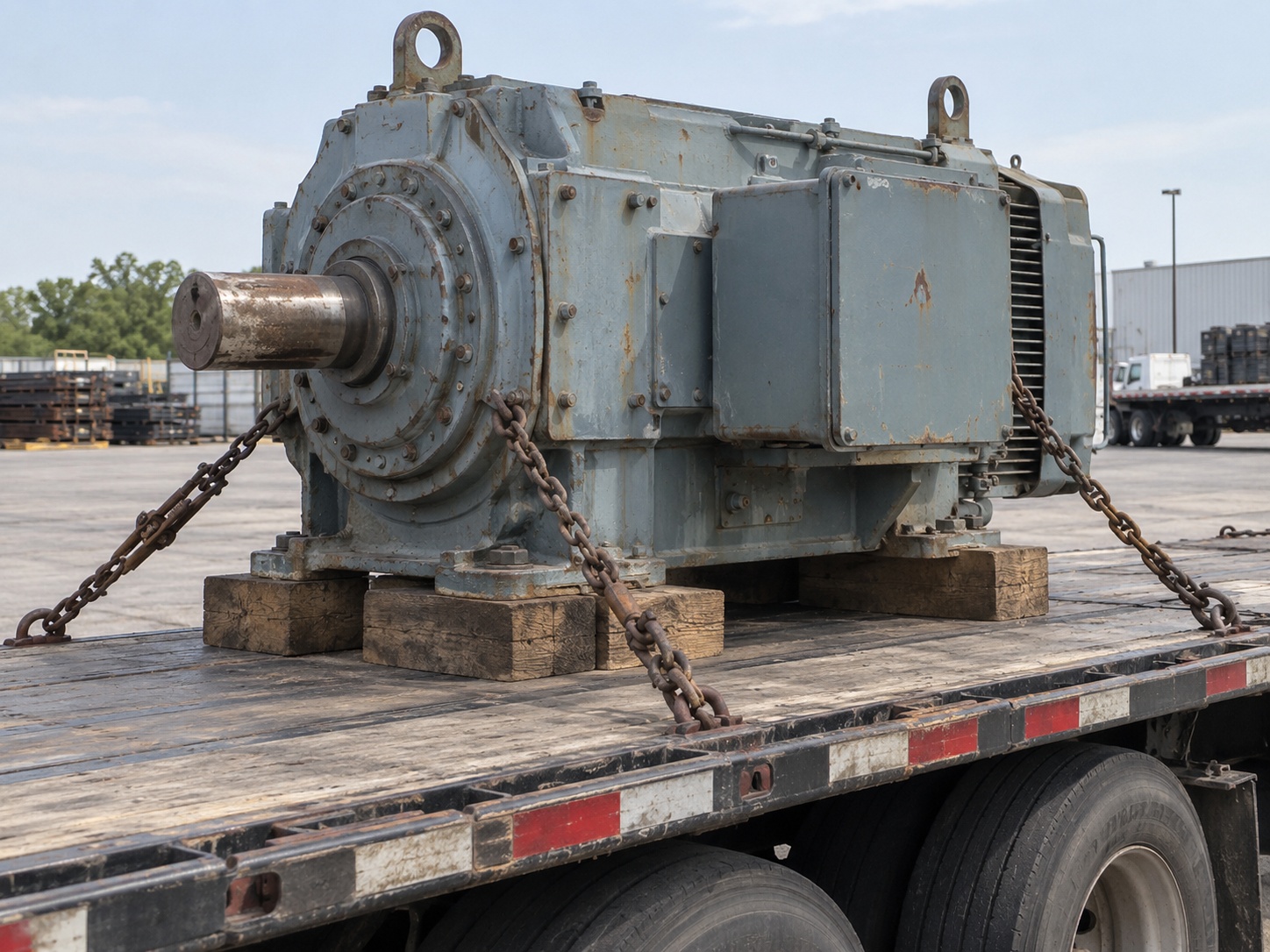
Machinery is difficult because the shipping footprint, lifting points and weight concentration may be very different from the machine's visible footprint.
Do these first
Prepare the machine and lifting plan before discussing equipment.
- Get the actual weight — do not estimate if a manufacturer or scale weight is available.
- Measure the shipping footprint — include skid, crate, guards and projections.
- Identify approved lifting points — fork pockets, lifting eyes or rigging points.
- Describe the center of gravity — especially when it is high or offset.
Planning a machinery shipment? Use the Machinery & Equipment Load Planner to check the machine’s transport dimensions, weight and loading method against flatbed, step deck, RGN and lowboy equipment. This guide explains how machinery shipping works; the planner is where you plan the actual shipment.
The machine may not have a pallet
Machinery often sits on a frame, feet, skid or purpose-built base. That changes how it can be lifted, where dunnage can go, where tiedowns can contact it and how the weight is spread onto the trailer.
A machine may need to be skidded or crated before transport. See crate or pallet.
The shipping footprint is not always the machine footprint
The move may require a skid, crate, protective frame, removed guards packed separately, drain pans or dunnage. Quote from the finished transport condition.
Preparation before pickup
Depending on the machine and manufacturer instructions, preparation may include securing moving parts, removing loose accessories, protecting finished surfaces, draining fluids when required, locking heads or arms, and providing rigging instructions.
Do not improvise preparation that could damage the machine.
What to tell us
- Finished length, width and height
- Total weight
- Center of gravity if known
- Approved lifting points
- Fork-pocket dimensions if applicable
- Loading and unloading equipment
- Whether the machine is skidded or crated
- Whether tarping or enclosure is required
Do not assume
- A forklift can pick the machine just because one is onsite.
- The machine can be chained or strapped anywhere on its frame.
- The visible machine dimensions equal its shipping dimensions.
Send the machine details before equipment is chosen
Give us the finished dimensions, weight, lifting points and loading method so the trailer can be matched to the machine rather than guessed.
Request a Freight Quote