When flatbed is the right answer
Flatbed is usually the better fit when the freight cannot reasonably load through the rear doors of an enclosed trailer.
Common examples:
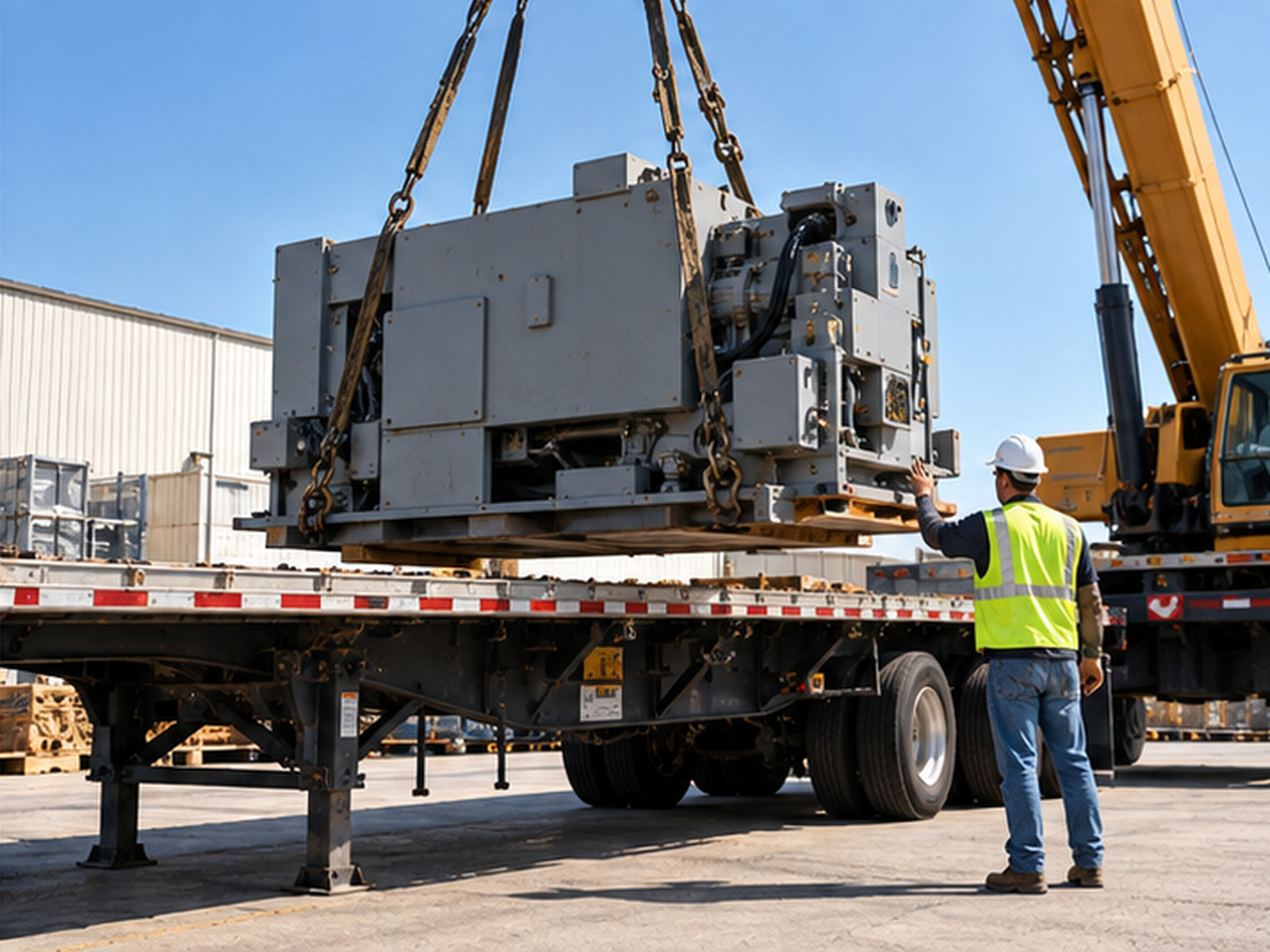
- Machinery loaded by crane
- Long steel or pipe
- Lumber and building materials
- Crated equipment that needs side loading
- Freight that is too wide, tall, long or awkward for a van
- Product that must be lifted straight down onto the deck
- Job-site freight with no dock
Flatbed gives you open access from the sides, the rear and the top. That flexibility comes with a different preparation problem: there are no trailer walls to contain the freight. The load has to be positioned, supported, secured and protected on an open deck.
The equipment reference carries the deck dimensions. This page is about everything you do before the truck gets there.
What to measure and send before quoting
Measure the freight as it will actually ship. For every piece, send:
- Length
- Width
- Height
- Weight
- Quantity
- Whether it can be stacked
- Whether it is fragile or crushable
- Whether it can tolerate strap pressure
- Whether it has approved lifting points
- Whether it has approved securement points
- Whether it has a high or offset center of gravity
- Whether any part can rotate, roll or shift
- Whether weather protection is required
Do not send only the footprint of the crate or skid if the product extends past it. Do not estimate the weight of machinery when an actual weight is available.
Measure the finished load
Crating, skids, brackets and protruding components change the dimensions that matter for equipment and permitting.
Tell us how the weight sits
Total weight is not enough for unusual freight. A 20,000 pound machine with the weight concentrated on a small base is a different loading problem from evenly distributed palletized material.
Say so when:
- Most of the weight is at one end
- The center of gravity is high
- The machine has a narrow base
- The freight has wheels, rollers or rounded surfaces
- The load cannot sit directly on the deck
- The manufacturer specifies support points
That information lets the carrier plan trailer position, dunnage and securement before arriving instead of improvising at your dock.
Who is lifting the freight?
Someone has to put the freight on the trailer at pickup. Someone has to take it off at delivery. Flatbeds do not bring their own loading equipment.
Possible loading methods include a forklift from the side or rear, a crane, an overhead crane, a telehandler, or a rigging contractor. Whichever it is, the equipment needs enough capacity and reach for the actual piece, and the operator needs access to the correct lifting points.
Confirm lifting before the truck is dispatched
- Pickup lifting equipment is confirmed
- Delivery lifting equipment is confirmed
- Capacity is adequate for the heaviest piece
- Fork or rigging access is clear
- Lifting points are identified
- Pickup window matches equipment availability
- Delivery window matches equipment availability
- Job-site or yard access is confirmed
A flatbed arriving at a site with no way to lift the freight is not a securement problem. It is a failed loading plan.
Tiedowns, and who decides
The driver and motor carrier are responsible for securing the cargo under the applicable cargo securement rules. Your job is to describe the freight accurately and to avoid making legal securement harder than it needs to be.
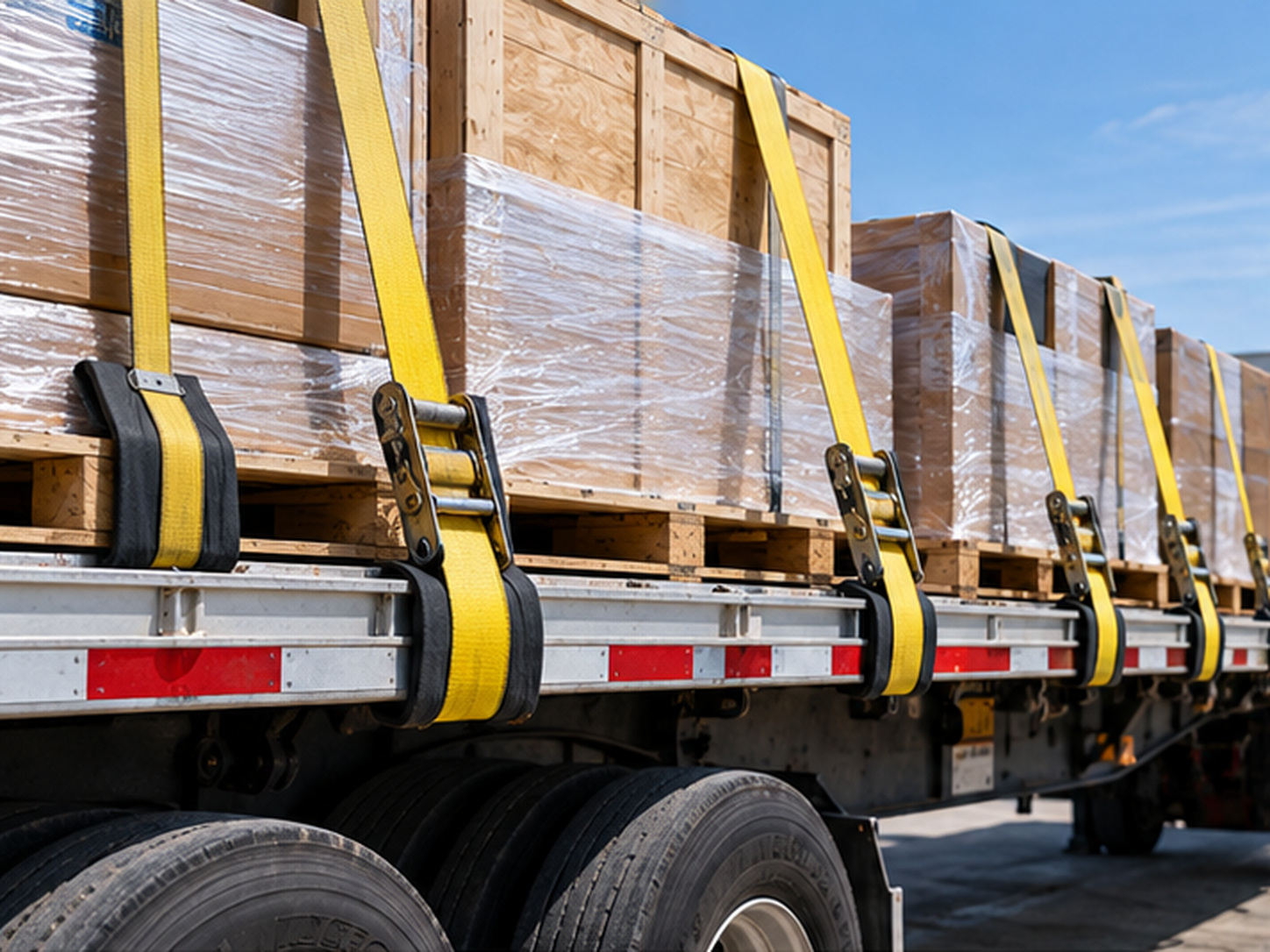
FMCSA rules require the aggregate working load limit of the tiedowns securing an article to be at least half the weight of that article, and set a minimum number of tiedowns that rises with the length and weight of the piece.
Commodity-specific rules apply to certain freight, including dressed lumber, metal coils, concrete pipe, automobiles, and heavy vehicles, equipment and machinery. Wheeled or tracked machinery weighing 10,000 pounds or more falls under its own rule and must be restrained in multiple directions with at least four tiedowns.
None of that is yours to design. It matters to you for one reason: it takes time, and it takes reachable securement points.
The driver owns the securement decision
Give the driver accurate weight, dimensions and lifting information, and leave the securement points reachable. Do not ask for fewer tiedowns because a previous load went out that way.
Straps versus chains
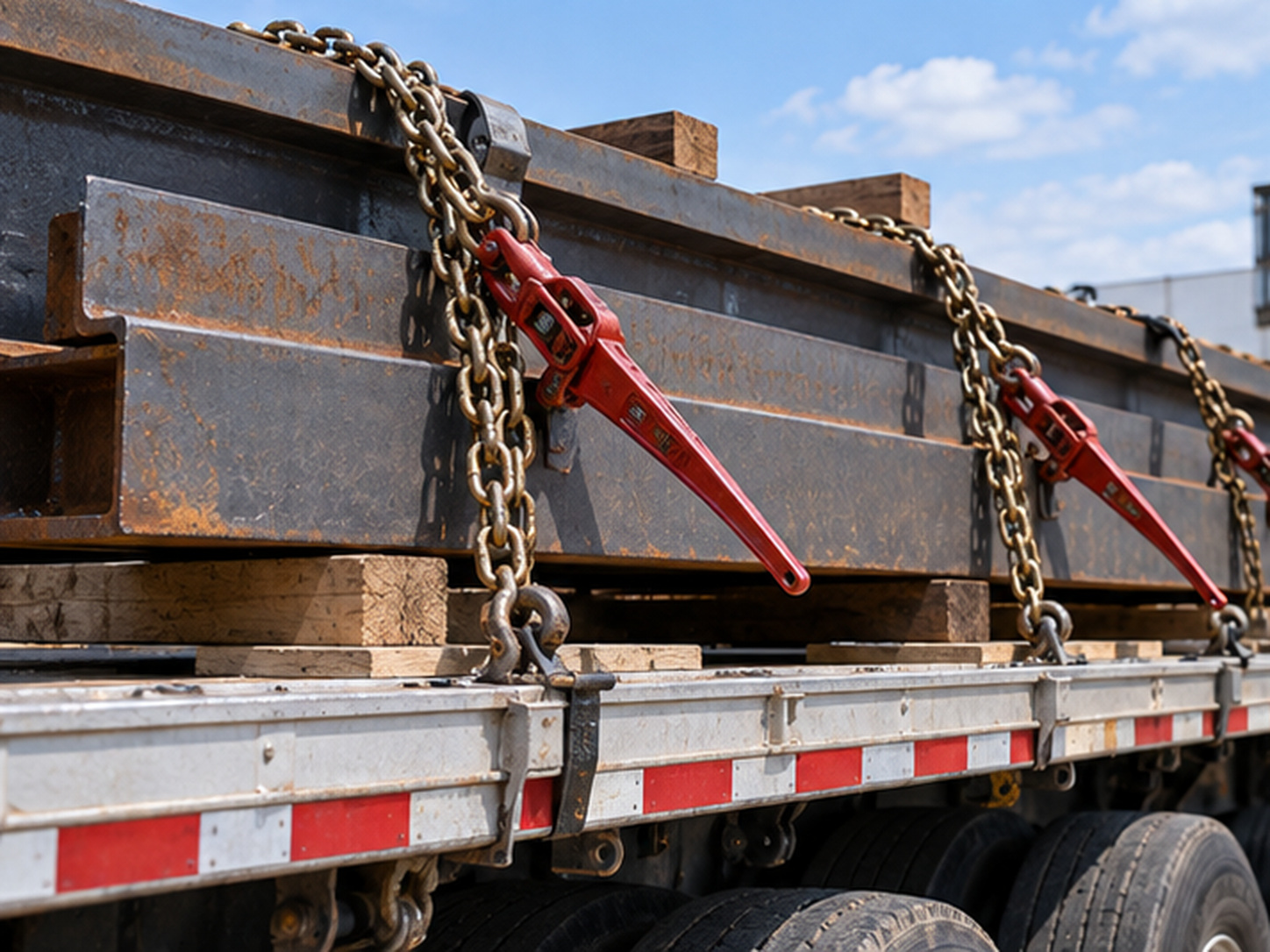
Both chain and synthetic webbing are recognized securement materials when they meet the applicable requirements. Which one gets used depends on the freight.
Web straps are common for palletized or crated material, building products, loads where a wide contact surface helps, and freight that direct chain contact would damage.
Chains and binders are common for heavy machinery, structural steel, equipment with designed chain-down points, and loads where cut resistance matters.
Do not reduce it to "heavy means chain." Some commodity rules impose specific requirements, and the driver has to use a compliant system for the actual commodity.
Edge protection
A strap can damage the freight it is holding down, and a sharp edge can cut the strap. Point out the vulnerable areas before securement starts.
Typical concerns are carton corners, finished metal edges, painted surfaces, soft lumber corners, plastic housings, crates with weak upper edges, and sharp steel that can cut synthetic webbing.
Edge protectors spread strap pressure and protect both the cargo and the securement device. If a surface cannot accept strap pressure at all, say that before the truck arrives, because the carrier may need a different approach or different equipment.
Dunnage, blocking and cradles on an open deck
Open-deck freight often needs support between the cargo and the trailer: 4x4 lumber, timbers that create forklift clearance, coil racks, wedges or chocks, purpose-built cradles, or blocking for irregular machinery.
Dunnage spreads load pressure, keeps freight off the deck, creates clearance for lifting, helps keep freight from rolling, supports irregular shapes and positions freight for securement.
Round freight needs particular attention. Pipe, coils, reels and cylindrical components roll if they are not properly supported and restrained. Straps alone do not turn a round object into a stable load.
For securement inside a van or reefer, which is a different problem, read securing freight in a trailer.
Tarping: say it before the truck is booked
If the freight has to stay dry, say so when you request the quote. Not when the driver is standing at your dock.
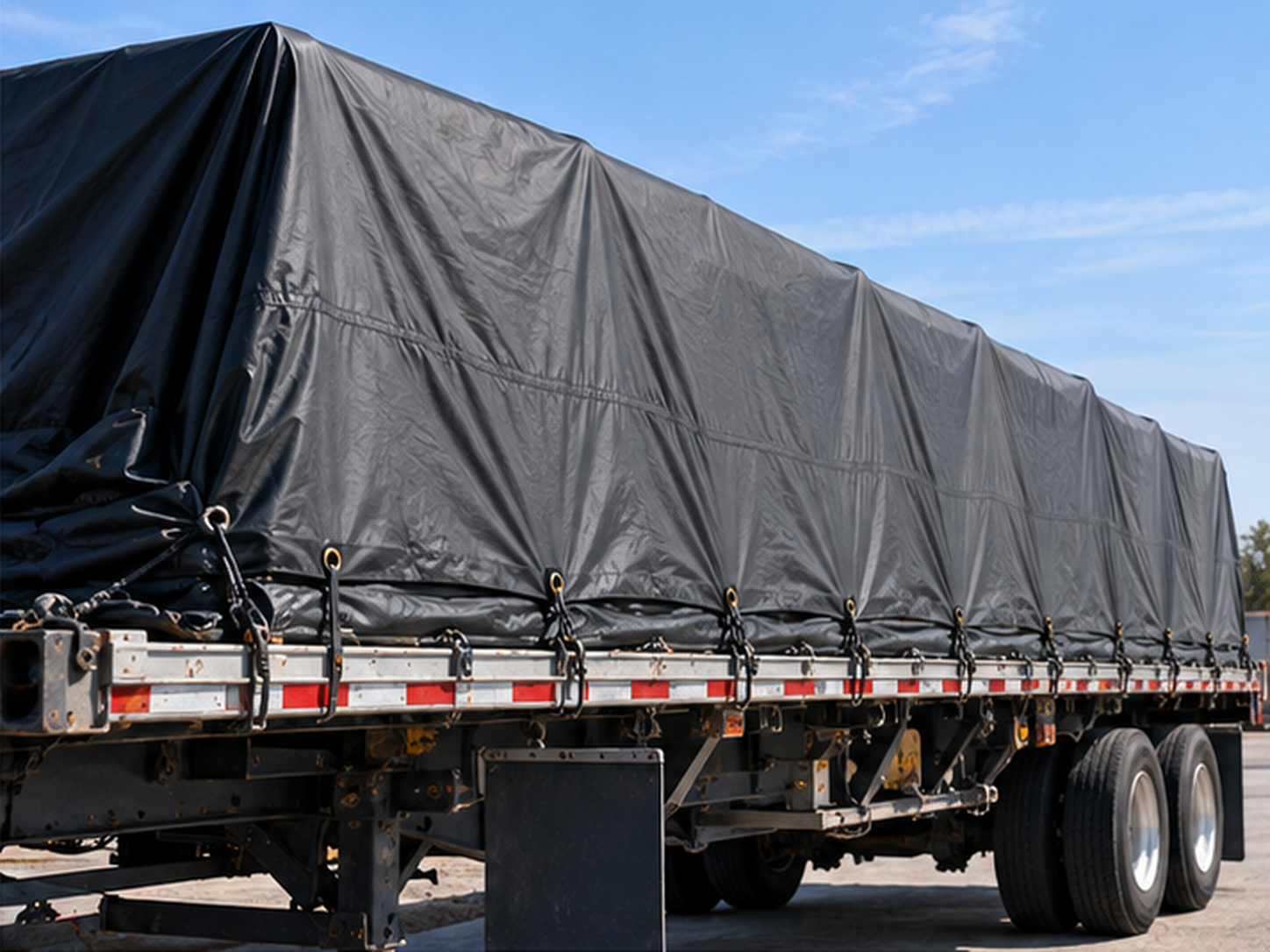
Tarping takes equipment, physical work and time, and the carrier needs to know about it before accepting the load. The common types:
Lumber tarps are built for taller, box-like loads and generally have deeper side and end drops. Steel tarps are generally shorter, because many steel loads sit lower. Smoke tarps are smaller covers used at the front of a load to reduce exhaust residue, road grime and debris when full tarping is not needed. Coil bags are fitted covers made for steel coils and similar shapes, quicker to fit than a large rectangular tarp.
Tarp names are not exact dimensions
Sizes and drop depths vary by manufacturer and by what the carrier actually has on the truck. Describe the freight and the protection requirement rather than ordering by tarp name.
What a tarp does not do
A tarp is weather protection. It is not securement, and it does not make every product suitable for an open deck.
Sharp projections tear tarps. Delicate finished surfaces can suffer abrasion if the cover rubs in transit. Irregular machinery can make tarping unsafe to work on.
If the freight cannot be tarped safely, or cannot tolerate tarp contact, raise it before booking. A Conestoga or an enclosed trailer may be the better answer when freight needs open-side loading plus real enclosure.
There is a large difference between "tarp if available," "must be fully tarped," "no water contact," "no tarp contact with the finished surface," and "Conestoga required." Use the real requirement.
Over-dimensional freight starts with the real dimensions
Federal law sets a 102 inch maximum vehicle width on the National Network, including the load.
There is no single federal vehicle height limit. Height is set by the states, and 13 feet 6 inches is a common legal overall height in many jurisdictions.
That distinction matters, because it is where the familiar 8 feet 6 inch figure comes from. A standard flatbed deck sits about 60 inches off the ground, so a load about 8 feet 6 inches tall on that deck comes to roughly 13 feet 6 inches overall. It is a planning figure, not a nationwide cargo height statute.
Step decks and double drop or RGN equipment lower the deck to buy usable cargo height before you reach the applicable overall limit.
Width. Freight wider than 102 inches is overwidth for normal operation and generally needs oversize permitting for the states and routes involved. Permits can specify the route, travel hours, escorts, flags, signs and lighting.
Height. Overheight permitting is state-based, because there is no uniform federal limit. The legal height and the permit rules depend on the states traveled and the route chosen.
Weight. Federal Interstate weight rules turn on gross vehicle weight, axle weights, axle spacing and the Federal Bridge Formula. The federal maximum gross weight on the Interstate System is generally 80,000 pounds unless the Bridge Formula requires less. Whether a given payload needs an overweight permit depends on the tractor, trailer, axle configuration, tare weight, load distribution, route and state rules. Send the real weight and let the carrier or permit specialist work out the legal configuration.
Rear overhang
Federal rules require warning flags when a load projects more than four feet beyond the rear of the vehicle. The flags must be red or orange fluorescent and at least 18 inches square. One flag at the extreme rear if the projection is two feet wide or less, two flags marking the maximum width if it is wider. Lighting requirements also apply when headlamps are required.
State rules can add permit, overhang and travel requirements on top of that. Tell us the full rear projection before booking, and do not assume a flag makes an otherwise overlength load legal.
Permits need lead time
Once freight is over legal size or weight for the route, the shipment becomes a permit move. That can change the route, the equipment, the travel hours, the pickup timing, the delivery timing and whether escorts are required. Some permitted moves are restricted by daylight, weather, holidays or route conditions depending on the jurisdiction.
The earlier the true dimensions are known, the easier the move is to plan.
Before the flatbed arrives
Flatbed pre-pickup checklist
- Final piece count is confirmed
- Actual length of every piece is confirmed
- Actual width of every piece is confirmed
- Actual height of every piece is confirmed
- Actual weight of every piece is confirmed
- Weight concentration or center of gravity concerns are disclosed
- Lifting points are identified
- Securement points are accessible
- Crushable or finished edges are identified
- Pickup forklift, crane or rigging is confirmed
- Delivery forklift, crane or rigging is confirmed
- Dunnage requirements are known
- Round or rolling freight is identified
- Tarp requirement is stated before booking
- Freight that cannot tolerate tarp contact is identified
- Overhang is disclosed
- Overwidth or overheight dimensions are disclosed
- Pickup and delivery access can handle open-deck equipment
- Freight is staged before the truck arrives
Sources
- FMCSA, cargo securement rules
- 49 CFR Part 393 Subpart I, cargo securement
- 49 CFR Part 393 Subpart I (eCFR)
- 49 CFR 393.106 (eCFR)
- 49 CFR 393.110 (eCFR)
- 49 CFR 393.87 and 393.11, warning flags and lamps on projecting loads
- 49 CFR 393.87 (eCFR)
- 49 CFR 393.11 (Cornell LII)
- FHWA, federal size regulations and bridge formula weights
- FHWA — Federal Size Regulations for Commercial Motor Vehicles
- FHWA — Bridge Formula Weights
- 23 CFR 658.17, federal Interstate weight rules
Not sure your freight is flatbed ready?
Send the final dimensions, the weight, how it will be lifted at both ends and whether it has to stay dry, and we will tell you what equipment it needs and what has to happen before the truck is booked.
Request a Freight Quote