
The short answer
Fragile freight fails when its packaging is designed for storage instead of transportation.
Do these first
Decide how much handling the product can survive.
- Identify fragile surfaces — corners, glass, controls or finishes.
- Choose pallet or crate — based on real protection needs.
- Protect against shock and movement — internal cushioning matters.
- Choose the service — LTL creates more handling than a dedicated truck.
Packaging is the answer
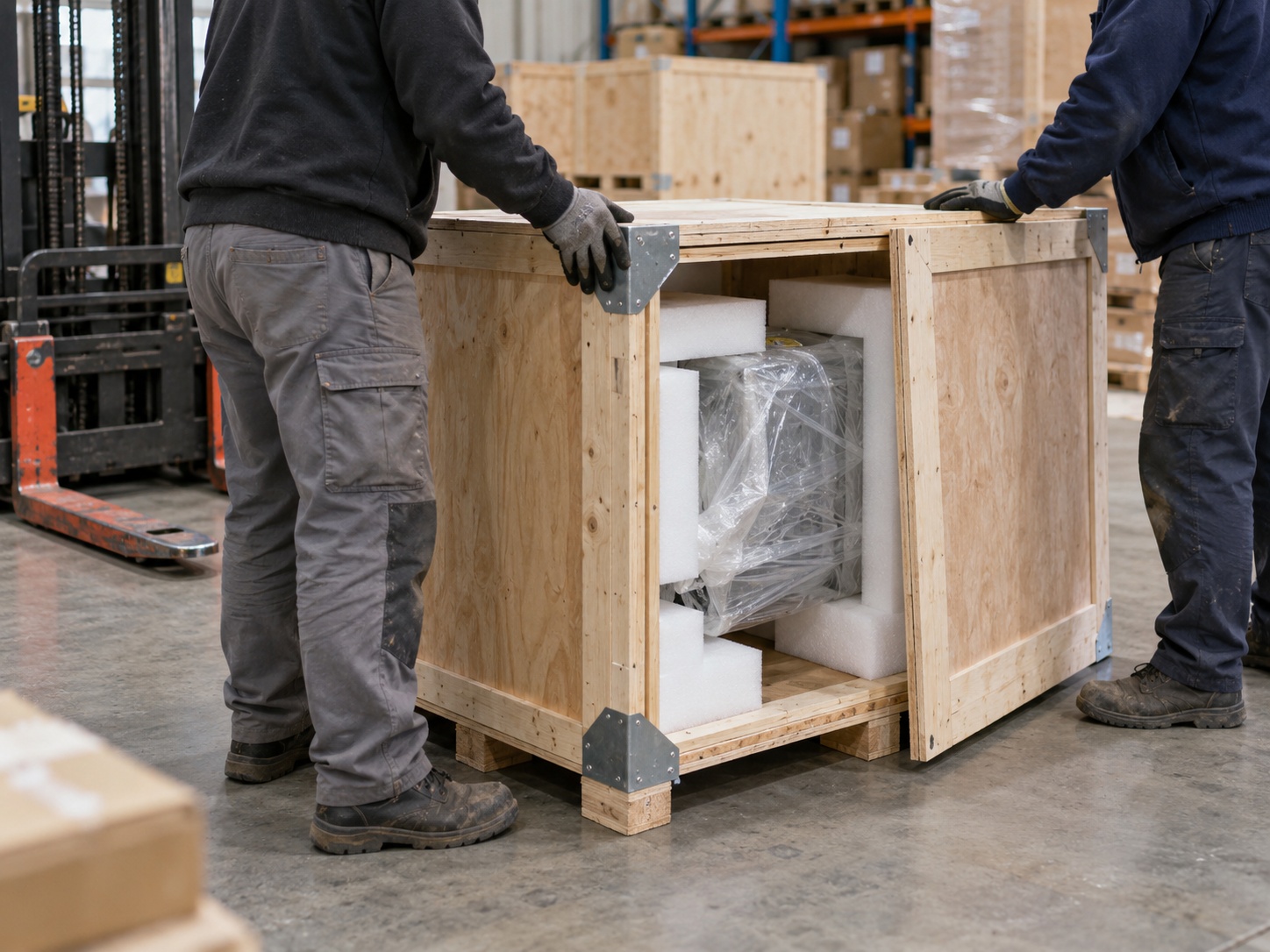
A strong outer package should keep the product from moving inside, protect vulnerable faces and corners, give forklifts a clear handling base and tolerate normal transport vibration.
LTL vs dedicated truck
LTL normally creates more handling events. That does not make LTL automatically wrong, but the packaging has to be built for the network.
See why LTL freight gets damaged.
Crating
Use a crate when the product needs a rigid protective structure around it. Use crate or pallet for that decision.
What to tell us
- Product description
- Finished package dimensions
- Weight
- Fragile surfaces
- Stackability
- Crated or palletized
- Whether the product can tolerate LTL handling
- Special orientation instructions
Do not assume
- A fragile sticker changes how a terminal can physically handle the freight.
- Stretch wrap replaces internal cushioning.
- A package that survived one truckload is automatically adequate for LTL.
Send the package, not just the product dimensions
Give us the finished crate or pallet size, weight, stackability and handling sensitivity so the service can match the risk.
Request a Freight Quote