
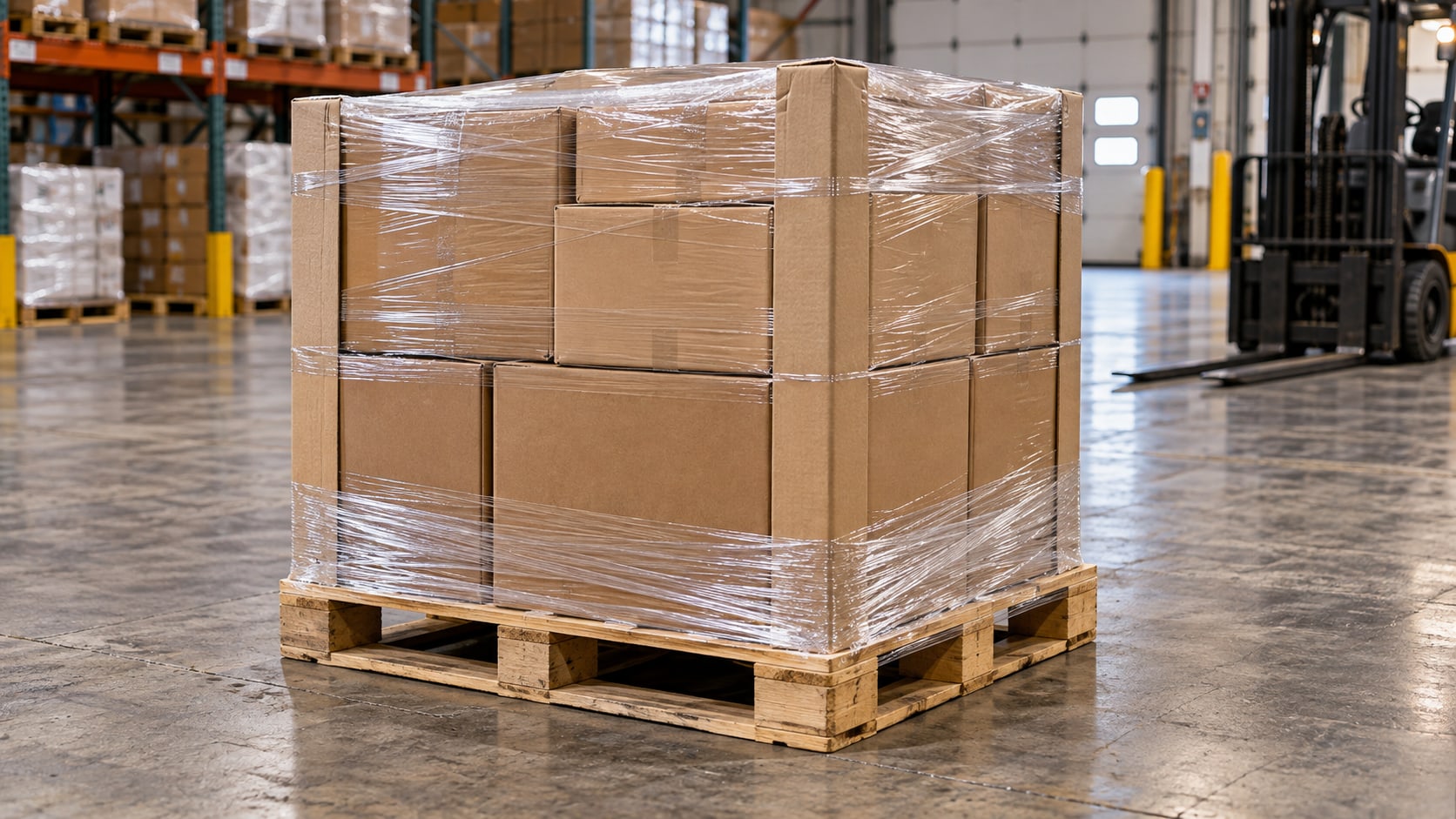
A good pallet is not just boxes placed on wood and covered with film. The pallet, product and containment have to work together through forklift handling, trailer movement and unloading.
Start with a pallet that can carry the load
The pallet is the foundation.
Before stacking freight, check for:
- Broken or missing deck boards
- Split stringers or blocks
- Protruding nails
- Severe warping
- Water damage or rot
- A pallet that is too small for the product footprint
- A pallet that cannot support the load weight
The truck and pallet loading guide already covers damaged-pallet inspection. Replace a questionable pallet before building the load rather than trying to compensate with more wrap.
Why stacking pattern matters
A pallet experiences repeated small forces in transit.
The truck accelerates. It brakes. It turns. The trailer vibrates. The pallet is picked up, set down and sometimes transferred.
If the cartons are stacked with weak edges, large gaps or an unstable footprint, those forces work the load apart.
Build the stack so:
- The bottom layer fully supports the layers above it.
- Cartons do not lean.
- Heavy cartons are not crushing lighter cartons.
- Gaps do not allow upper layers to settle unevenly.
- The load stays within the pallet footprint.
- The finished stack is as square and vertical as practical.
Think in terms of movement
If a box can slide, lean or compress while the pallet is sitting still, trailer motion gives it more opportunity to do it.
Keep heavy product low
A high center of gravity makes a pallet easier to tip.
When the product allows it:
- Put heavier product toward the bottom.
- Keep lighter cartons above heavier cartons.
- Avoid building a tall narrow tower when a lower, wider stable stack is possible.
- Follow manufacturer stack limits.
Do not put heavy product on top simply because the cartons fit.
Overhang deserves its own check
Product extending past the edge of the pallet is exposed.
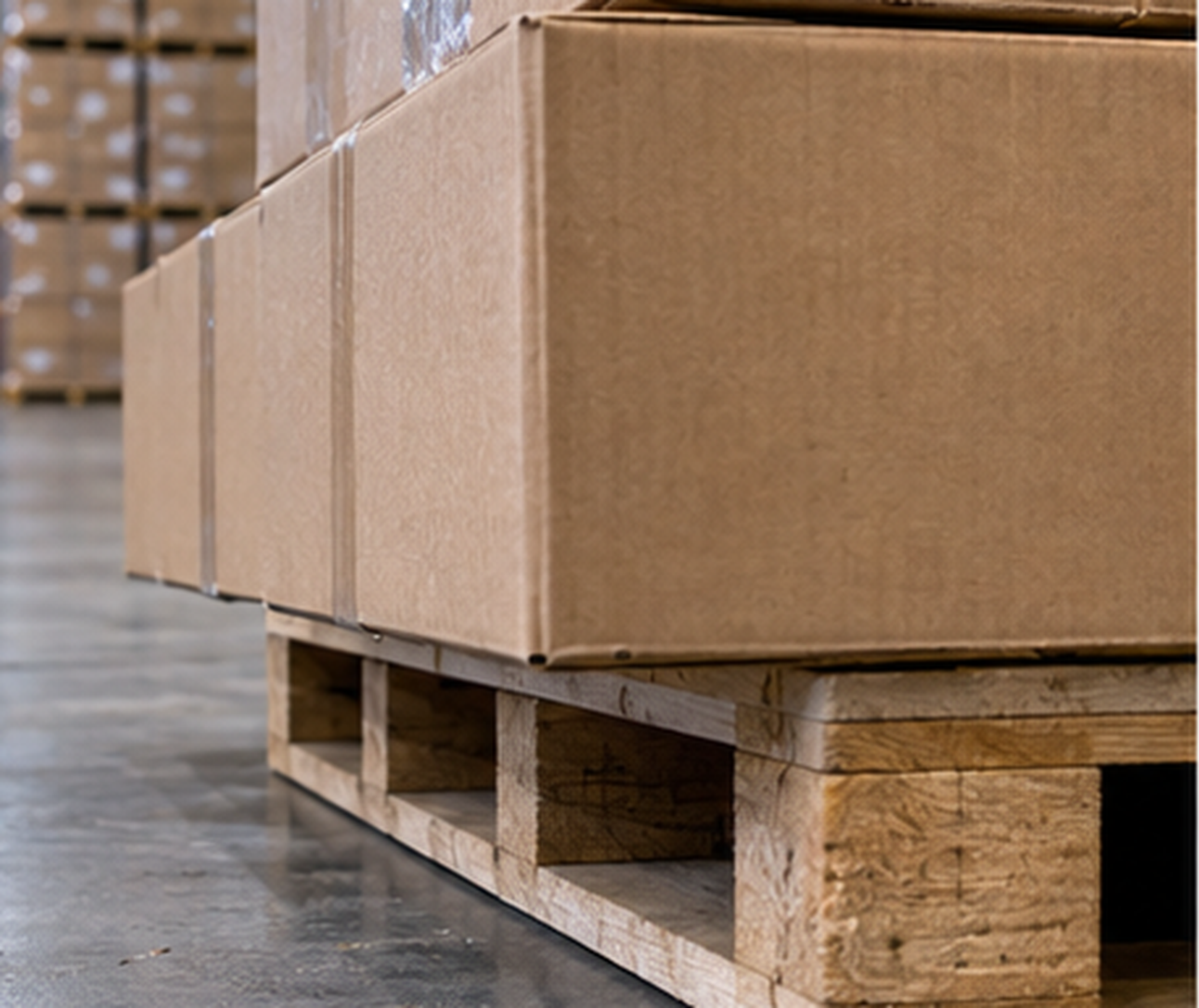
The carton is no longer fully supported from below, and the protruding edge is more likely to contact another pallet, trailer wall, forklift or dock equipment.
Overhang can lead to:
- Crushed lower cartons
- Torn packaging
- Load instability
- Reduced usable trailer space
- Difficulty placing pallets tightly together
- Damage during forklift handling
If the product does not fit the pallet footprint, use a more appropriate pallet or packaging plan instead of treating overhang as normal.
A few inches can matter
A pallet that measures 48 inches wide is not a 48-inch handling unit if the product extends beyond it. Quote and plan from the greatest actual dimensions.
What stretch wrap is actually doing
Stretch wrap is containment.
It should help keep the product attached to itself and anchored to the pallet so the load behaves as one unit.
A common failure is wrapping only the cartons and leaving the film disconnected from the pallet.
When the load moves, the wrapped carton stack can shift while the pallet stays behind.
Wrap low enough to connect the load to the pallet
Start the containment low.
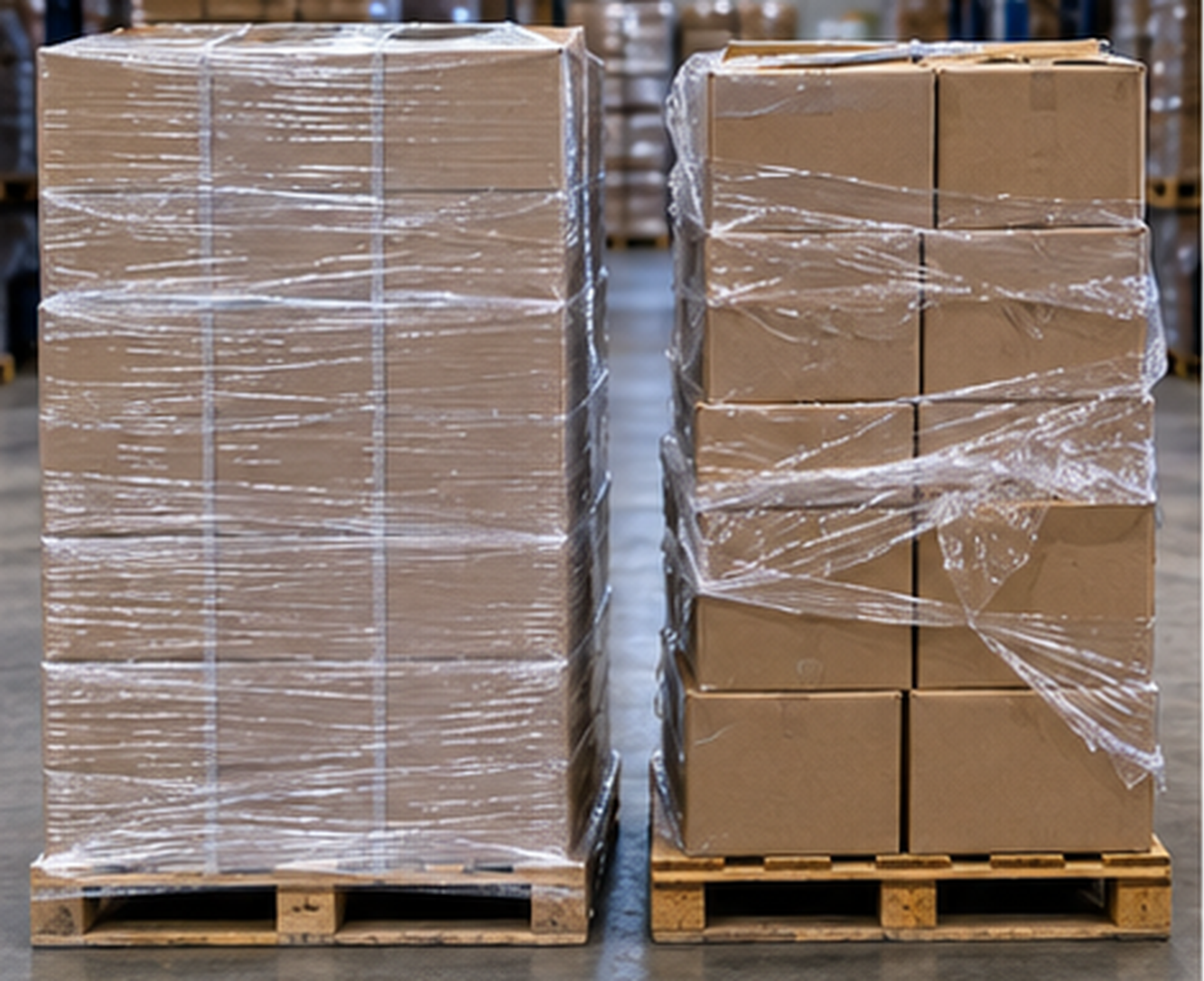
The film should engage the bottom of the load and pallet area rather than floating several inches above the deck.
Build enough containment at the base to resist the stack walking or sliding off the pallet.
Then work upward with overlapping passes appropriate for the load.
Finish with enough containment to keep the upper layers from separating.
The exact film, tension, number of wraps and machine settings depend on the product and packaging. The principle is consistent: the film has to contain the load without crushing it.
Do not confuse more wrap with better wrap
Adding film cannot repair:
- A broken pallet
- Bad carton stacking
- Excessive overhang
- Crushed boxes
- A load that is too tall and unstable
- A poor center of gravity
Fix the structure first.
Use wrap to contain a good load, not hide a bad one.
When corner boards help
Corner boards or edge protectors can help:
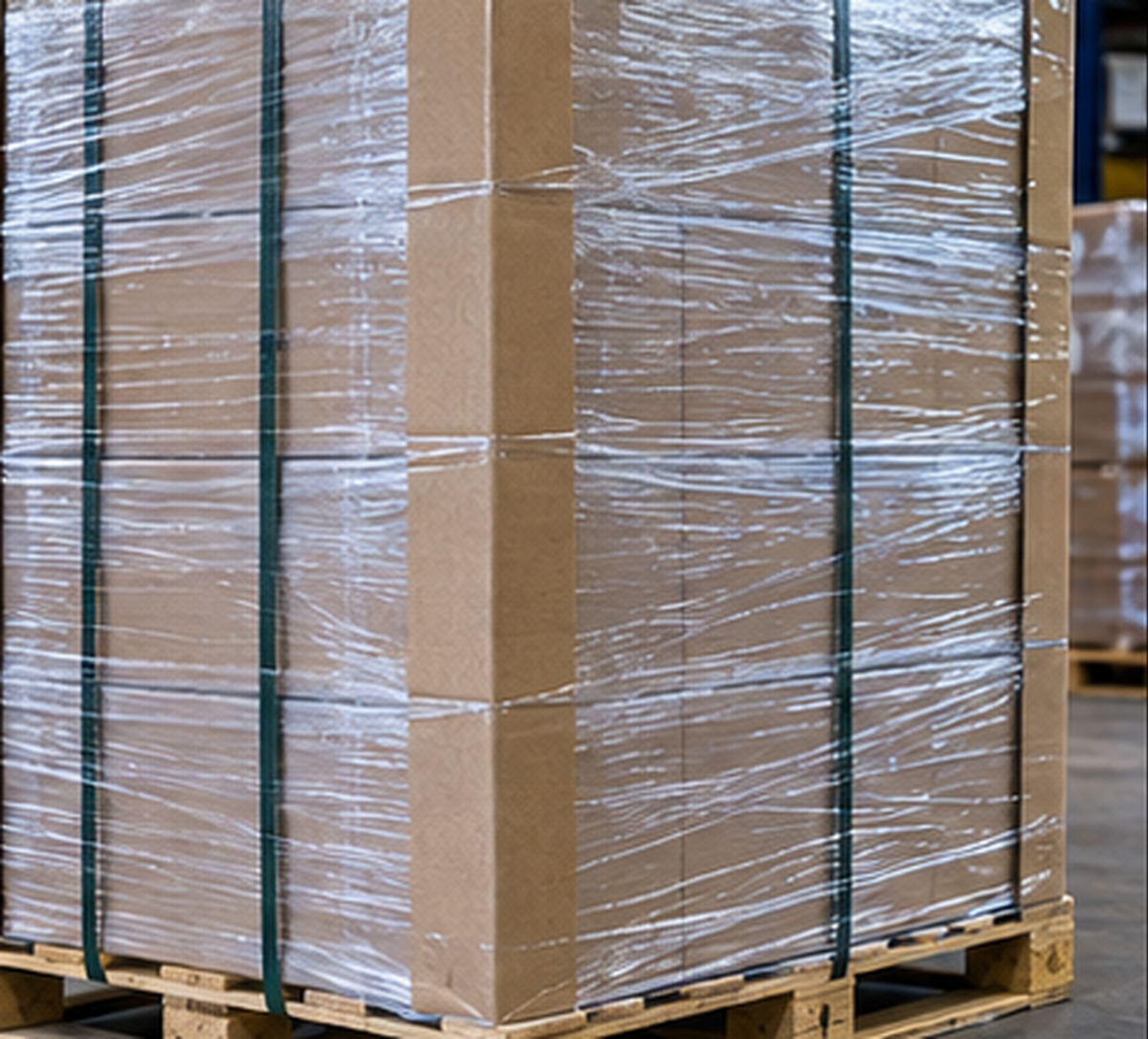
- Protect carton edges
- Spread strap pressure
- Reinforce tall stacks
- Keep wrap from cutting into soft packaging
- Maintain a straighter load profile
Place them where they protect the product and remain captured by the wrap or securement method.
What about strapping?
Strapping can add restraint for loads that need more than film.
Use a method appropriate to the freight and pallet. Protect product edges where strap tension could crush or cut the packaging.
Do not use excessive tension that damages the product.
LTL needs stronger packaging discipline
LTL freight may be handled and transferred more than a direct full-truckload shipment.
That makes packaging quality especially important.
See LTL vs FTL for the handling differences that can affect your packaging decision.
Measure the finished pallet, not the empty pallet
For quoting and planning, provide the greatest finished dimensions.
Measure:
- Longest actual length
- Widest actual width
- Highest point
- Total palletized weight
If corner boards, cartons, banding or product extend beyond the nominal pallet size, include them.
Use the pallet capacity tool to estimate trailer space from the finished dimensions.
Final pallet check
Before the pallet leaves the staging area
- Pallet is sound and appropriate for the load
- Product is stable and square
- Heavy product is supported low in the stack
- No avoidable product overhang
- Cartons are not crushed or leaning
- Stretch wrap contains the full load
- Wrap engages the base of the load and pallet area
- Corner protection is installed where needed
- Strapping does not damage the product
- Finished dimensions and weight are confirmed
- Labels and paperwork remain visible where required
Want to make sure the packaging fits the freight plan?
Send the pallet count, finished dimensions, weight and commodity and we will help check the equipment and space requirements before booking.
Request a Freight Quote