The short answer
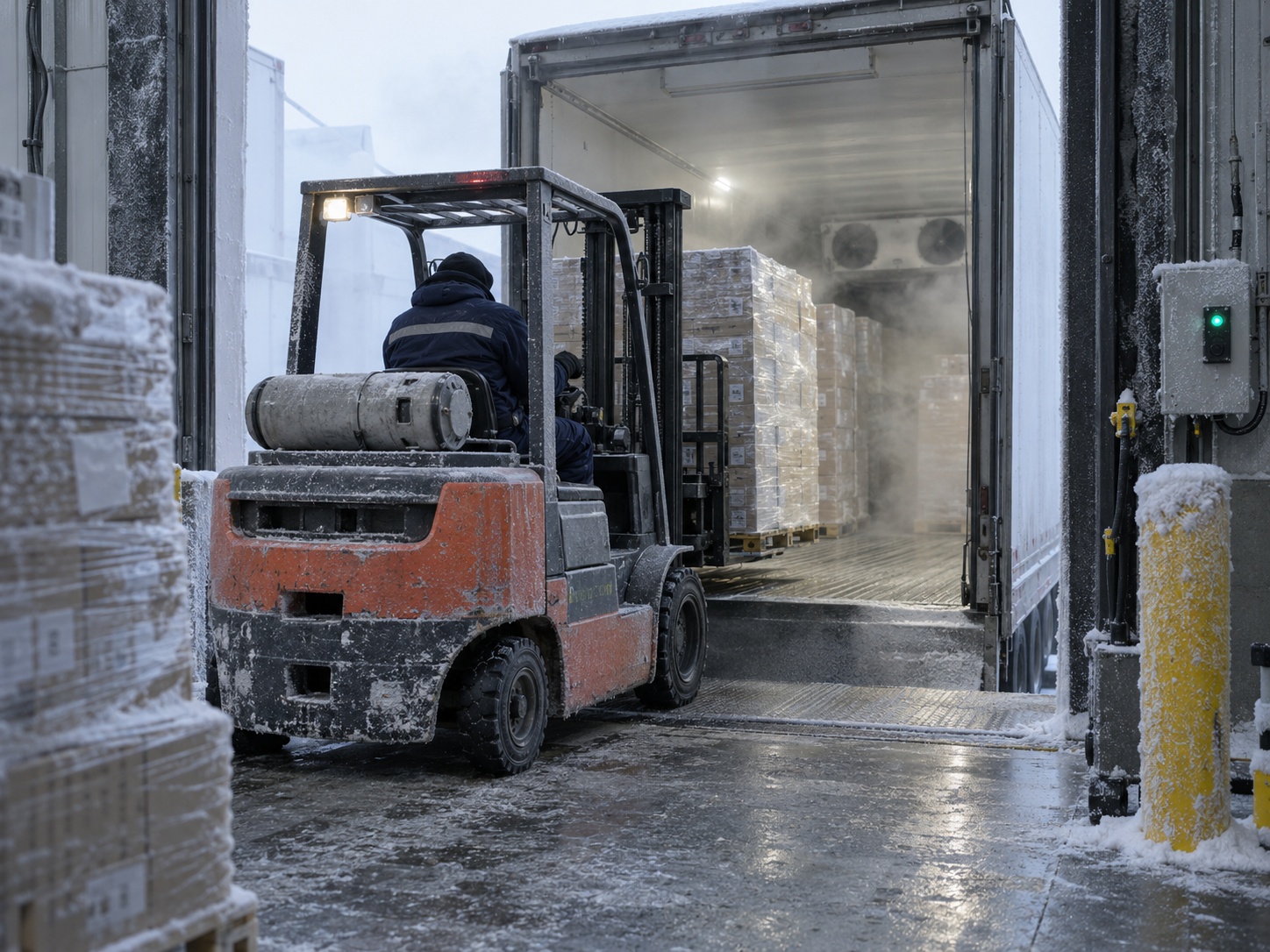
Frozen freight has less room for recovery because the product must remain within the shipper's required transportation condition through the trip.
Do these first
Lock down the cold-chain instructions before loading.
- Provide the operating temperature — the shipper sets it.
- Confirm trailer preparation — including precooling when required.
- Confirm monitoring method — carrier system, recorder or other agreed method.
- Confirm receiver requirements — including readings or documentation.
Trailer preparation
FDA says loaders of food requiring temperature control must verify that mechanically refrigerated compartments are adequately prepared, including precooling when necessary.
Monitoring
FDA does not require one specific recording device for every shipment. The shipper and carrier can agree on an appropriate temperature-monitoring method.
What to do if a reading is out of range
Do not make a product-safety decision from a generic chart. Record the time, reading, trailer status, product condition if checked, and who was notified.
FDA guidance says food should not be sold or distributed after a possible temperature-control failure until a qualified determination is made when safety may be affected.
What to tell us
- Frozen commodity
- Shipper-specified operating temperature
- Pallet count and dimensions
- Monitoring or recorder requirement
- Sanitation requirement
- Seal requirement
- Pickup and delivery times
- Required temperature records
Do not assume
- Every frozen product uses the same set point.
- One ambient-air reading proves product temperature.
- A generic temperature chart decides whether product is acceptable after a deviation.
Sources
- FDA — Frequently Asked Questions FSMA
- FDA — Key Changes FSMA Final Rule Sanitary Transportation Human And Animal Food
- FDA — FSMA Final Rule Sanitary Transportation Human And Animal Food
Send the cold-chain instructions before booking
Give us the operating temperature, monitoring requirement, sanitation instructions and delivery window so the load can be built around the actual product requirement.
Request a Freight Quote