
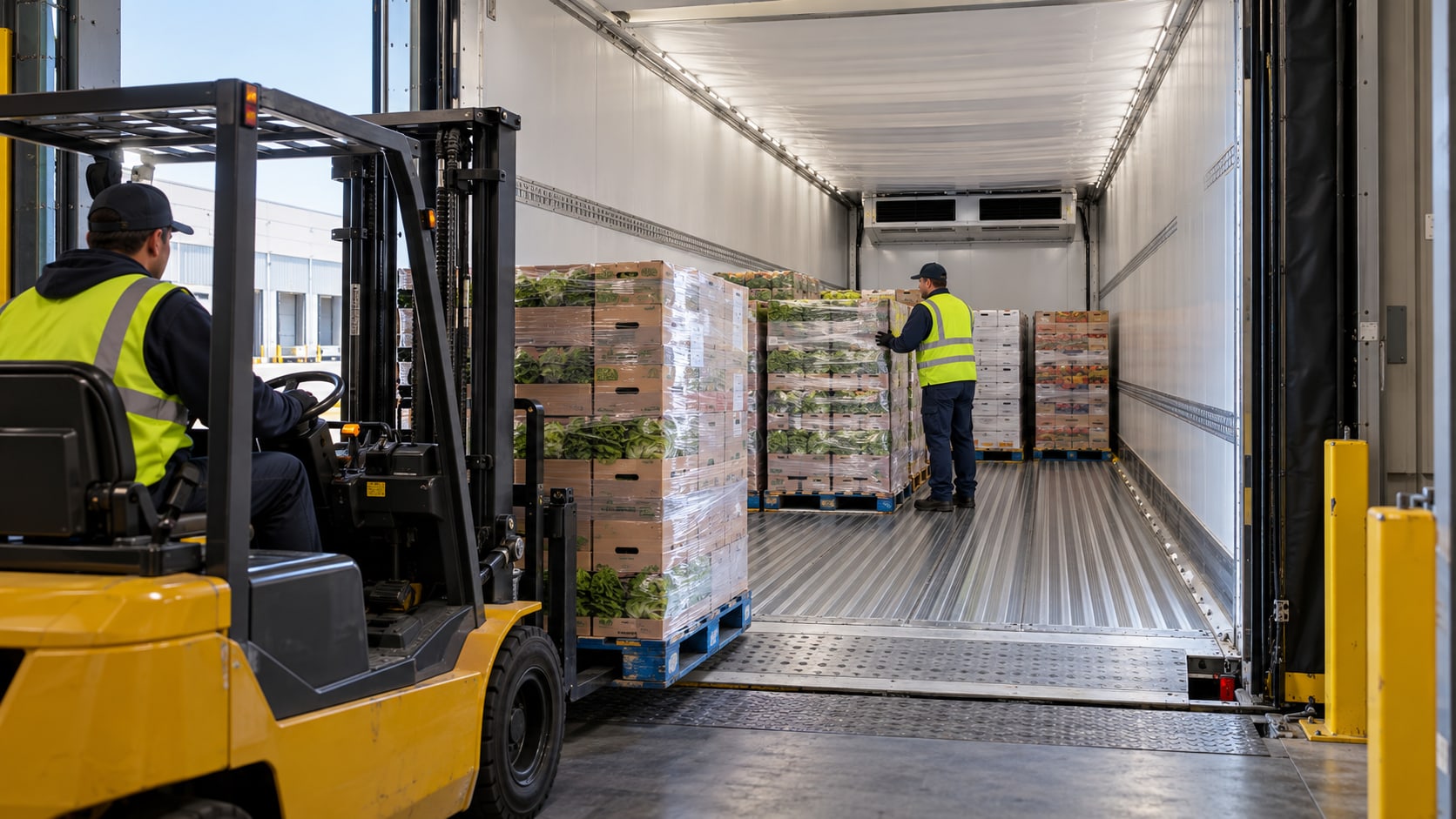
A refrigerated trailer controls the air inside the trailer, but the product still has to be loaded so that conditioned air can circulate as intended. Blocking the air path can create temperature differences through the load.
Understand the air path
Reefer systems are designed to move conditioned air through the trailer and return air back toward the refrigeration unit.
The exact airflow pattern depends on the trailer and refrigeration setup.
The practical warehouse rule is:
Do not load in a way that blocks the trailer's intended supply and return airflow.
Use the trailer's actual loading requirements
Reefer designs and commodity instructions vary. Follow the shipper's temperature instructions and the carrier's equipment-specific loading requirements.
Do not load to the roof
Loading product too high can restrict airflow.
The upper air distribution area needs clearance.
If the trailer has an air chute or other distribution system, do not crush, block or interfere with it.
Confirm maximum load height before building the pallets.
Leave the return path open
Air has to return to the refrigeration unit.
Freight packed tightly into areas intended for return airflow can reduce circulation.
Do not assume that filling every available inch is better reefer loading.
Palletized freight helps airflow underneath
Many refrigerated trailers use floors designed to support airflow beneath the load.
Palletized product can help preserve an under-load air path when loaded correctly.
Do not block floor channels or air paths with loose packaging or inappropriate dunnage.
Why pre-cooling freight and pre-cooling trailers are different
A reefer is primarily intended to maintain the required transport environment.
Do not assume the trailer can quickly remove large amounts of heat from product that was loaded too warm.
The shipper should establish the required product condition before loading.
The carrier should confirm the trailer is prepared according to the shipment instructions.
Confirm product temperature requirements
Before booking, provide:
- Required setpoint
- Fahrenheit or Celsius
- Any acceptable range
- Continuous or cycle instructions if specified by the shipper
- Commodity
- Whether product temperature will be checked
- Any special loading or airflow instructions
Use the temperature conversion tool only for unit conversion. It does not choose the correct setpoint.
Pulp temperature
For some commodities, the product temperature itself matters in addition to the trailer air temperature.
"Pulp temperature" generally refers to the internal temperature of the product being measured.
If the shipper requires product-temperature checks, confirm:
- What should be measured
- When it should be measured
- Acceptable temperature
- Required documentation
Do not invent a product setpoint from a general chart.
Loading speed matters
Leaving reefer doors open exposes the trailer to outside conditions.
Have the freight staged and ready before opening the trailer whenever possible.
A smooth loading process reduces unnecessary exposure and delay.
Check packaging and airflow together
Stretch wrap, slip sheets, floor-loaded product and tightly packed cartons can change how air moves around the freight.
The loading pattern should match:
- Commodity requirements
- Trailer design
- Pallet configuration
- Required airflow clearance
Before the reefer is released
Reefer loading check
- Correct equipment is at the dock
- Trailer condition has been checked
- Required setpoint and units are confirmed
- Freight is ready before doors stay open
- Product condition meets shipper instructions
- Load height does not block upper airflow
- Return airflow area is not blocked
- Floor airflow channels are not obstructed
- Air chute or trailer components are protected
- Doors can close without contacting freight
- Seal and paperwork requirements are confirmed
For general pallet placement, use the truck and pallet loading guide.
Have a temperature-controlled load to plan?
Send the commodity, temperature instructions, pallet dimensions, weight and pickup details and we will help make sure the equipment request is complete before booking.
Request a Freight Quote