
The short answer
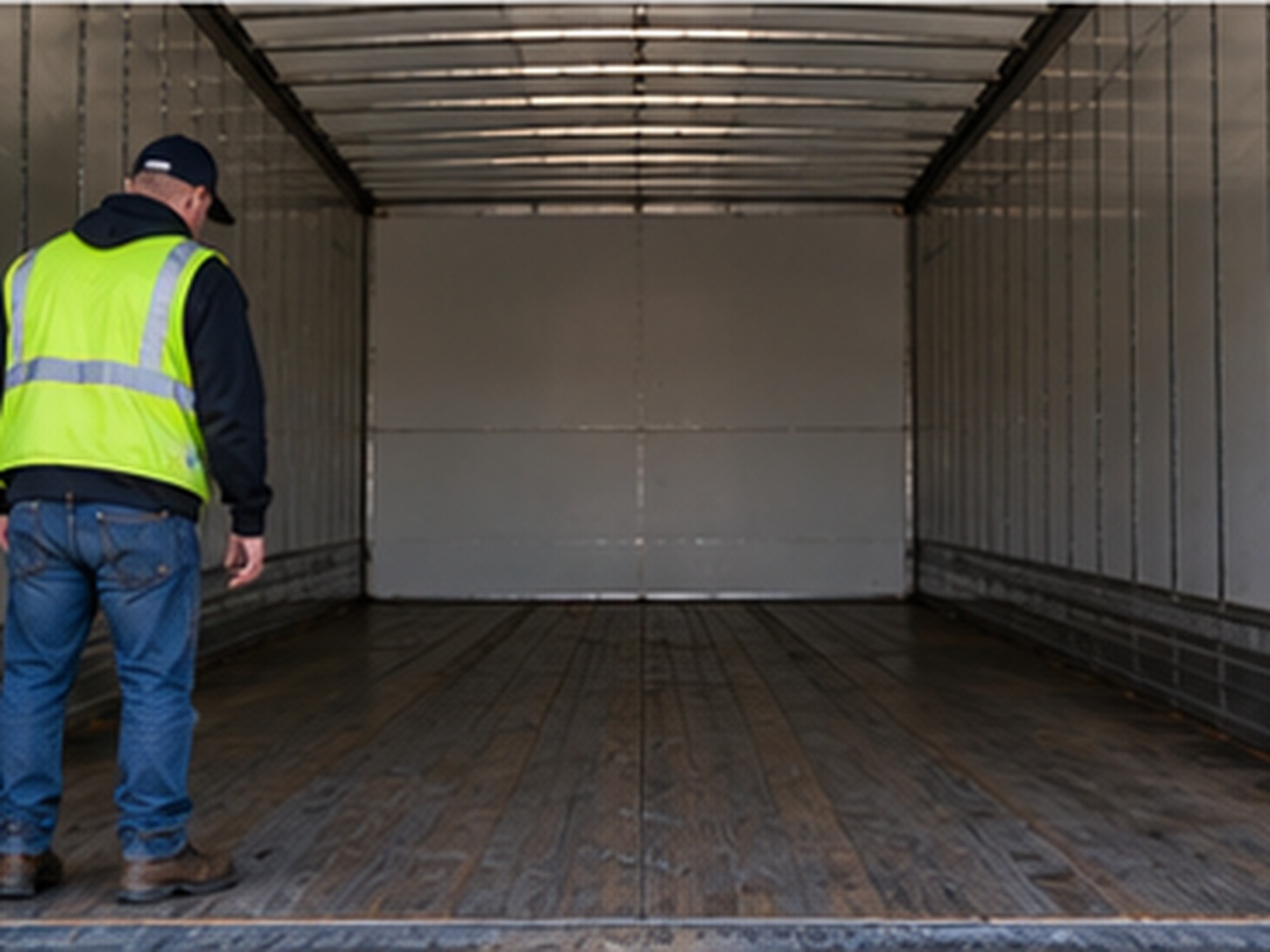
This page is the shipper inspecting the carrier's empty trailer before loading. It is different from freight inspection, where the carrier inspects the shipper's freight after pickup.
Do these first
Inspect before the first pallet goes in.
- Check the floor — OSHA requires checking trailer flooring for breaks and weakness before powered industrial trucks enter.
- Look at walls and roof — note visible damage, openings or moisture concerns.
- Check doors — verify they operate and visible damage is documented.
- Photograph questionable conditions — do it before freight hides the area.
Floor condition comes first
OSHA requires trailer flooring to be checked for breaks and weakness before powered industrial trucks are driven onto it.
That is the first safety check because a forklift places concentrated load on the trailer floor.
Do not send a forklift into a trailer with a visibly unsafe floor.
Walls, roof and visible openings
Look for visible conditions that could affect the load, such as:
- Holes
- Torn interior panels
- Exposed sharp surfaces
- Visible moisture
- Water staining
- Debris
This is a condition check, not a structural engineering inspection.
If something looks wrong, stop and resolve it before loading.
Odor, debris and contamination concerns
Some commodities are sensitive to:
- Strong odors
- Dirt
- Residue
- Moisture
- Previous-cargo contamination concerns
The shipper's commodity requirements determine whether the trailer is acceptable.
Do not use this page to invent food-sanitation standards.
For food and temperature-controlled freight, use reefer airflow and loading and the shipper's own sanitary instructions.
Doors and seals
Before loading, inspect visible door condition and make sure the doors can close properly.
If the shipment requires a numbered seal, confirm the seal procedure after loading.
Record the seal number in the shipment paperwork where required.
Reefer-specific condition
For a reefer, also check:
- Air chute condition
- Floor airflow channels
- Visible interior cleanliness
- Refrigeration-unit condition as required by the shipper/carrier process
- Required temperature preparation
Do not duplicate the airflow guide here.
Photograph before loading
Photos are most useful before freight blocks the trailer surfaces.
Consider documenting:
- Empty trailer interior
- Floor
- Walls
- Ceiling
- Doors
- Any existing damage
- Moisture or residue concerns
That can help separate pre-existing trailer condition from freight damage discovered later.
What to have ready
- Commodity requirements — Especially moisture, odor or cleanliness sensitivity.
- Trailer type — Dry van or reefer.
- Photos — Keep them with the load record.
- Seal requirement — If the load must be sealed after loading.
Important to know
- This is a pre-load trailer condition check.
- The carrier-side freight inspection page is a different process.
- Reefer sanitation and temperature instructions come from the actual shipment requirements.
Do not assume
- A clean exterior means the trailer interior is acceptable.
- A dry van and reefer need the same condition checks.
- Visible trailer problems are easier to document after the trailer is loaded.
Sources
- OSHA 29 CFR 1910.178, trailer flooring check before powered industrial truck entry
- OSHA Powered Industrial Trucks — Loading and Unloading
- FMCSA Cargo Securement Rules
Tell us if the trailer is not acceptable before loading
Document the condition and call before the freight goes in so the equipment issue can be solved while the trailer is still empty.
Request a Freight Quote