The short answer
An inspection is the carrier verifying your shipment against the bill of lading: weighing it, measuring it and looking at what it actually is. Most reclasses start here.
Do these first
Good pre-pickup records make an inspection easier to review later.
- Measure finished freight — include pallet, packaging and projections.
- Use actual weight — keep scale or warehouse records when available.
- Describe the commodity accurately — vague descriptions make classification review harder.
What happens on the dock
The carrier can verify:
- Actual shipment weight
- Outside dimensions
- Packaging and handling-unit count
- Commodity description
- Classification information
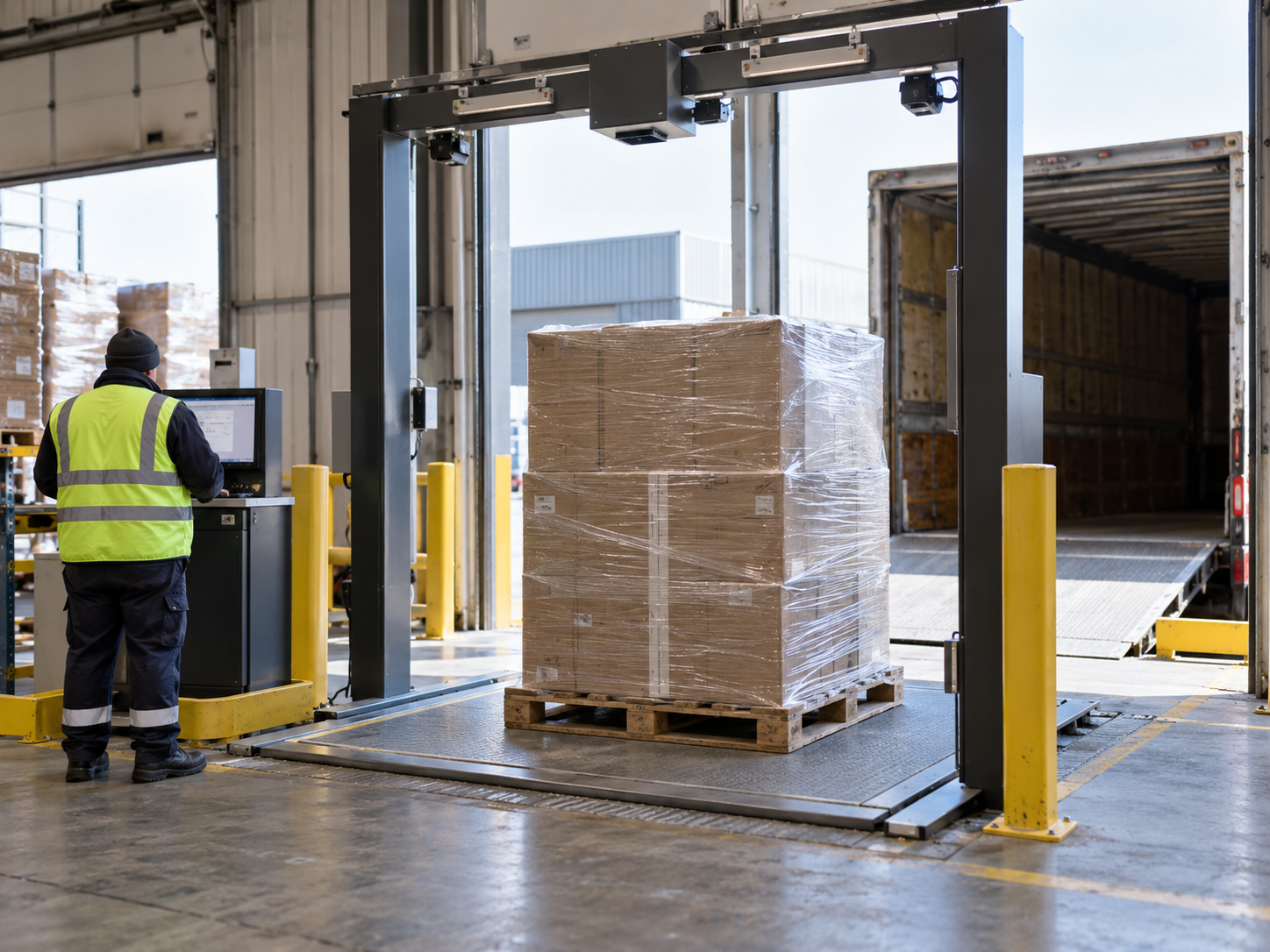
What a dimensioner does
A freight dimensioner or scanning system captures the shipment's outside measurements.
NMFTA's density guidance says density calculations use the greatest straight-line dimensions of the handling unit as tendered, including projections.
That is why a nominal 48 × 40 pallet can measure larger when cartons, wrap or product extend beyond the pallet.
What can happen after inspection
If the carrier's verified information differs from what was tendered, the billing record may be corrected.
That can lead to:
- Reweigh
- Dimension correction
- Reclass
- Rebill
See freight reclass for the classification side.
Important to know
- The inspection is about the freight that physically arrived at the carrier's dock.
- Finished dimensions matter more than nominal pallet size.
- Good records let you compare the carrier's measurement with your own.
Sources
Want to prevent an inspection surprise?
Send the final weight, finished dimensions and commodity before the shipment is tendered.
Request a Freight Quote