
The short answer
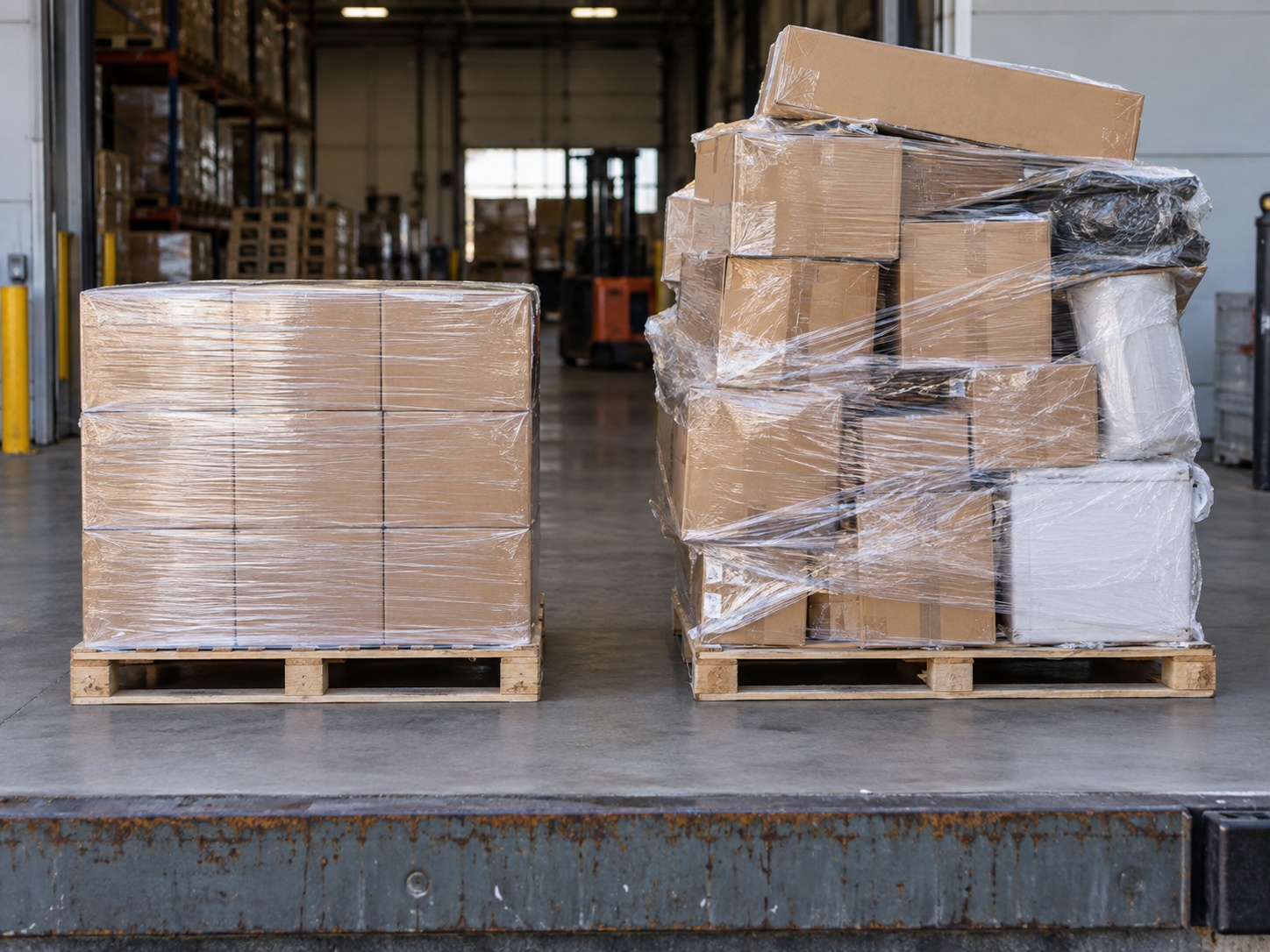
Stackable freight has a stable top and enough structural strength to support compatible freight above it. Non-stackable freight should not have another handling unit loaded on top.
Do these first
Decide stackability from the finished package, not the product name.
- Check the top surface — it needs to be stable and reasonably level.
- Check packaging strength — cartons or crate structure must support the intended load.
- Check product sensitivity — fragile or protruding product may make the unit non-stackable.
What makes freight stackable
A stackable unit normally has:
- Stable base
- Stable top
- Adequate package strength
- No fragile projections
- No uneven product that creates point loading
- No shipper restriction against top loading
The freight still needs to be compatible with whatever is placed above it.
What makes freight non-stackable
Common reasons include:
- Fragile product
- Irregular top
- Machinery projections
- Soft cartons
- Open-top crates
- Tall unstable loads
- Product that cannot tolerate vertical load
Why it matters in LTL
LTL carriers combine multiple shipments in the same trailer.
A non-stackable unit can consume usable space above its physical height because nothing can be safely placed on top.
That is one reason the LTL network cares about handling characteristics beyond simple weight.
Use why LTL freight gets damaged for the handling-count problem.
Why it matters in partial freight
Partial truckload pricing is often sensitive to the amount of trailer space a shipment consumes.
A non-stackable handling unit may prevent the carrier from using vertical space above it even though the floor footprint stays the same.
Important to know
- Stackable is a packaging and product decision.
- The top surface and product strength matter more than empty air above the pallet.
- Carrier loading decisions still depend on compatible freight and safe handling.
Do not assume
- A flat-looking pallet can support any amount of weight.
- A crate is automatically stackable.
- "Do not stack" can be ignored because the trailer has space.
Tell us whether the freight can take top load
Include stackability with the dimensions and weight so the carrier is pricing the space the shipment really consumes.
Request a Freight Quote