
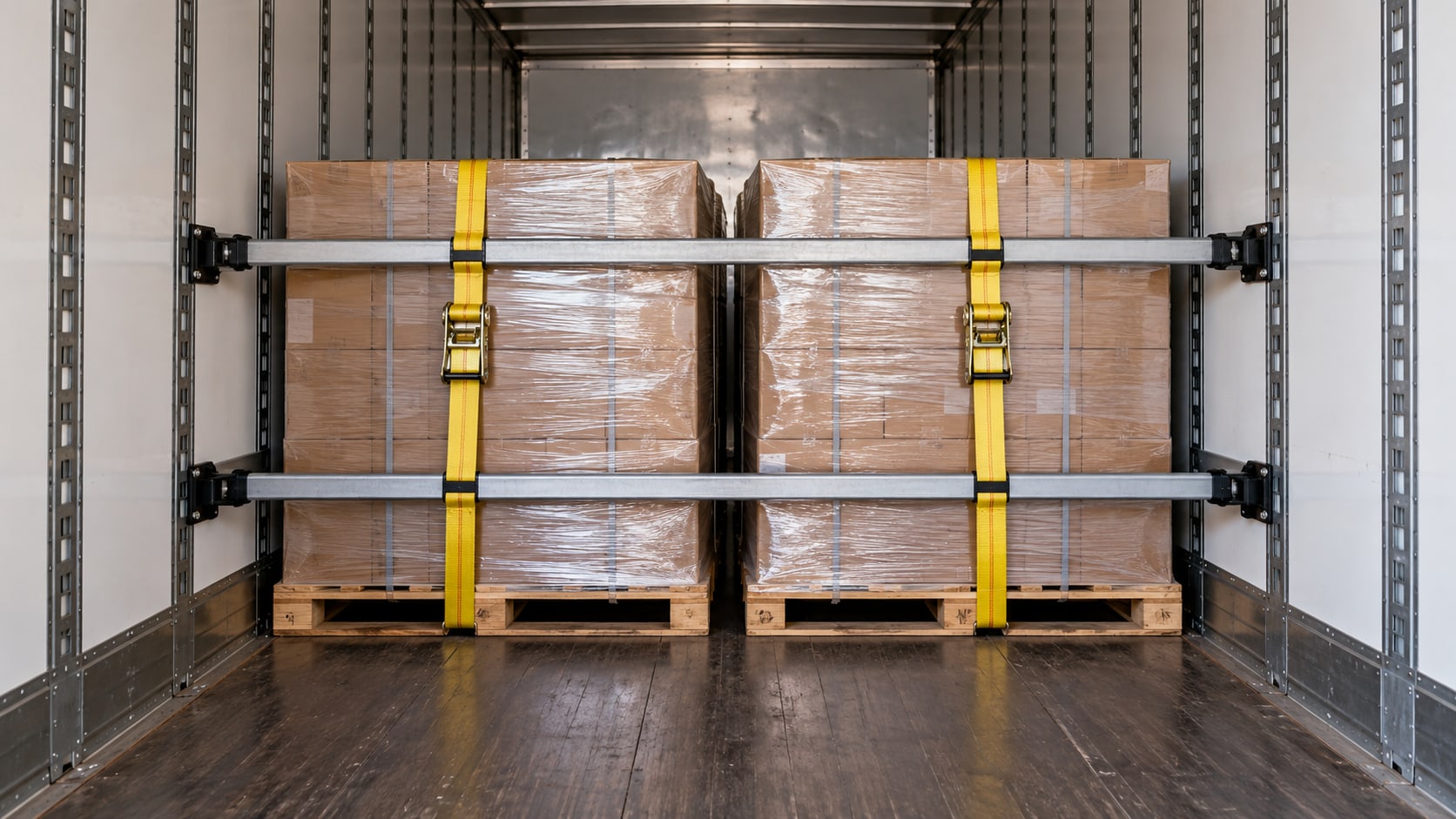
Freight securement keeps the load from sliding, tipping, rolling or separating when the truck changes speed or direction. The right method depends on the freight, packaging, trailer and amount of open space around the load.
First ask what the freight can do
Look at the loaded freight and ask:
- Can it slide forward or backward?
- Can it move side to side?
- Can it tip?
- Can round product roll?
- Can stacked product separate?
- Can open space let pallets build momentum before they hit something?
- Can a strap or bar damage the product if applied directly?
The answer tells you what type of restraint the load needs.
Dunnage
Dunnage fills space, separates freight or creates a stable support surface.
Examples include:
- Wood
- Air bags designed for cargo use
- Pads
- Mats
- Other approved load-support materials
Dunnage can help reduce movement, but it has to remain effective through the trip.
Do not use loose filler that can collapse, shift or damage the product.
Blocking
Blocking physically prevents freight from moving in a direction.
It is useful when the load has open space and needs a solid stop.
Good blocking is:
- Strong enough for the load
- Positioned against a structurally appropriate area
- Installed so it cannot simply move with the freight
- Compatible with the trailer and cargo
Bracing
Bracing supports or reinforces the load so it does not tip, lean or shift.
It may work with blocking to create a more complete restraint system.
Irregular freight often needs more thought than palletized cartons because the center of gravity and contact points can be different.
Load bars
Load bars can help create a barrier across the trailer.
They are useful for certain palletized and partial loads, but the bar has to be:
- Rated and appropriate for the application
- Installed against the correct trailer surfaces or track
- Tight enough to remain in place
- Positioned where the freight cannot simply move under, over or around it
A load bar is not automatically the right answer for heavy freight.
Straps
Straps can help restrain freight against forward, rearward or side movement.
Use attachment points intended for cargo securement.
Consider:
- Strap rating
- Direction of restraint
- Contact with carton edges
- Whether the load can compress
- Whether the strap can loosen as the freight settles
Use edge protection when strap pressure could damage the product or packaging.
Edge protection
Edge protectors spread force and protect corners from straps, banding or contact.
They can help prevent:
- Crushed cartons
- Cut packaging
- Damaged edges
- Concentrated strap pressure
They do not replace the restraint itself.
Open space changes the problem
A tightly packed load and a partial load behave differently.
If pallets have several feet of open trailer ahead of them, they can move before contacting the next restraint or trailer surface.
That movement can create more damage than a load that is already well contained.
This is one reason partial truckload freight needs careful space and securement planning.
Secure the freight without damaging it
More force is not always safer.
A strap can crush cartons. A bar can damage product. Blocking can concentrate force into a weak package.
Use enough restraint to control movement while protecting the load itself.
Reefer trailers need additional care
Do not install securement in a way that damages reefer walls, airflow components or refrigeration equipment.
For temperature-controlled freight, read reefer airflow and loading.
Use the loading guide for placement
The truck and pallet loading guide covers loading patterns and general movement control.
Use this page when you need to decide what physical restraint should keep the freight where you placed it.
Final securement check
Before closing the trailer
- Freight cannot freely slide into open space
- Tall loads are stable
- Rolling freight is controlled
- Bars are installed correctly
- Straps are properly attached and tensioned
- Edge protection is used where needed
- Dunnage cannot collapse or escape
- Blocking and bracing are stable
- Securement does not damage the product
- Trailer walls and equipment are not being misused as attachment points
- Doors can close without contacting the freight
Securement requirements vary
Cargo type, trailer type and applicable carrier or regulatory requirements can change what is required. Use this guide for planning, then confirm the specific securement method for the shipment.
Have freight that does not load like a normal pallet shipment?
Send the dimensions, weight, packaging and equipment type and we will help identify what needs to be discussed with the carrier before dispatch.
Request a Freight Quote