
Carton freight
How to Ship Boxes and Cartons by Freight
Enter how many cartons, their size and weight, and whether they stack. The Load Planner checks them against cargo vans, box trucks, vans and reefers in our library and shows what physically fits.
Carton details
Freight Command Center Freight load report
Jay Rock Freight Broker · UCW Logistics 520-394-7400 · jrock@ucwlogistics.com FreightCommandCenter.com
Your load
Correct anything in the shipment and rebuild the answer. Nothing else you entered is lost.
Use this load
The measurement behind the answer: the shipment as FCC read it, every check, every option in full and why some were ruled out.
What was checked
Everything the planner could settle from what you entered is marked as checked. Everything it could not is listed as requiring confirmation rather than assumed, and the two are never mixed.
Space used
A possible arrangement, not an instruction. It shows that the freight can be placed inside the published floor dimensions; the driver and carrier decide the actual load order, weight distribution and securement.
Equipment fit details
Every trailer in the library measured against this shipment, and what each one said about the freight physically. These are fit answers, not a second set of recommendations.
Requires confirmation
Where a figure is marked as requiring confirmation, it is because this site does not publish that measurement for that equipment -- most often the rear-door opening, which is a different measurement from the interior width.
Recommended planning fit, based on the information entered and the equipment figures this site publishes. Actual equipment specifications vary. Final loading, weight distribution, securement and legal compliance remain subject to the carrier, the driver and the actual equipment.
Your stops are already in it. Nothing you do in here changes the shipment above.
Request a quote
Request received
Thank you. Your quote request is in.
Your reference is . Keep it for any follow-up.
This is a quote request, not a confirmed booking. We’ll review it and follow up using the contact details you provided.
How carton freight is planned
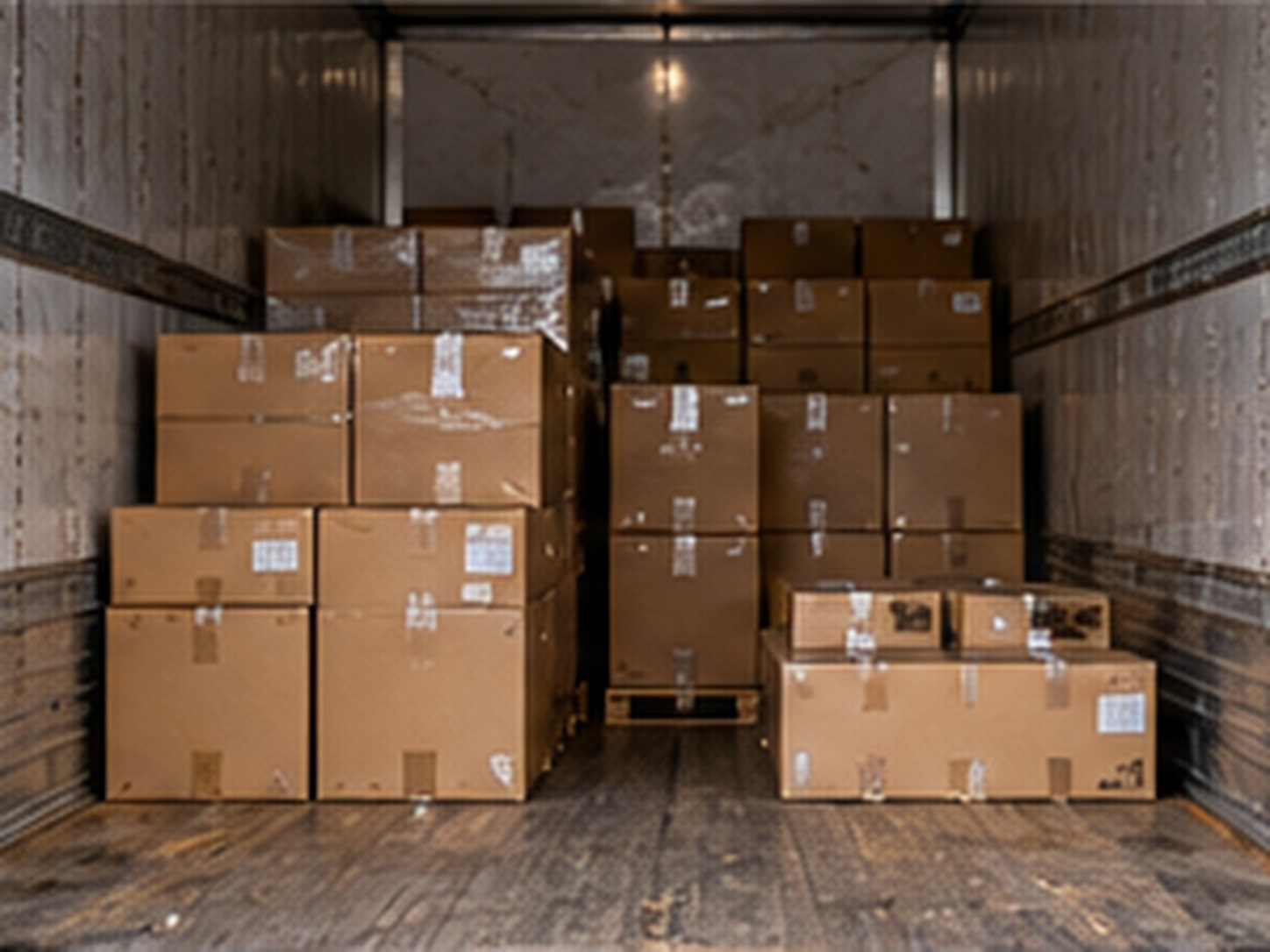
Cartons travel one of two ways: on pallets, or floor loaded — stacked directly on the trailer floor. If the cartons will be palletized, plan them as pallets. Floor-loaded cartons are planned by the size and weight of each carton, and they take longer to load and unload by hand.
Count, carton size and weight decide the space. Cartons usually stack, but crush strength varies, and light or soft packaging may not take weight on top. Tell the planner if they cannot.
A small carton shipment may not need a full trailer at all. The planner compares cargo vans and box trucks as well as 53-foot equipment, and says which ones the cartons actually fit.
What we need to plan it
- How many cartons of each size
- Carton length × width × height
- Weight per carton or for the whole shipment
- Whether the cartons can take weight on top
- Palletized or floor loaded
- Any temperature requirement
- Where it picks up and delivers, and whether each end has a dock or needs a liftgate
Equipment to consider
Carton freight moves in enclosed equipment. The size of the shipment decides which: a cargo van or box truck for a small one, a dry van or reefer for a large one.
Sprinter-Style Cargo Van
Urgent smaller shipments, parts, automotive freight and time-sensitive deliveries. Medical freight may have additional handling requirements.
Box Truck / Straight Truck
Smaller shipments, urban deliveries and commercial locations that do not need a full tractor-trailer.
53' Dry Van
Palletized freight, boxed goods, packaged products, consumer goods and most general freight.
53' Refrigerated Trailer / Reefer
Produce, frozen products, dairy, meat, beverages and other temperature-sensitive freight. Pharmaceutical shipments may require additional qualifications.
The planner compares your shipment against every equipment type in our library that carries this kind of freight. The result it gives you, not this list, is the answer — and actual equipment specifications vary by carrier.
What affects the price
- The number of cartons and the total weight
- The space they take, and whether they stack
- Floor loading, which means hand loading and unloading time at both ends
- Liftgate, residential or inside delivery
- Distance, the lane and lead time
- Current market conditions
Common mistakes
- Giving the weight of one carton without the count, or the reverse.
- Describing palletized cartons as loose boxes — plan them as pallets.
- Forgetting that floor-loaded freight needs people to load and unload it.
- Assuming light cartons can take weight on top.
- Putting every carton size on one line.
Common questions
When should cartons ship as freight instead of parcel?
When the count, weight or size makes sending them one at a time impractical, or when they need to arrive together. There is no single cutoff; send the shipment details and we will look at it.
Is it better to palletize my cartons?
Palletized cartons load faster and are handled as one unit; floor-loaded cartons can use trailer space better but take longer to load and unload. Floor-loaded freight sets out the trade-off.
What does floor loaded mean?
The cartons are stacked directly on the trailer floor rather than on pallets, and are loaded and unloaded by hand.
Can my cartons go in a cargo van or box truck?
If they fit and the weight is within the vehicle’s capacity, yes. The planner checks cargo vans and box trucks with the rest of the library and shows which ones work.
What if my cartons are different sizes?
Add each size as its own freight item. The planner plans the whole shipment together.
Related tools and guides
Ready to price this carton shipment?
Use the planner above, then send the shipment to us for an actual freight price. Once you have run a report, this button opens the quote with the shipment already filled in, so nothing is typed twice.