
STATE PERMIT GUIDE
Missouri: plan the permit work.
Every field below says what FCC has verified against an official source and what it has not. A field marked Confirmation required is one FCC has not verified — it is not a requirement that does not exist, and it is never a zero.
- Issuing authority
- Missouri Department of Transportation (MoDOT) Motor Carrier Services
- Checked by FCC
- 21 of 22 fields verified, last on 2026-09-20
Dimensions & weight
- General loaded width
- 102 in
Any vehicle operated upon the highways of this state, including load. A recreational-vehicle appurtenance exception follows in the same subsection. Quoted from the cited document and matched against it on 20 September 2026. Exceptions and permit conditions apply.
Verified 2026-09-20 · Regulations as to width, height and length of vehicles (Missouri Revisor of Statutes) · RSMo 304.170.1 - General loaded height
- 168 in
14 ft on the interstate highway system and on any route designated by the state highways and transportation commission; 13 1/2 ft on all other highways (14 ft for vehicles transporting automobiles or other motor vehicles). Road-class dependent: interstate and commission-designated routes versus all other highways. Quoted from the cited document and matched against it on 20 September 2026. Exceptions and permit conditions apply. The published limit differs by road class, so FCC does not apply an automatic threshold for this state; the requirement is confirmed against the route.
Verified 2026-09-20 · Regulations as to width, height and length of vehicles (Missouri Revisor of Statutes) · RSMo 304.170.2 - Configuration-specific length
- Single motor vehicle: 45 ft including load. Truck-tractor and semitrailer (or truck-tractor with dromedary and semitrailer): 60 ft including load, except that on the interstate system there is no overall limit and the semitrailer may not exceed 53 ft. Truck-tractor + semitrailer + trailer on the interstate: no overall limit, neither trailing unit over 28 ft; on non-designated primary highways, 65 ft overall. All other combinations: 65 ft on primary or interstate highways plus 10 miles, and 55 ft on any other highway.
Configuration- and road-class dependent. The 65/55 ft catch-all is 304.170.12: 'Except as provided in subsections 5, 6, 7, 8, 9, 10, and 11 of this section, no other combination of vehicles operated upon the primary or interstate highways of this state plus a distance of ten miles from a primary or interstate highway shall have an overall length, unladen or with load, in excess of sixty-five feet or in excess of fifty-five feet on any other highway.' Subsections 7-10 add transporter, saddlemount and towaway lengths. Quoted from the cited document and matched against it on 20 September 2026. Exceptions and permit conditions apply.
Verified 2026-09-20 · Regulations as to width, height and length of vehicles (Missouri Revisor of Statutes) · RSMo 304.170.3, .5, .6, .12 - Gross combination weight
- 80,000 lb total gross weight. On highways other than the interstate system a vehicle may exceed single-axle, tandem-axle and gross limits by not more than 2,000 lb, but total gross weight still may not exceed 80,000 lb except under the named exceptions (for example 85,500 lb for milk from a farm or livestock, off the interstate).
Highways other than the interstate highway system, for the 2,000 lb tolerance; the 80,000 lb ceiling is the general figure. The exception list continues past subsection 9 in the statute text; subsection 9 allows up to 85,500 lb for milk hauled from a farm to a processing facility or for livestock, on non-interstate highways only. Quoted from the cited document and matched against it on 20 September 2026. Exceptions and permit conditions apply.
Verified 2026-09-20 · Regulations as to weight - axle load, tandem axle defined · RSMo 304.180.6 (quoted); table at 304.180.3; milk/livestock exception at 304.180.9 - Axle / bridge / tire limits
- 20,000 lb on one axle; 34,000 lb on any tandem axle; a steering axle of a general-freight regular-route combination is limited to the manufacturer's rating, not to exceed 12,000 lb. 'Tandem axle' means a group of two or more axles arranged one behind another whose extremes are more than 40 in and not more than 96 in apart.
Any highway in this state. Permit configurations and their maximum permitted gross weights by axle count are separately tabulated in 7 CSR 10-25.020(11)(C) (for example 104,000 lb on a 5-axle configuration, 120,000 lb on a 6-axle configuration, up to 150,000 lb on a 1-2-2-2 7-axle configuration). Quoted from the cited document and matched against it on 20 September 2026. Exceptions and permit conditions apply.
Verified 2026-09-20 · Regulations as to weight - axle load, tandem axle defined · RSMo 304.180.1 - Load overhang
- Confirmation required
FCC has not verified this against an official source yet, so nothing is published. Confirm the requirement with the Missouri issuing authority — a blank field is not a requirement that does not exist.
Permits & costs
- Single-trip permit
- $15 for a single trip oversize permit. $15 plus a $250 movement feasibility fee for a single trip oversize permit in excess of 16 ft wide, 16 ft high or 150 ft long. $15 plus $20 per each 10,000 lb in excess of legal gross weight for a single trip overweight permit up to and including 160,000 lb gross. Above 160,000 lb gross, the same plus a bridge and roadway analysis fee of $425 (0-50 miles), $625 (51-200 miles) or $925 (over 200 miles). Multi-stop oversize permit (farm implements only) $25.
Special permit fees payable before issuance. 'Fees shall not be required for permits covering the movement of vehicles and loads owned and operated by governmental subdivisions or agencies.' Quoted from the cited document and matched against it on 20 September 2026. Exceptions and permit conditions apply. The 40-state package cited a departmental page for this field as well; the statute or rule is kept as the authority.
Verified 2026-09-20 · Motor Carrier Operations (7 CSR 10-25.020 Oversize/Overweight Permits) · 7 CSR 10-25.020(4)(B)1.-5., printed p6 (PDF p5) - Annual permit
- Annual blanket emergency overweight permit (round trip) $624; annual blanket oversize permit - single commodity $128; annual blanket oversize permit - multiple commodity $400; annual blanket longer combination vehicle $128; annual blanket overweight well drillers, concrete pump trucks or crane permit $300; annual blanket milk hauler permit $500. All prorated quarterly. A 30-day blanket permit is $300.
Annual blanket permits. Their dimensional ceiling is set by 7 CSR 10-25.020(6): 'Blanket permits may be issued for moves up to and including twelve feet, six inches (12'6") in width and one hundred fifty feet (150') in overall length. Height and weight shall be legal.' The typo 'one hundred twenty-eighty dollars ($128)' is in the published rule. Quoted from the cited document and matched against it on 20 September 2026. Exceptions and permit conditions apply.
Verified 2026-09-20 · Motor Carrier Operations (7 CSR 10-25.020 Oversize/Overweight Permits) · 7 CSR 10-25.020(4)(B)6.-12., printed p7 (PDF p6) - Validity
- Single trip: one load, one origin to one destination, and the move must be completed in seven moving days. Annual blanket: all annual permits expire at 12:00 a.m. on January 1 of the following year. By statute, permits are issued only for a single trip or for a definite period not beyond the expiration date of the vehicle registration.
Single trip permits. The annual rule is 7 CSR 10-25.020(6): 'All annual permits will expire at 12:00 a.m. on January 1 of the following year.' The statutory frame is RSMo 304.200.1: 'Such permits shall be issued only for a single trip or for a definite period, not beyond the date of expiration of the vehicle registration, and shall designate the highways and bridges which may be used pursuant to the authority of such permit.' Quoted from the cited document and matched against it on 20 September 2026. Exceptions and permit conditions apply.
Verified 2026-09-20 · Motor Carrier Operations (7 CSR 10-25.020 Oversize/Overweight Permits) · 7 CSR 10-25.020(1)(H), printed p5 (PDF p4); annual expiry at (6), printed p7; statutory limit at RSMo 304.200.1 - Published lead time
- For super heavy and large loads, the applicant should allow at least two weeks for a route evaluation. No general lead time is published for routine permits.
Super heavy and large load movements only - those generally in excess of 16 ft wide, 16 ft high, 150 ft long and/or over 160,000 lb gross. For routine oversize and overweight permits the rule states no advance-application period. Quoted from the cited document and matched against it on 20 September 2026. Exceptions and permit conditions apply.
Verified 2026-09-20 · Motor Carrier Operations (7 CSR 10-25.020 Oversize/Overweight Permits) · 7 CSR 10-25.020(15)(A), printed pp16-17 (PDF pp15-16) - Special / superload review
- Super heavy and large load review applies to permit applications with dimensions or weights exceeding the routine limits - generally in excess of 16 ft wide, 16 ft high, 150 ft long and/or over 160,000 lb gross weight. Such applications must be submitted electronically with insurance information, and a minimum of $425 may be required in escrow to cover a bridge analysis before the application can be processed. Above 350,000 lb GVW an additional power unit must accompany the load. Above 17 ft loaded height the applicant must supply written utility-company approval to disturb aerial lines.
Loads in excess of routine permit limits, considered under section (15) 'when air, rail, or water terminal points are not available'. Minimum insurance for super heavy and large loads is $2,000,000 combined single limit under 7 CSR 10-25.020(2)(A). Quoted from the cited document and matched against it on 20 September 2026. Exceptions and permit conditions apply. The 40-state package cited a departmental page for this field as well; the statute or rule is kept as the authority.
Verified 2026-09-20 · Motor Carrier Operations (7 CSR 10-25.020 Oversize/Overweight Permits) · 7 CSR 10-25.020(15)(A), (C), (D), printed pp16-17 (PDF pp15-16) - State permit fee
- Seventeen named permit fees are fixed in the rule (see singleTrip and annual). The variable components are: $20 per each 10,000 lb in excess of legal gross weight for overweight single trips; a $250 movement feasibility fee for oversize above 16 ft wide / 16 ft high / 150 ft long; and a distance-banded bridge and roadway analysis fee of $425 / $625 / $925 above 160,000 lb gross. Other fixed items: project permit $125, highway crossing permit $250, noncommercial building movement $265, single trip commercial zone bridge analysis $265, permit amendment $2. All oversize/overweight special permits issued by MoDOT Motor Carrier Services. Fees may be waived by the Motor Carrier Services director when a federal or state disaster declaration is in effect. Quoted from the cited document and matched against it on 20 September 2026. Exceptions and permit conditions apply.Verified 2026-09-20 · Motor Carrier Operations (7 CSR 10-25.020 Oversize/Overweight Permits) · 7 CSR 10-25.020(4)(B), printed pp6-7 (PDF pp5-6)
Escorts & markings
- Pilot cars / escorts
- Over 12 ft 6 in wide: escorts required. Over 12 ft 6 in to 14 ft wide: one escort per oversize unit - rear on divided or multi-lane undivided highways, front on two-lane highways. Over 14 ft to 16 ft wide: two escorts (one front, one rear) on all multi-lane undivided and two-lane highways; one rear escort on all divided highways. Overlength: a rear escort when the vehicle and load exceed 110 ft for a combination unit on all highways except divided highways, or exceed 125 ft for a combination unit on all highways. A separate escort is required for each load and each dimension; no more than two front and two rear civilian escorts for any single load except for movements of unusual complexity. Front escorts travel about 300 ft ahead and rear escorts about 300 ft behind. Superloads add: one front and one rear for loads over 350,000 lb; one front on two-lane highways for superloads (except those not over 220,000 lb with no other escort trigger); one front and two rear for crawl-speed bridge crossings in the Kansas City and St. Louis areas; one front and one rear on divided and multi-lane undivided highways if the load exceeds 16 ft wide; and no more than three civilian escorts for any combination of those four triggers.
Applies to all movements of oversize and/or overweight loads except as stipulated in sections (6), (11), (12), (13), (14), (15) and (16). The width-band counts are in the separate sections quoted in the locator - (13)(B): 'One (1) escort is required for each oversize unit on the highway system. This escort shall be in the rear on divided or multi-lane undivided highways and in the front on two- (2-) lane highways.' and (14)(B): 'Two (2) escorts are required on all multi-lane undivided and two- (2-) lane highways, one (1) front and one (1) rear. One (1) rear escort is required on all divided highways.' Quoted from the cited document and matched against it on 20 September 2026. Exceptions and permit conditions apply. The 40-state package cited a departmental page for this field as well; the statute or rule is kept as the authority.
Verified 2026-09-20 · Motor Carrier Operations (7 CSR 10-25.020 Oversize/Overweight Permits) · 7 CSR 10-25.020(9)(G)1.-4. and (9)(H), printed p10 (PDF p9); (13)(B) and (14)(B), printed p16 (PDF p15); (15)(G)1.-4., printed p17 (PDF p16) - Police escort
- Missouri State Highway Patrol escorts are required when the load exceeds 16 ft wide on any two-lane highway; 18 ft wide on a divided or multi-lane undivided highway; 150 ft overall length on any highway; 17 ft high on any highway; or any time deemed necessary due to complexity of route or load. Motor Carrier Services may waive the requirement or allow substitution of local or military law enforcement.
Super heavy and large load movements under section (15). The same paragraph adds that the Patrol may conduct a Level I inspection before escorting, and (15)(F)4. adds: 'Unless otherwise stated on the permit, dates and times of travel will be determined by the Missouri State Highway Patrol if the load requires their escort services'. Quoted from the cited document and matched against it on 20 September 2026. Exceptions and permit conditions apply.
Verified 2026-09-20 · Motor Carrier Operations (7 CSR 10-25.020 Oversize/Overweight Permits) · 7 CSR 10-25.020(15)(G)5.A.-E., printed p17 (PDF p16) - Height pole
- A height detection vehicle is required to precede overheight loads exceeding 15 ft 6 in. It satisfies any front escort requirement except where multiple front escorts are prescribed, and must have a vertical clearance detection device and direct, continuous, uninterrupted two-way communication with the power unit.
All permits under section (9). Separately, above 17 ft loaded height a super heavy / large load applicant must provide written utility-company approval to disturb aerial lines (15)(C), and a Missouri State Highway Patrol escort is required above 17 ft high (15)(G)5.D. Quoted from the cited document and matched against it on 20 September 2026. Exceptions and permit conditions apply.
Verified 2026-09-20 · Motor Carrier Operations (7 CSR 10-25.020 Oversize/Overweight Permits) · 7 CSR 10-25.020(9)(G)3., printed p10 (PDF p9) - Signs / flags / lights
- Flags: red, yellow or orange fluorescent flags in good condition, minimum 18 in square, at the extreme ends or projections of all overwidth and overlength loads and at all four corners of manufactured and sectional home units. Signs: OVERSIZE LOAD or WIDE LOAD signs at least 7 ft long by 18 in high with 10 in letters of 1 5/8 in stroke, front and rear, for loads exceeding 10 ft 6 in in width on all highways; a rear sign is also required when a combination unit exceeds 110 ft or a single unit exceeds 50 ft overall. Yellow background, black lettering. Escort signs: minimum 5 ft by 1 ft with 10 in letters, yellow background, black lettering, visible for at least 300 ft. Lights: for permitted night moves the signs must be lighted or reflectorized and clearance lights mounted at extreme ends or load projections in lieu of flags.
All oversize permits. The sign legend must read 'OVERSIZE LOAD' or 'WIDE LOAD'. Quoted from the cited document and matched against it on 20 September 2026. Exceptions and permit conditions apply.
Verified 2026-09-20 · Motor Carrier Operations (7 CSR 10-25.020 Oversize/Overweight Permits) · 7 CSR 10-25.020(10)(A), printed p10 (PDF p9); escort signs at (8)(D)-(E); night lighting at (10)(F) and (9)(F)1.
When and where to move
- Travel hours
- Travel is limited to one-half hour before sunrise to one-half hour after sunset, subject to the exceptions in the rule. Metropolitan curfews apply Monday to Friday in St. Louis, St. Charles, Kansas City and Springfield - for example all routes in St. Louis City and County except Route 370 are restricted 6:30-9:00 a.m. and 3:30-6:30 p.m.; the Kansas City bounded area 7:00-9:00 a.m. and 4:00-6:00 p.m.; inside Springfield city limits 7:00-9:00 a.m. and 4:00-6:00 p.m. The metropolitan curfews do not apply to loads that are overweight only. Overweight loads of legal height, not over 110 ft long and not over 12 ft 6 in wide and within the gross weight table are granted day and night movement.
All permits under section (9). The line break in 'onehalf' is in the published text. Quoted from the cited document and matched against it on 20 September 2026. Exceptions and permit conditions apply.
Verified 2026-09-20 · Motor Carrier Operations (7 CSR 10-25.020 Oversize/Overweight Permits) · 7 CSR 10-25.020(9)(B) and (9)(E), printed p9 (PDF p8); overweight day-and-night allowance at (11)(A), printed p11 (PDF p10) - Weekend movement
- No movement is allowed on Saturdays and Sundays on the named routes in the Lake of the Ozarks and Branson areas. For super heavy and large loads, travel is allowed on Saturday and Sunday for moves 16 ft wide and less except in those tourist areas or when prohibited by the holiday restrictions.
Route- and season-specific weekend bans in two tourist areas, not a statewide weekend ban. The reviewed rule states no general statewide Saturday/Sunday restriction. Quoted from the cited document and matched against it on 20 September 2026. Exceptions and permit conditions apply.
Verified 2026-09-20 · Motor Carrier Operations (7 CSR 10-25.020 Oversize/Overweight Permits) · 7 CSR 10-25.020(9)(D), printed p9 (PDF p8); superload weekend rule at (15)(F)3., printed p17 (PDF p16) - Holiday movement
- Movement is restricted on New Year's Day (January 1), Memorial Day (last Monday in May), Independence Day (July 4 or designated day of observation), Labor Day (first Monday in September), Thanksgiving Day (fourth Thursday in November) and Christmas Day (December 25). Restrictions begin at 12:00 noon on the last business day preceding the holiday and apply until one-half hour before sunrise on the first business day following observation.
General regulations for oversize/overweight permits; applied to oversize, overweight, blanket and superload movements by cross-reference throughout the rule. Quoted from the cited document and matched against it on 20 September 2026. Exceptions and permit conditions apply.
Verified 2026-09-20 · Motor Carrier Operations (7 CSR 10-25.020 Oversize/Overweight Permits) · 7 CSR 10-25.020(1)(I) and (1)(I)1., printed p5 (PDF p4) - Seasonal restrictions
- Seasonal tourist-area restrictions: the Lake of the Ozarks weekend restrictions apply May 25 through Labor Day; the Branson weekend restrictions apply May 1 through November 30.
The two named tourist areas and the specific routes listed under each. No statewide seasonal or frost-law weight restriction is stated in the reviewed sources. Quoted from the cited document and matched against it on 20 September 2026. Exceptions and permit conditions apply.
Verified 2026-09-20 · Motor Carrier Operations (7 CSR 10-25.020 Oversize/Overweight Permits) · 7 CSR 10-25.020(9)(D)1. and (9)(D)2., printed p9 (PDF p8) - Weather restrictions
- No movement is allowed when road conditions are hazardous, such as snow and ice covered, or when hazardous cross winds affect the movement, or when weather conditions limit visibility to less than 500 ft. For loads over 14 ft to 16 ft wide there is also no movement on two-lane highways when dirt shoulders are wet.
All permits under section (9). The wet-shoulder rule is (14)(C)1.: 'No movement on two- (2-) lane highways when dirt shoulders are wet.' Quoted from the cited document and matched against it on 20 September 2026. Exceptions and permit conditions apply.
Verified 2026-09-20 · Motor Carrier Operations (7 CSR 10-25.020 Oversize/Overweight Permits) · 7 CSR 10-25.020(9)(B), printed p9 (PDF p8); wet-shoulder rule at (14)(C)1., printed p16 (PDF p15) - Local / toll jurisdictions
- The state permit does not cover local roads. Routing primarily uses the designated state highway system, and where off-system streets or highways are used it is the applicant's responsibility to obtain approval from the agency responsible for that road and to observe its bridge postings. Overweight permit movements are over specified routes on the state highway system only. By statute, the officer in charge of a municipality's streets may issue permits for use of those streets.
Routing for all oversize/overweight permits. The statutory municipal power is RSMo 304.200.4: 'The officer in charge of the maintenance of the streets of any municipality may issue such permits for the use of the streets by such vehicles within the limits of such municipalities.' Quoted from the cited document and matched against it on 20 September 2026. Exceptions and permit conditions apply.
Verified 2026-09-20 · Motor Carrier Operations (7 CSR 10-25.020 Oversize/Overweight Permits) · 7 CSR 10-25.020(1)(D), printed pp4-5 (PDF pp3-4); state-system-only at (11)(A), printed p11; municipal authority at RSMo 304.200.4
Requirements and fees can change. Final permits, routes and movement requirements are determined by the applicable issuing authorities. State permits may not cover local or toll roads.
Resource center
Plan the details
Ten guides, in the order the work happens.
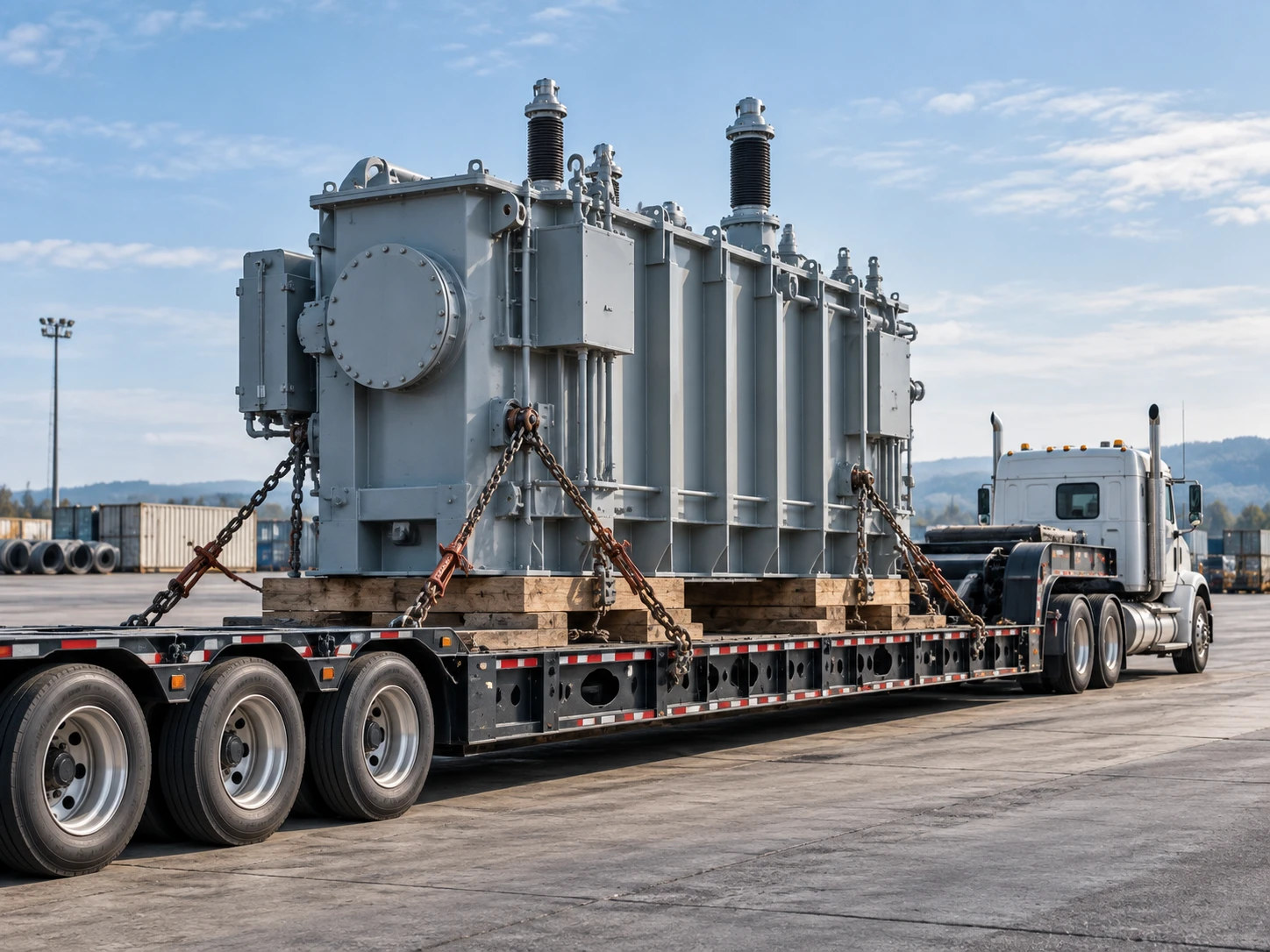 04Start here
How to plan a multi-state oversize load
One route, several permits, and the order to get them in. It is the one that matters most from where you are.
Read the guide →
04Start here
How to plan a multi-state oversize load
One route, several permits, and the order to get them in. It is the one that matters most from where you are.
Read the guide →