
The short answer
Construction freight has to match the build schedule and the physical job site, not just fit on a trailer.
Do these first
Plan the receiving sequence before the freight leaves the yard.
- Group freight by site need — avoid burying first-needed material.
- Confirm site access — truck size, ground and entry.
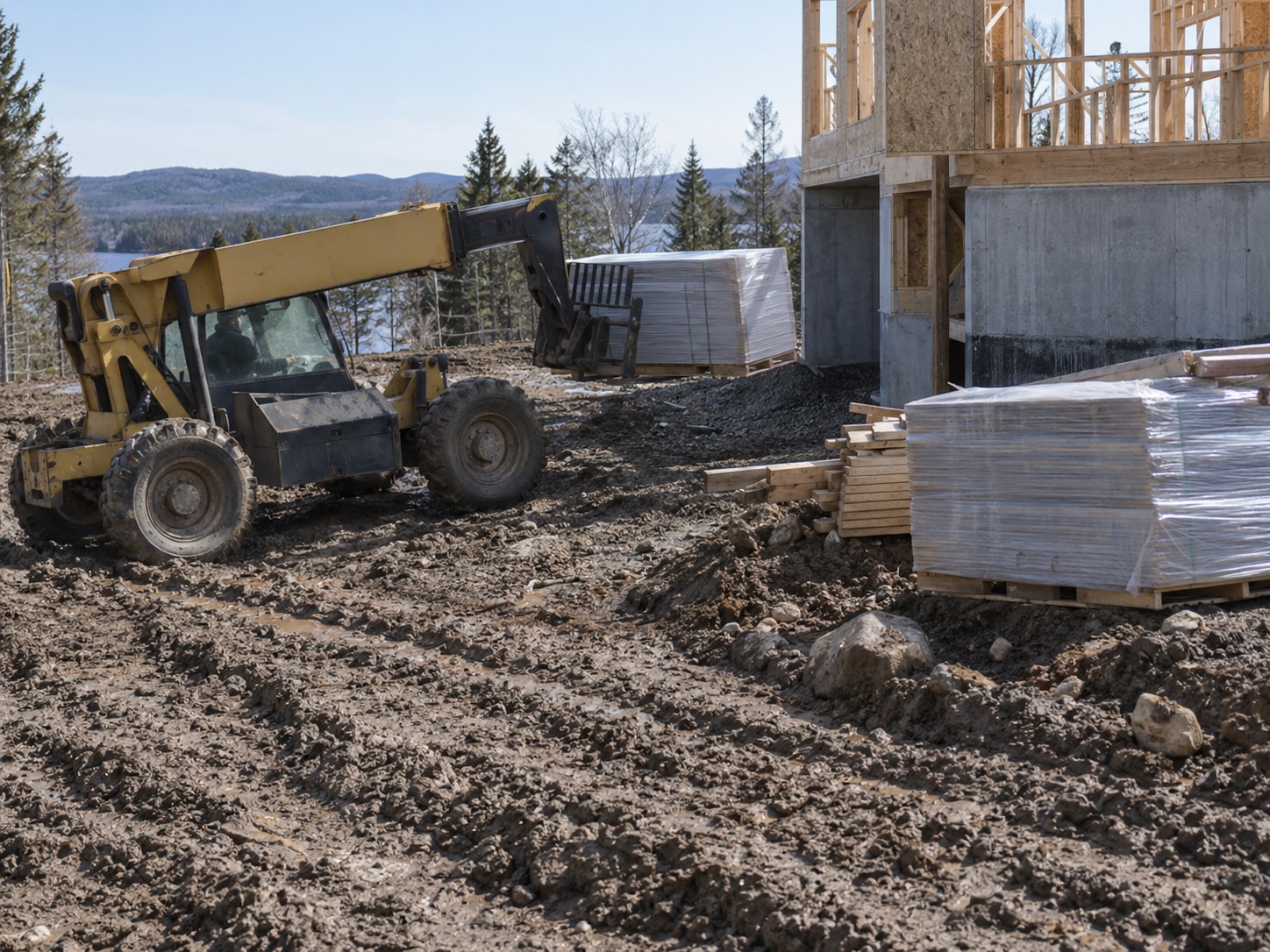
- Confirm unload equipment — forklift, telehandler or crane.
- Name the onsite receiver — one person needs to own the handoff.
Mixed loads create sequencing problems
A construction shipment can contain several material types with different unload priorities. The site may not need all of it at once, so load order should support the build sequence.
Site conditions change quickly
The same site can have different access from one week to the next. Use job-site delivery for the full access checklist rather than repeating it here.
Partial loads can make sense
Project material does not always justify a full dedicated trailer, but partial freight still needs clear dimensions, stackability, securement compatibility and real delivery timing.
What to tell us
- Material types
- Piece or bundle counts
- Dimensions and weights
- Delivery sequence
- Site entrance
- Ground condition
- Unloading equipment
- Onsite receiver
- Required date and working hours
Do not assume
- The site is ready because the address exists.
- Material can be unloaded in any order.
- A construction-site contact will automatically be onsite when the truck arrives.
Send the site plan with the freight details
Give us the material list, delivery sequence, access and unloading equipment before booking.
Request a Freight Quote