On this page
The short answer
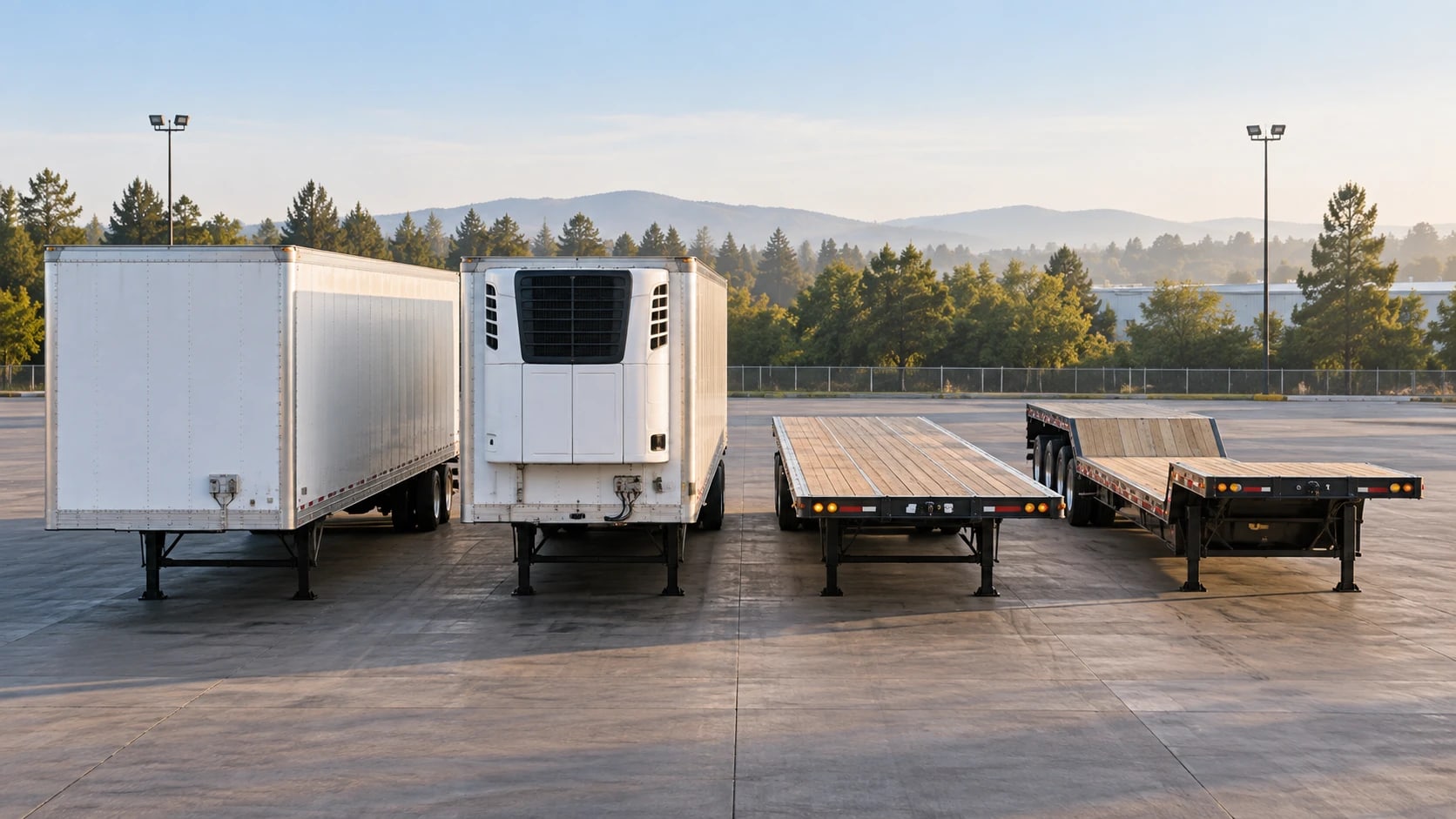
A dry van is the usual starting point for enclosed pallets and boxes. A reefer is for freight that needs temperature control. A flatbed suits freight loaded from the side or top, or that will not go through van doors. A step deck lowers the deck for taller open-deck freight, and an RGN or other low-deck trailer is for tall, heavy or drive-on machinery. These are starting points: the actual dimensions, weight and loading method decide.
Two loads with the same commodity name can need different trailers because their packaging, size or loading method differ.
Five questions that narrow the equipment quickly
1. How big is the freight after packaging?
Use the shipping dimensions, not the bare product. A pallet, crate, transport frame, attachment or protective wrap all count. For open-deck freight, the loaded configuration is what matters.
2. What does it weigh?
Total weight matters, and so does the heaviest single piece and how its weight is concentrated. A load can fit on the floor and still need different equipment because of weight or distribution.
3. How will it load and unload?
Through the rear doors from a dock, from the side by forklift, from above by crane, driven on, or forklifted at ground level? The loading method rules out equipment that otherwise appears to fit.
4. Does it need protection?
Fully enclosed, temperature-controlled, tarped, a rolling cover where available, or no weather exposure at all? Sensitive or high-value cargo can narrow the choice further.
5. What can the pickup and delivery sites handle?
A trailer only works if both ends can service it: dock, forklift, crane or ramp, ground-level access, turning room, gates and receiving hours.
Dry van
Enclosed, and a common choice for palletized, boxed and general freight. A good starting point when the freight fits through the actual door opening, needs no temperature control and can load and unload through the rear. Watch the door opening against the interior, tall freight, long pieces that cannot turn through the door and freight that has to load from the top or side.
Reefer
A refrigerated trailer provides temperature-controlled or insulated capacity for produce, frozen food, temperature-sensitive beverages and other products with a verified temperature requirement. Not every food load needs a reefer, and reefer loads do not share one setpoint: confirm the actual temperature and operating instructions. See how to ship frozen food and reefer airflow and loading.
Flatbed
Open access from the sides and top, used for steel, lumber, machinery, construction materials, long or odd-shaped freight and anything loaded by crane. Open deck brings its own planning: securement, weather protection, loaded height, width and length, and permit review where the load is large. See preparing freight for a flatbed.
Step deck
A step deck has a lower main deck than a standard flatbed, which helps when freight is too tall for a flatbed but can still move on open-deck equipment. The number that matters is not the item's height alone:
Actual deck height + actual freight height = loaded height.
Step decks are not all built the same, so check the actual trailer.
RGN and other low-deck equipment
A removable gooseneck (RGN) or other low-deck configuration is often considered for excavators, loaders and other heavy or tall machinery, especially equipment that drives on at ground level. "RGN" describes a family of configurations, not one capacity: the right one depends on weight, axle needs, loaded dimensions, ground clearance, loading method and the route and permits. See how to ship machinery.
Box truck or cargo van
Smaller dedicated freight does not always need a tractor-trailer. A box truck or van can suit smaller shipments, tight sites and time-sensitive dedicated moves, but door size, payload, liftgate capacity and interior space vary a great deal.
| Your freight | Start by looking at |
|---|---|
| Pallets or boxes, fits through van doors, no temperature need | Dry van |
| Needs a set temperature or insulated equipment | Reefer |
| Loads by crane or forklift from the side, long or odd-shaped | Flatbed |
| Open-deck freight too tall for a standard flatbed | Step deck |
| Tall, heavy or drive-on machinery | RGN or other low-deck trailer |
| Small dedicated load or a tight delivery site | Box truck or cargo van |
Will my freight fit in the trailer?
Physical fit is more than one length number. Check the finished transport dimensions, total weight, piece count, orientation, stackability, loading method, the door opening where there is one, deck or interior height, and any concentrated weight or securement issue. A shipment can fit by floor length and still fail on height, width, weight, loading clearance or the actual trailer's specifications.
The Freight Load Planner compares the freight you enter against the equipment we publish and separates what appears to fit, what does not and what still needs confirming. A planning fit is not certified axle distribution, final securement, the exact dimensions of the truck that turns up, legal approval or carrier acceptance.
What if I have several different freight items?
Enter them separately when their size, weight or handling differs. A shipment can mix pallets, crates, machinery and long material, and the largest or hardest-to-handle item often decides the equipment even when most of the load is ordinary. The Load Planner has pages for machinery, long freight, crates and other freight types.
What if the load is oversized?
Then equipment and permits are one decision. If the loaded configuration may exceed legal dimensions or weight, carry the equipment and load details into the State Permit Guide and read what makes a load oversize or overweight.
Need the actual shipment priced?
Send the freight dimensions, weight and how it loads, even if you are not sure of the trailer, and we will say which equipment the load needs.
Request a Freight Quote