
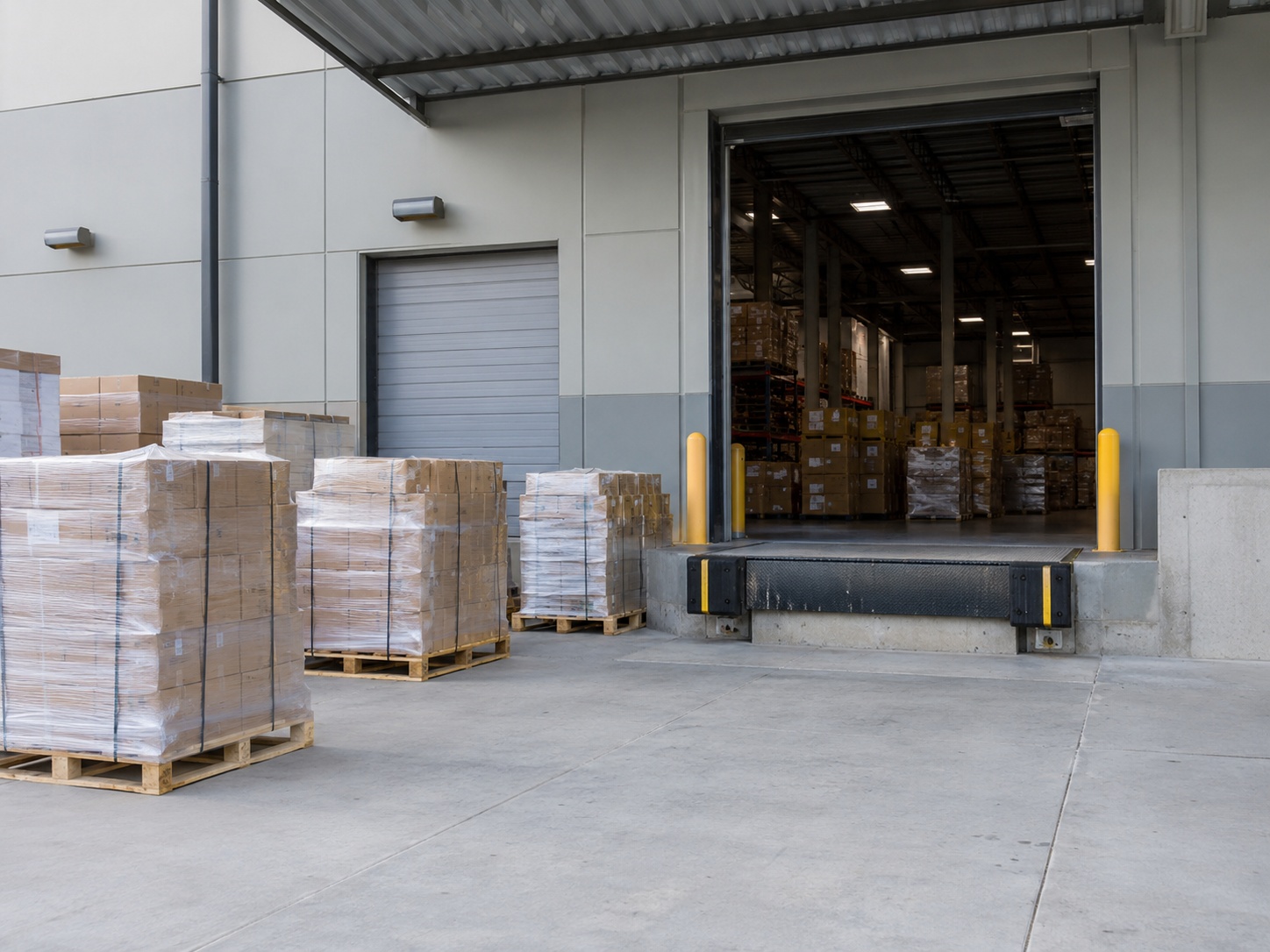
Before the truck arrives, make sure the shipment in the warehouse matches the shipment that was quoted. A driver should not be the first person to discover that the pallet count, dimensions, weight, equipment need or pickup instructions changed.
Stage the actual freight
Move the shipment into a clearly identified staging area.
Confirm that:
- All pieces are present
- Pallets belong to the correct shipment
- Freight is packaged
- Labels are applied
- Damaged freight is identified before loading
- Nothing still needs production, picking or repacking
Ready means physically ready
A scheduled truck should not arrive for freight that still needs to be built, wrapped, counted or found.
Verify pallet and piece count
Compare the physical shipment with the quote or dispatch information.
If the booking says 12 pallets and the dock has 14, stop and update the shipment before loading.
A changed count can affect:
- Trailer space
- Linear feet
- Weight
- Equipment
- Rate
- Delivery planning
Use the pallet capacity tool or linear feet tool if the shipment changed materially.
Confirm finished dimensions
Measure the freight as it will actually ship, including the pallet, packaging, overhang and highest projection. For the full measurement method and examples, see how to measure freight correctly.
Confirm weight
Use the finished shipping weight, not only the product weight. Pallets, crates and packaging change the number the carrier receives; see how to weigh freight correctly for the full process.
Finish the packaging
Before check-in:
- Replace damaged pallets
- Correct unstable stacks
- Finish stretch wrapping
- Install corner protection where needed
- Complete banding or strapping
- Close crates
- Protect exposed product
For more detail, read build a pallet that survives.
Make sure the dock is ready
Check:
- Correct dock door
- Clear loading path
- Forklift availability
- Forklift operator availability
- Dock plate or loading equipment
- Ground-level loading requirements
- Any special securement materials
The truck and pallet loading guide covers the loading process itself.
Have paperwork ready
The exact documents depend on the shipment, but the warehouse should have the required shipping information ready when the driver checks in.
Confirm:
- Shipment or load number
- Pickup reference
- BOL or shipping document
- Purchase order references if required
- Piece and pallet count
- Weight
- Destination
- Special instructions
Confirm pickup hours and check-in instructions
Make sure the carrier has:
- Facility address
- Correct entrance
- Shipping hours
- Appointment or pickup number
- Check-in procedure
- Contact phone number
Bad instructions can turn a simple pickup into avoidable waiting time.
See accessorial charges for detention and other delay-related costs.
Keep one contact reachable
Someone at the facility should be able to answer:
- Is the freight ready?
- Where should the driver check in?
- What if the pallet count is different?
- What if the truck type looks wrong?
- Who can approve a change?
A reachable contact can prevent a small discrepancy from becoming a failed pickup.
Reefer loads need additional confirmation
For temperature-controlled freight, also confirm:
- Required setpoint
- Units
- Product condition
- Loading instructions
- Seal requirements
- Any temperature documentation
See reefer airflow and loading.
Final pre-arrival checklist
Before the carrier checks in
- Freight is physically staged
- Pallet or piece count matches the booking
- Finished dimensions are confirmed
- Shipment weight is confirmed
- Packaging is complete
- Damaged pallets have been replaced
- Required labels are applied
- Paperwork is ready
- Correct dock or loading area is available
- Forklift or loading equipment is available
- Pickup reference and facility hours are confirmed
- Driver check-in instructions are correct
- A pickup contact is reachable
- Any shipment changes have been reported before arrival
Want to avoid a failed or delayed pickup?
Send the final count, dimensions, weight, equipment need and facility details before dispatch and we will help check the shipment for obvious issues.
Request a Freight Quote